Value Options: The AI Singularity Is Coming. This $400 Stock Is Still Mispriced?
Sunday, November 15, 2026
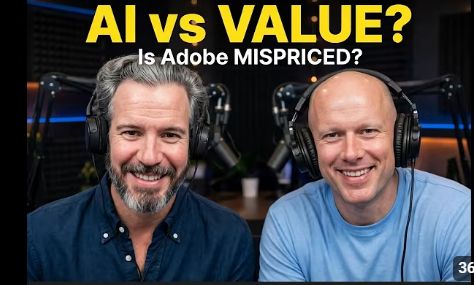
During their recent episode of the Value Options Podcast, Travis and Carlisle discussed:
AI Singularity: How Artificial Intelligence Is Disrupting Microsoft and Nvidia
AI Investing Lessons: Why Revolutionary Technologies Can Still Be Bad Investments
Google, Apple and Anthropic: Which AI Companies Have a Competitive Advantage?
AI Stock Market Bubble: Could Nvidia and Micron Face a Semiconductor Crash?
Adobe and HubSpot: Are Software Stocks Becoming AI Value Traps?
AI Stock Volatility: How Options Investors Can Find Opportunities
TRANSCRIPT
[Tobias]
Hi, I'm Tobias Carlisle. This is the Value Options Letter Podcast. I'm joined as always by my co-host, Tim Travis.
How are you, Tim?
[Tim]
Doing well, Toby. Been running around a little bit today, so sorry a little late, but excited to do it.
[Tobias]
Once again, I think the way as we enter the singularity, it feels to me like the investment landscape is changing so rapidly. It's kind of breathtaking. One of the things I saw yesterday, Claude has brought out this competitor to Microsoft's Word and Excel, and that's existed before.
Google has Sheets and so on, but I can see just never opening another Word document in my life because I would rather just dictate it to Claude and have Claude produce the finished document, which I get that that's not the most part of Microsoft's business, but they're making real inroads in these software businesses.
[Tim]
Absolutely, Toby. I heard via Twitter, so take it for what it's worth, but I fully believe it, that someone created a full-blown operating system using AI. Obviously, that's a huge competitive threat to any of those companies, but no, it's so powerful, Toby, and with Anthropic's IPO coming out next week, they released quite a bit of information.
One of the things that I found interesting, and I'm not a tech nerd as much as I wish I was, honestly, but I know that a big part of NVIDIA's moat is its CUDA software that comes with the top-notch equipment. I believe that Claude has made inroads in being able to assimilate other chips and have different chips work together with different softwares. Without a doubt, there's going to be such massive change, Toby, that it's hard to predict two years out, let alone five or 10.
[Tobias]
That was the claim for a long time, that Microsoft and Intel had that Wintel partnership, where the Intel chips were optimised to work with the Windows operating system. That was an advantage that made it so much more difficult for every other chip maker to compete. Then, because NVIDIA has become so much more successful, they've now become the platform, and so all of the other software providers have had to fit in with what NVIDIA wants to do.
It seems like AI is going to break that relationship, too. It's exciting, but it's also a little bit scary about the inroads that AI is currently making into these various different businesses. Like you were on Twitter, I saw a guy said in September, he said this chip design is something that is going to be one of the very few areas that is going to resist AI.
Then I saw him tweet that yesterday. He's like, no, no, no, it turns out that's not true. AI has figured out how to do it.
AI Singularity: How Artificial Intelligence Is Disrupting Microsoft and Nvidia
[Tim]
Yeah, that's probably related to the anthropic information on the IPO, because that was one of the topics on there. No, I mean, without a doubt, it's transformational. I think the only comparisons are things like the internet or even like electricity, because the difference is so profound.
There's obviously generations that are not as immersed into it as you and I and a lot of the people that we know and communicate with. A lot of people don't understand the full functionalities. There's a girl I know, and she has a really cool business where she invented a cooler for a kid's car seat.
It's successful. It sells all over the world. She's been using Clawd.
I just told her about Clawd code versus just the Clawd co-work. It's so different. The level of productivity that you can get when you use the Clawd code is so exceptional that projects that would have taken weeks, months.
Projects, Toby, that you nor I would even have taken on because we didn't have the budgets for it or the time. It's like you're going to have to monitor the IT team that you're bringing on, and are you going to like it? I mean, as we've talked about before, I tried to build the value options letter several times, spent nearly $100,000, and it just never came out right.
But nowadays, it's just so much better with how you can do things. So exciting, but I agree with you. There is trepidation in many ways.
AI Investing Lessons: Why Revolutionary Technologies Can Still Be Bad Investments
[Tobias]
I've been writing a white paper, which I'll have out in the not too distant future, where I just went and looked at historical tech revolutions and what happened through those historical tech revolutions. The one that I remember most clearly is 1999, the .com 1.0, when there were a lot of these profitless .coms. It was clearly a new style of business where you could have that website. For a while, it was like just having a website made you a .com.
Now, it's kind of like that's just table stakes. There's not a business in the world. Every lawn mowing business has a website where you can reach out to somebody and book your lawn getting mowed.
So that's not the technological leap. But at that time, Buffett came out and he said, it could be a world changing technology and still be a terrible investment. And what really matters is durable competitive advantages.
And I think that's really the focus of this white paper that I've done. I just took his idea and then I've worked through some historical tech revolutions. And as you say, there's railways was one that was sort of transformational.
Electricity was transformational. Hard to imagine now that electricity is such a huge technological advancement. But for a long time, even manufacturers were resistant to electricity and they hadn't organised their shop floors in a way because they were used to using steam engines where you'd have one big steam engine that drove everything on the line and then electricity made it possible to put it in a different kind of modular fashion.
And that took a few decades to kind of work its way into factories just because it takes a long time to start a new factory. But we're in a totally different world now where it's software really that drives the world. And that's where AI is native to the software.
But I still think that some of those, there are lessons you can take away from that. And one of them is that there are these sort of different layers of the technology. There's the infrastructure layer and there's a little bit of a, we're not entirely sure, is this a brand new technological revolution or is this just a continuation of the telecom computing?
And that Carlotta Perez, who's one of the people I massively have a huge amount of respect for and her ideas, and I sort of discussed them a little bit in this white paper. One of the things that she said is that this is just a continuation. It's not a brand new tech revolution.
Not that that really matters, but other than just for thinking about where we are in the infrastructure layer. So there's an infrastructure layer, which is the fibre optic cables. And as everybody well knows, the fibre optic build out led to some bankruptcies, even though ultimately that was the thing that created the possibility of running really fast internet over fibre so much faster than twisted pair.
And then there's a builder layer that goes on top of that. And you can think of that as being sort of Google and those sort of internet native businesses that wouldn't exist except for that underlying infrastructure. And then there's a retail layer that goes on top of that, that uses Google as part of its business.
And so the challenge, I think, for this revolution is to work out whether Anthropic and OpenAI are that builder layer or that retail layer. And I can see a pretty strong argument for them being maybe a little bit of a hybrid, maybe a little bit in both because you can certainly get a lot of functionality out of them. As you say, you can just ask it to build what you want.
But my question is, do they really want to be that retail layer or will it be like electricity or like the internet where every business is going to have AI built into its business and it's probably going to be supplied by one of those labs? Although there's always going to be a limit on what they can charge because the functionality of those free AIs will always keep them kind of honest. If you need the bleeding edge AI because you're doing bleeding edge research, then you need those ones.
But if you can do with just a little bit less functionality, maybe use a free version.
[Tim]
I mean, exactly. I mean, there's so many similarities in the different AI products now. And then, I mean, we're not even talking about like China.
But if you look at what Meta has done with Muse and how that's kind of more retail related version, but now they're getting more into the business aspect of it, it doesn't seem like there's a huge competitive moat between those. So I think that that's a big risk. But then you also have huge disruption for companies such as Google potentially where their search business could potentially be cut out a little bit by the AI models when they're doing stuff like that.
There's not as many potentially search queries. But then on the flip side of that, well, guess who's producing their own chips? A huge, huge volume on is going to be selling them and has built what's going to be one of the biggest chip companies within Google.
And there's so many. And chip design, they have so many different swings at the back. And that's one of the smart things that these large hyperscalers have done is that they've given themselves a lot of opportunity to where they're just not a one or two trick pony anymore.
You know, it's impressive what they've what they've done. And so if I think that's where valuation matters, Toby. Yeah, I saw one.
Yeah. Yeah. I saw one person who kind of compared, you know, somewhat the trepidation on the Anthropic IPO, how, you know, the price is kind of a little less than what they said.
Now, of course, they're racketing it back up. But with the way it was with with Google when they when they IPO in 2004, because, you know, we when when Google IPO, they had taken a controlling market share for who. But everyone had just lived through the tech bust.
And so, you know, what once again, what's the barrier to entry there? You know, is Google going to be able to sustain itself? And I mean, it was still a high multiple, you know, 10 times sales or whatever it was, but it wasn't it wasn't like I mean, there was a lot of hesitancy.
I remember I was working at Vanguard at the time and everyone was like, oh, you wouldn't want to touch that, blah, blah, blah. But it ended up being a phenomenal buying opportunity. So we'll see.
I mean, that's a very different valuation from where Anthropic's going. But we'll see.
Google, Apple and Anthropic: Which AI Companies Have a Competitive Advantage?
[Tobias]
I remember the I also remember the Google IPO very clearly because it was in that I think they went public in 2004, which was like the trough after the bubble. And they were still like a .com and .com was a little bit on the nose at that point. And then they wanted to do it in a strange, they did this strange Dutch auction where you had to submit how much you wanted to buy at what price.
And then they cleared the market at the lowest price. And so you didn't really know what sort of allocation you were going to get and what you're going to pay for it. And so a lot of people stayed away and they went at the low end of their range.
As a result, I was in Australia and I couldn't buy it because you needed to be a US citizen to have a look at the filing documents. And you needed to put your postcode in to prove that you're a US citizen. The only one I knew was Beverly Hills 90210.
So I had to look at the documents by putting in 90210, but I wasn't allowed to buy, which was a little bit of a shame because I liked it. I was using it at the time. Should have bought it, probably be on a beach right now.
One of the things that you just raised then that I think is particularly interesting, when you have Google making chips and when you go now and do a search, and really it's Google's own AI response at the top of the search. And they really try to keep you in their AI because they ask a few of the follow-on questions that are the natural sort of follow-on questions that you would have from doing a search. So how do you click a link now to have a look?
And that's how they get paid. So what happens in a world where you have Google and Microsoft and Anthropic and Meta sort of all competing directly for the same audience, the same attention, it's hard to see how they capture much profitability. And that's been one of the historical trends that I observed and I've written about in this paper, that's the builders only capture about 2%.
The innovators only capture about 2% of the value creation. 2% of the additional value created and 98% is consumer surplus. So that would be wonderful for the world if that happens again.
And it seems likely, it seems hard to avoid.
[Tim]
Well, one analogy that I would give is like, think of kind of the transformation with Amazon. I mean, it started with a book delivery and then they developed this incredible scale and just ease of use in terms of distribution. But if you look at, if you try to buy something on Amazon now, you're kind of steered towards things and that's their advertising business doing it.
You know, like they show, you know, okay, this sponsored purchase or whatever, and they kind of steer you. And that's a, you know, multi $10 billion business now with an attractive growth rate within Amazon now that really, you know, didn't exist to anything like that scale long before. So I'm sure that, that those companies, you know, once they have the eyeballs you know, they can figure out ways to monetise that.
However that may be, maybe it's even getting a discount from, you know, like, like almost like a price line type thing where they get a cut of the actual, you know, hotel booking or something like that. I mean, there's a lot of ways to skin a cat and these guys are good at making money. But yeah, I mean, it's, you know, it's hard to know that disruption.
And I think that's why you get such an extreme valuation for something like Apple, where, you know, it's trading at one of the highest valuations in its history at well over 10 times sales, like something in the mid thirties, in terms of an earnings multiple. And it's just, well, at least you kind of know what Apple looks like. You know, you have a good feel for, you know, where they sit and whether you're using Claude or, or chat GPT, a lot of people are going to buy the next iPhone regardless.
You know, they have that brand, which is unheard of Toby. I mean, for this to be in consumer technology, it's, it's unheard of, of what they've been able to do, but you know, it's been like that for almost 20 years now, it feels like.
[Tobias]
You know, there's some suggestion that we're going to go away from phones and towards some other little pocket device. That'll be an AI pocket device that won't have a screen on it. What do you, what do you think about that?
What do you make of that?
[Tim]
Well, I think the glasses are, are something that I've heard a lot of, or, or, I mean, even like with what you think of like Elon Musk, Neuralink, I mean, putting something like into your, I mean, like a chip is, it's not as farfetched as it used to be, you know? But, but yeah, no, I think that you're right. I mean, it's just like the tablet came out and the tablet was just like a bigger phone, but for some people it kind of replaced computers.
For them, you know, depending on what your utilisation is on that. And so, you know, I think that the form doesn't matter right now, but ultimately at some point it will, I mean, people have been pretty loyal to that Apple infrastructure and, you know, that's why it trades, you know, at such a rich price. I don't like it at this price.
I think it's overvalued in my opinion. But yes, but then you, that's why we've talked about it. The other ones, the hyperscalers, the ones that have a little more uncertainty within their business model, whether it's, you know, Meta at various times this year, Microsoft at various times, Google, Amazon, you know, you're, you're getting really high quality businesses that are seeing major troughs into negative free cashflow generation due to the large CapEx.
But, but you haven't been able to buy them at these multiples before. So for instance, Berkshire Hathaway, you know, they ploughed into Google substantially. So, you know, I'm kind of leaning there personally, but who knows if that's right or wrong.
[Tobias]
There seem to be two competing views on Twitter about the AI revolution. One is that it's this winner takes all, it's going to be anthropic and they're going to make anthropic motors and there's not going to be any other business out there except for anthropic or, you know, open AI or whoever is the ultimate winner. And then there's another view that it's all a bubble and they're all, and the evidence for that is the negative free cash flows and the fact that they're borrowing and the fact that they're raising all this equity capital and the revenues just aren't there on the other side.
How do you work your way through those two views?
[Tim]
I mean, I think, I think that there's, you know, some, some warning signs there for sure. I mean, if these companies can't, I mean, with the election, for instance, like if you don't get as many data centres being built, then there's already a tonne of GPUs that are sitting around doing nothing for various reasons, like whether they don't have the power or the permitting or whatever it is. So if, if you get less demand, naturally you're going to have excess supply and prices go down.
And companies like Micron and SK hynix, they can't turn off their factories because the fixed costs are so high that they have to keep producing. And that's why it's a quantitized product. I mean, it's similar to home building.
Like they kind of have to keep building to cover their cost basis. And so, and so, yeah, I mean, I think that you could see, you know, a bubble crash. The valuations are very different than the tech bubble, without a doubt.
If you believe the earnings are where they are, the margins are historically high. I mean, you're, you're probably better to speak about that than I am, but, but you look at the margins of a Nvidia or a Micron at these levels and it's hard to imagine that being sustainable when you see increased competition occurring and that's actually occurring for both businesses.
AI Stock Market Bubble: Could Nvidia and Micron Face a Semiconductor Crash?
[Tobias]
Yeah. I, I, I, I think two things can be true at once. I think we can have this world changing technology and a bubble at the same time.
And I think you and I, you and I both use AI extensively in our businesses. Everybody uses, everybody who's a little bit lazy and, and high agency users. I mean, you don't even have to be lazy.
Just if you, if you want to get something done, AI is an incredible tool to get, to get going in it. But at the same time, it could, it can still be a bubble. And I, I think that's one of the lessons that, that I, that I sort of learned from this white paper as I've, as I've been researching it, is that you have these periods where the build out, and I think fibre optic cable is a good example of, we, we, we, at one point we hadn't lit enough of the fibre optic cable and they were kind of building the cable because that was the metric that Wall Street cared about, how much cable they were laying in the ground rather than how much cable they'd lit. And that was unsustainable because they were using debt to build it out.
But there's no question now that we use all of that fibre optic cable and we're going to continue to use more and more as we use more data. So it's just that it's taken us a period of time to assimilate the amount that we built. And that's a, that's a classic kind of technology.
You know, they call it, it used to be the Gartner hype cycle. But the idea is just that in the short term, you sort of overestimate the impact and they overbuild and everybody gets too excited. And there's this trough of disillusionment.
And then on the other side, you find this sort of plateau that's a little bit more realistic. And the trough is below the plateau. And so the suggestion is maybe you can invest a little bit more successfully by not participating in the bubble part, knowing that you probably get this retracement at some point where you get a better entry price.
And I think for the most part, for IPOs, that has been my view that you probably don't want to participate in the IPO. And SpaceX is a great example of one that just recently, it went public at a very, very high price. And then that's basically the end of the buying.
You know, there was a little sort of mania effort listed pretty soon after you had an opportunity to buy it at a much better price.
[Tim]
Oh no, Toby. I mean, I've never seen demand, at least on a personal level, like I did for SpaceX on IPOs. It hasn't been the same for Anthropic at all yet.
Um, obviously it's closer, but, but I think people are, um, enraptured by Elon Musk for a lot of credible reasons, in my opinion, he's pretty, pretty incredible. Um, but I would agree with that. And, you know, a good analogy of that is, is what Amazon did is that, you know, during COVID and the lockdowns, their business was booming and they couldn't meet all the supply.
And so they built so much infrastructure, you know, knowing that at some point there was going to be a little bit of a glut, but they've turned that into, you know, it's improved their AWS, improved their, now they're competing with like FedEx and UPS on distribution and shipping. And so, you know, ultimately, you know, it should, it should work out for the strongest, but, but yeah, if you pay too much, Toby, I mean, I was watching a great, a great YouTube thing today and it was on WealthTrack and it was like 2008, October 15th, 2008. And it was Martin Whitman, who I love, third afternoon, rest in peace.
And, uh, it was two other people. One was like a Fed type guy. And then the other was like another mutual fund guy.
But look, you remember that time that was like, you know, almost a year into, you know, the financial crisis where there started being some serious cracks into it. And we were down like 40% the market. And obviously there was tonnes of that, that, you know, if you had money, but a lot of people told me when you're that deep into a bear market, you don't have money.
You know, you're, you're, you, you invested so much at certain levels that it's really hard to keep, you know, that cash reserve in. And so like stocks that you would have liked, I mean, think of like NVIDIA right now, NVIDIA has been dropping. Some people want to buy it now.
Some people are selling, but it's like, you know, you keep doing that and then they just keep going lower. And at some point you really don't have any money. You have, you have more ideas than you have money.
And so I think your point is very valid where you say the key is, you know, don't get blown up by the bubble and then be able to capitalise and pick up the pieces. I think that both you and I though would probably skew that valuations have been so high for so long that that logic has hurt probably both of us, you know, over the last 10, 15 years, you know, but, but at some point, at some point it'll help, God willing.
[Tobias]
Well, you, you, you need the discipline of the valuation. Otherwise there's no, you know, Einhorn has a great line where he says, and he says it as a don't short, because, you know, if you see something that's two times overvalued, that's no less silly. That's something that's three or four times overvalued.
That means, you know, from two times to four times is a double. And it's a tough way to be, you know, live your life being short, something like that. The market can remain irrational for longer than you can remain solvent.
Like that's, that's an idea that's been around since Keynes. So it's been around for a very long period of time. You still need to exercise some valuation discipline when you're buying, even though the businesses do seem to be transformative.
So I don't, I don't know enough about the anthropic valuation. And I think that all of that high growth stuff is incredibly hard to handicap because you don't know how long that high growth lasts for. And that's a key part of like coming up with a terminal valuation, all of that sort of stuff.
It's a tough, it's a tough ask. I think that one other way of looking at it though, is just to ask what businesses are going to be impacted by this. And so what businesses don't you want to own?
And I think there have been some good examples that remember through COVID and through the lockdown Chegg, which was this, they supplied the answers to college students for some of the questions that they did. And that was a $14.5 billion business at one point. That was one that I was short because they were burning cash and they were, had a terrible trajectory, but they didn't really crack until ChatGPT became available.
And then the day that ChatGPT sort of announced that college students could use it to get answers to some of the questions, it was down 50% and it ended up being down, closing down 99% after a period of time. So there are those sort of businesses out there. And that's one of the things that, that's one of the things that make this market difficult.
So you look at something like Adobe, which now that's been the standard for a long time. And so there are people who trained in Adobe illustrators, who are trained in Adobe, who've learnt those skills and use those tools to build pictures and so on. And now you can sort of do it by natural language, describing what you need to AI.
I don't know how Adobe, I don't, I literally don't know how they survive. It's not that I, that's not to say they don't survive. It's just to say that it's a difficult path for them.
And I don't know one way or the other, because optically on the financial statements, it's actually reasonably good value. They're still earning lots of money on their assets. Like it's a good business.
It's just that the future for them is difficult. I don't have a view on Adobe one way or the other. I just raise it as an example of a, and there are lots of businesses like that.
They're exposed to AI where the business looks good. The financial is still pretty good, but the underlying business is at risk.
Adobe and HubSpot: Are Software Stocks Becoming AI Value Traps?
[Tim]
Yeah. I mean, I think what you're seeing is these companies are spending a lot of money now to create their own AI agents to make the utilisation as helpful as possible. And so like I use HubSpot, for instance, I use that as my CRM.
And I've always loved it, like compared to any of the other CRMs I've ever had, like it's been phenomenal. I don't, I use like one 50th of the capabilities. Like I'm like not super complicated, but I will tell you that integrating that with like Cloud has not been the greatest, like especially it was a little worse.
It's gotten a lot better, especially utilising Cloud code with it. But initially there was kind of like a lot of glitches there and I probably could replace it honestly. Like I don't think that I necessarily need it if I wanted to, but I do have, you know, my employees and stuff like that.
It's kind of what we use. And I mean, we're a small organisation, larger companies, you have to train them all up on it. And then, you know, what's the cost, like what's the cost of Adobe versus, you know, having, you know, all these disparate, you know, platforms.
And at some point they're going to cost money or, so I think it matters how expensive it is. And I mean, I agree with you with what you said. I probably am more bullish on Adobe than you are, at least also like selling puts on it because the volatility is quite high.
So you can get really good premiums, manufacture a cheaper entry price into the stock. We have had Adobe sold options on the value options letter. And you look at the margins, similar concerns occurred to me when it was the rotation from software to the cloud.
The stock crushed and Adobe basically set the template for that transition to, you know, making money on the cloud. And it's a little print revenue structure where ARR is the important metric instead of, you know, selling software licences. But yeah, I mean, we'll see if they can do it again.
People were discouraged when the CEO left, that managed that transition for Adobe. I think they thought, okay, this is your chance to do it again. But I don't know how old he is or what his status was, but we'll see.
That's definitely one to watch. HubSpot and Adobe, I think are two interesting case studies.
[Tobias]
Yeah. To be clear, I'm not bearish on Adobe at all. As I say, like the financials still look very impressive.
It's just, it's one of those things that I think that there's a, and there's a lot of these businesses that because I'm a value guy that come in, that there's AI fears that are creating a discount in the stock. And I would probably be inclined to own them long. It's just that it's a fear of mine that having bought them, that you've got this real AI risk out there, which is, it's just true for so many businesses.
There's so many online and those online businesses tend to be quite good businesses. They've got high margins and high returns and invested capital. And so they command a premium valuation.
And it's that, if that premium goes away, if they can't raise prices as they could in the past, or they just lose seats because there are people who just don't need that capability anymore, that's going to hurt them. What do you make of the political risk for the data centres? Because that's another thing that when I was working through this white paper, the infrastructure layer, which is, if you think about coppers, something that goes into a lot of these, coppers used all the way through computers and twisted parents used everywhere.
And it's just hard to open new minds globally. For one thing, we haven't found them. There's one in Chile, Escondido.
And then we need eight more to meet the demand by 2030, which is just plainly not going to happen. And then there's this political resistance to data centres. I saw a story, which is a terrible story about this, I think it was a shopping mall car park that's had nothing in it for 24 years.
And they had a plan to build a $5 billion data centre there. And they've collected 25,000 signatures in the course of this election cycle. And so now it's not going to be built there, which just seems like an absolute travesty to me.
But that clearly is, that's the mood of the people. Because if you look at, there were 41 propositions in the election and saying no to more data centres and 40 of them got up. So it's just, you just don't see, people don't agree to that level on anything.
And they've all agreed that they don't want more data centres. But I worked in a telecom. I used to work in a telecom.
We ran data centres. Like it's a really inoffensive, compared to like there are other kinds of factories that you can have out there near you. You don't want one of those factories, like data centres, basically this like air conditioned room that's filled with computers.
It's inoffensive.
[Tim]
Economics, Toby. I mean, there's a data centre near where I live. And I mean, you talk to so many people that their jobs are relying on that.
And so this was kind of a weird election. I don't think that there was excitement whatsoever on the Republican side. And I think that I wouldn't, honestly, I wouldn't make too much into it.
I think that obviously there's trepidation over it. There's a lot of fears over AI and people know that jobs are going to be replaced. But if it makes sense for localities from an economic standpoint, whether it's built in Texas or Louisiana or Oklahoma or whatever, they're probably still going to get built.
And if there's one thing I know about our political class, and this has been true since before the Roman Empire, is that they can be bought. They will sell their souls for special interests. And so they'll get built.
I'd bet a lot of money on that.
[Tobias]
Well, that's true. But it does seem, I think that Musk came out and said, data centres in space starting to look pretty good. And I used to say this as a bit of a joke, but I think that it's not hard to see a future where there are data centres in space and what they send back to Earth is the AI, the intelligence, the output of the AI.
So you have all of the compute and all of the infrastructure in space. I have no idea about the feasibility of that. That sounds like an absurd proposition to me, but I'm looking at, clearly that's what a satellite is, just a computer in space.
And so we can clearly, we have the capability to do it. It's not that unimaginable.
[Tim]
I mean, we're living in an era with, I mean, he's Nikola Tesla, Albert Einstein, and John D. Rockefeller built into one. I mean, he's incredible.
Like what he's done, regardless of any political affiliation, I don't care. I don't care about any of that. But like, if you look at what that guy's done with SpaceX, with Tesla, and I mean, that's just a couple of them, PayPal, everything.
I mean, if there was someone that was like brought back in time from the future or something like that, it's him. I mean, what he's done. So I wouldn't, I would trust his judgement more than I would most people in terms of them making those long-term projections.
I know that they've been wrong on the timing quite a bit, but of course, when you're doing things of that scale. So it seems like a very potentially realistic possibility to me, but I'm no scientific expert, that's for sure.
[Tobias]
So I think to summarise what we've decided today, it's that AI is real. It could also be in a bubble. It's very important to use valuation when you're considering all of these opportunities.
Volatility of a stock is often a good indication that there's at least some interest in it. When it sells off, you can take advantage of that volatility. If you're in it and it runs up, you can take advantage of that volatility in other ways.
So we've discussed all the issues.
AI Stock Volatility: How Options Investors Can Find Opportunities
[Tim]
Let me say one more thing. Yeah, because you mentioned that you brought something to light. So last week, for instance, when you got that major crash in the market, the volatility index went up 70%.
And I think on the value options that I think we might've had five or six trade suggestions go out that day, because volatility is such a huge component of pricing. And so it was really stocks of whatever flavour someone's in. If they like tech, there was opportunities in tech.
If they like real estate, there's opportunities there, consumer staples. So that's one of the things that I think is important in investing is as long as you understand what you're doing and what you are investing in, then be open-minded and don't lock yourself into one approach where you have to be 25% bonds and 75% equity, even if bonds are yielding 2%. I mean, we saw that with retirement portfolios a few years ago or with banks and their credit portfolios and their mortgage loan portfolios.
So I think taking a dynamic approach, a business-like approach to your investment decision-making will pay dividends literally and figuratively. So yeah, but volatility has become a real factor. We're probably not past this rising volatility cycle, I would imagine.
And so it should be an eventful end of 2026.
[Tobias]
Yeah. Endorse that view. Where can folks get in contact or follow along with what you're doing?
[Tim]
Sure. The valueoptions.com is a free seven-day trial, and you can take a look at all the trades that are on there. And we put out at least three to five per week generally, and that includes exits.
So we've had a lot of exits lately where we've made most of the profit and now freeing up capital. So we'd love to have you.
[Tobias]
Good stuff. Thanks, Tim. Thanks, folks.
We'll see you next week.
📈 Want to see how value investors Tobias Carlisle and Tim Travis use options trades?
See the actual cash-secured put and covered call trades Tobias Carlisle and Tim Travis send subscribers — with ongoing recommendations as positions develop through the Wheel strategy.
👉 Start your 7-day free trial.
Link in my channel profile or use the link below.
👉 https://valueoptionsletter.com/a/acquirers-multiple
Disclosure: This is an affiliate link. If you subscribe, I may earn a commission at no additional cost to you.
Educational content only. Not financial advice.
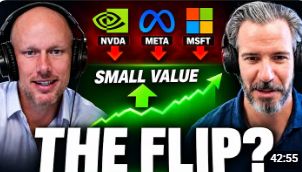 Magnificent 7 Valuations: Could the AI Chip Boom Turn Into a Bust?
 The 10 Cheapest Large-Cap Stocks This Week
 VALUE: After Hours (S08 E38): The Quality Growth Playbook for Biotech | David Ferreiro