Deep Value Investing: How Stock Buybacks Create Shareholder Returns
Tuesday, November 10, 2026
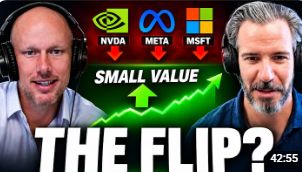
During their recent episode of the Value Options Podcast, Travis and Carlisle discussed Deep Value Investing: How Stock Buybacks Create Shareholder Returns. Here's an excerpt from the episode:
[Tobias]
Yeah. I've done all right in Dillard's, which is one of those... I don't think it's a great retailer either.
It's just they've been quite good at sort of managing the decline, which is one of the things that as a deep value guy, that's one of the things that I do that probably a lot of more modern growthy type investors don't do. But I don't mind companies that are sort of in a gentle decline or where they're sort of being run, they're running in a sort of form of liquidation by buying back stocks. So if they're in that cash cow or like slight decline phase of the business, and I always think of AutoZone and O'Reilly's as two really good examples of this, but my portfolios are always filled with these kinds of businesses that basically they're too cheap because everybody can see that the end of the line is not here yet, but there's some point where it's not going to work anymore.
And so they just buy back stock hand over fist. And you can have a look at the stock price charts on these things. They're extraordinary.
All of them do very well over time. Dillard's is no exception to that, even though everybody knows what's wrong. They're just throwing off cash and buying back stock.
It's a really simple playbook, but it's very, very effective. And it's one that I like a lot. And it's one that I tend to participate in.
So Dillard's has sort of worked out, but retail is tough. And I've seen a lot of Buffett's written about that a little bit too, about the retail concept, the department store concept has changed over time. At one point, the most important thing was that you were near like a railway stop or a station where everybody got off and they went to you first and he's bought those sort of ones.
And then the railway moves or the retail concept changes. So Amazon is obviously the reason why a lot of these companies have struggled where previously you might've gone into the store to get one thing and then you get other stuff while you're in there. And now you just get that from Amazon and you never need to go in there.
And so you don't make those ancillary purchases, which is the thing that they're really relying on. So retail is tough and I would never size anything retail too big in the portfolio for that reason. But I do think it's an interesting, the two areas that there's a huge amount of risk, but there's also a lot of opportunity, as long as you know what you're doing, insurance, retail, they can be quite profitable.
[Tim]
A hundred percent. And you can get them at low valuations. So yeah, I mean, I think Assured Guarantee, the municipal bond insurer, I think they're another example of that where it's nice, especially for small caps or mid caps, Toby, like if you trust the capital allocation and if you trust that management team to act in your best interest, that's such a big part of it because you at least know, okay, if this stock gets cheap enough, I know damn well, they're just going to buy back stock. I mean, even if they have some other corporate priorities that maybe they're focused on in the short term, at some point it's just like, okay, if you're going to give me my company for 30% of the intrinsic value, I'm going to take advantage of that.
So, but then I've had other investments where I remember one was a Kennedy Wilson, which is a Los Angeles based real estate company and really interesting assets. They were early in a lot of markets, almost most of their big investments in apartments, offices, hotels, they were early, even in like the Idaho movements or the Sunbelt, they were just really early on it. But the problem was all the money went to the management team.
It was just like the incentive pay was so out of whack and you just didn't see any of the profits as a shareholder and the stock did not do well. Ultimately, Fairfax Financial bought it out at a very low price. They're going to do extremely well with it, in my opinion.
But yeah, it's just, that was a management team that didn't really prioritise the shareholders, in my opinion.
📈 Want to see how value investors Tobias Carlisle and Tim Travis use options trades?
See the actual cash-secured put and covered call trades Tobias Carlisle and Tim Travis send subscribers — with ongoing recommendations as positions develop through the Wheel strategy.
👉 Start your 7-day free trial.
Link in my channel profile or use the link below.
👉 https://valueoptionsletter.com/a/acquirers-multiple
Disclosure: This is an affiliate link. If you subscribe, I may earn a commission at no additional cost to you.
Educational content only. Not financial advice.
 Bill Ackman's Investment Strategy: Uber, Howard Hughes and Berkshire Hathaway
 Where Is the Deep Value in Small and Micro Caps This Week?
 Ferguson (FERG): Why Industrial Distribution Is an Attractive Investment