Bill Ackman's Investment Strategy: Uber, Howard Hughes and Berkshire Hathaway
Monday, November 9, 2026
During their recent episode of the Value Options Podcast, Travis and Carlisle discussed Bill Ackman's Investment Strategy: Uber, Howard Hughes and Berkshire Hathaway. Here's an excerpt from the episode:
[Tim]
Yeah. No kidding. I mean, yeah, I think you could make the argument either way.
I mean, honestly, people look at their phones. I probably would be okay with it to tell you the truth. But yeah, Tesla, I mean, I don't discount that they'll be strong.
And I mean, that's why the Uber stock is compressed. And another thing I liked in the article is it's similar to how Warren Buffett and Charlie Munger articulate things where basically the stock follows the earnings growth over time. So even if you pay a little higher multiple, if the earnings growth is there, you should get a pretty good return on the stock.
And with some of the Pershing Square vehicles where they're kind of permanent capital vehicles, it's interesting hearing his philosophy on that and their goals to compound at 20% a year. And the Howard Hughes thing's interesting because Howard Hughes was a spinoff of General Growth Properties long ago. And I remember investing in General Growth Properties and following that whole story.
And so they have a huge real estate holdings, including key assets in Summerlin, Las Vegas, and Arizona, and Hawaii.
[Tobias]
Los Angeles.
[Tim]
Yep. And what they're doing is they acquired an insurance company that is relatively small. And essentially they've hired a really great team to manage the insurance company.
And the idea is to kind of sell off the real estate over time and invest it in the insurance company, and then kind of follow the Berkshire playbook where they've already sold off their fixed income investments. And now they're switching a lot of that to common stock, but with pretty conservative leverage ratios. And they think that they can get a 20% return on equity.
That's aggressive. I mean, most insurance companies don't get that, but that's the goal there. So look, I own some Howard Hughes.
I think it'll be interesting. I think it's cheap with real estate where it is. And then I think there's a lot of upside to what Ackman's doing there.
[Tobias]
I think that's an interesting situation. And I agree with you. I like the way Ackman moves.
And I've followed General Growth. And I remember when it became Howard Hughes, it was one of the most extraordinary runs out of the 2009 bottom. I don't know what he's, is he a 30 bag or a hundred bag on that?
[Tim]
It just could be- Oh, at least 30. Because I mean- It was 30 early. Yeah.
Because Toby, I mean, remember it was trading at pennies on the dollar, General Growth properties. So the issue was for folks that don't remember, they were the second largest mall REIT in the United States after Simon Property Group. And they went bankrupt.
And I mean, the rule of thumb basically is that equity is wiped out in a bankruptcy. But the issue with General Growth properties was that it was a liquidity issue because you couldn't really refinance debt in that market in the financial crisis. And so it was much more of a liquidity issue and Ackman grasped that.
And so in that default, the fulcrum security was actually the equity. And so he bought the equity for pennies on the dollar. And a lot of people thought he was crazy to do so.
And they kind of worked through it a little bit, got some liquidity in there. And then ultimately I believe Simon Property Groups and I believe Brookfield, if my memory is correct, they both made acquisition offers for General Growth properties after things had kind of settled a little bit. I remember because I was selling puts on General Growth properties.
It had already rallied past the pennies and I was selling puts on it. And the puts were far below the offers that they had gotten. It was an interesting time.
And so then ultimately they spun out Howard Hughes and yeah, that was a transformative investment for sure.
[Tobias]
I think insurance is a tough business. I don't know if you've ever gone back and read all of the early Buffett letters where he talks about buying the early insurers and the struggles that they had. Even Buffett, who's a pretty good assessor of risk reward, they really struggled to make those insurance companies work out of the gate.
And I don't think they could really get it going until they got Ajit Jain or maybe somebody else in there who was running the insurance rather than just the reinsurance. And then I think about, they seem to have mastered it and figured it out and they'd run it in a completely different manner to the way that every other insurance company has run. They don't write as many policies as they could given their asset base, but then they tend to put their assets into equities, which are more volatile rather than bonds.
So that's the quid pro quo for the way that they run that asset liability match. But then even though they seem to have mastered it, you look at the struggles that Geico's had over the last decade or so. And I understand that that's because they didn't progressively got pretty good at getting folks to put the little monitors into the cars that give you the data on how they drive.
And so then you can craft the insurance policy to give better drivers, better rates. And so they stick around and then you charge worse drivers, higher rates, and hopefully you kick them out and they go to a cheaper insurer somewhere else. And so you can run a pretty profitable business that way.
And I think that they were a little bit late to that. And so as a result, they stumbled. And I don't know if they've ever really regained their footing.
Maybe they're treading water at the moment. Have you followed that closely?
📈 Want to see how value investors Tobias Carlisle and Tim Travis use options trades?
See the actual cash-secured put and covered call trades Tobias Carlisle and Tim Travis send subscribers — with ongoing recommendations as positions develop through the Wheel strategy.
👉 Start your 7-day free trial.
Link in my channel profile or use the link below.
👉 https://valueoptionsletter.com/a/acquirers-multiple
Disclosure: This is an affiliate link. If you subscribe, I may earn a commission at no additional cost to you.
Educational content only. Not financial advice.
 Value Options: Small Value is Back. Is Mag 7 Finally Rolling Over?
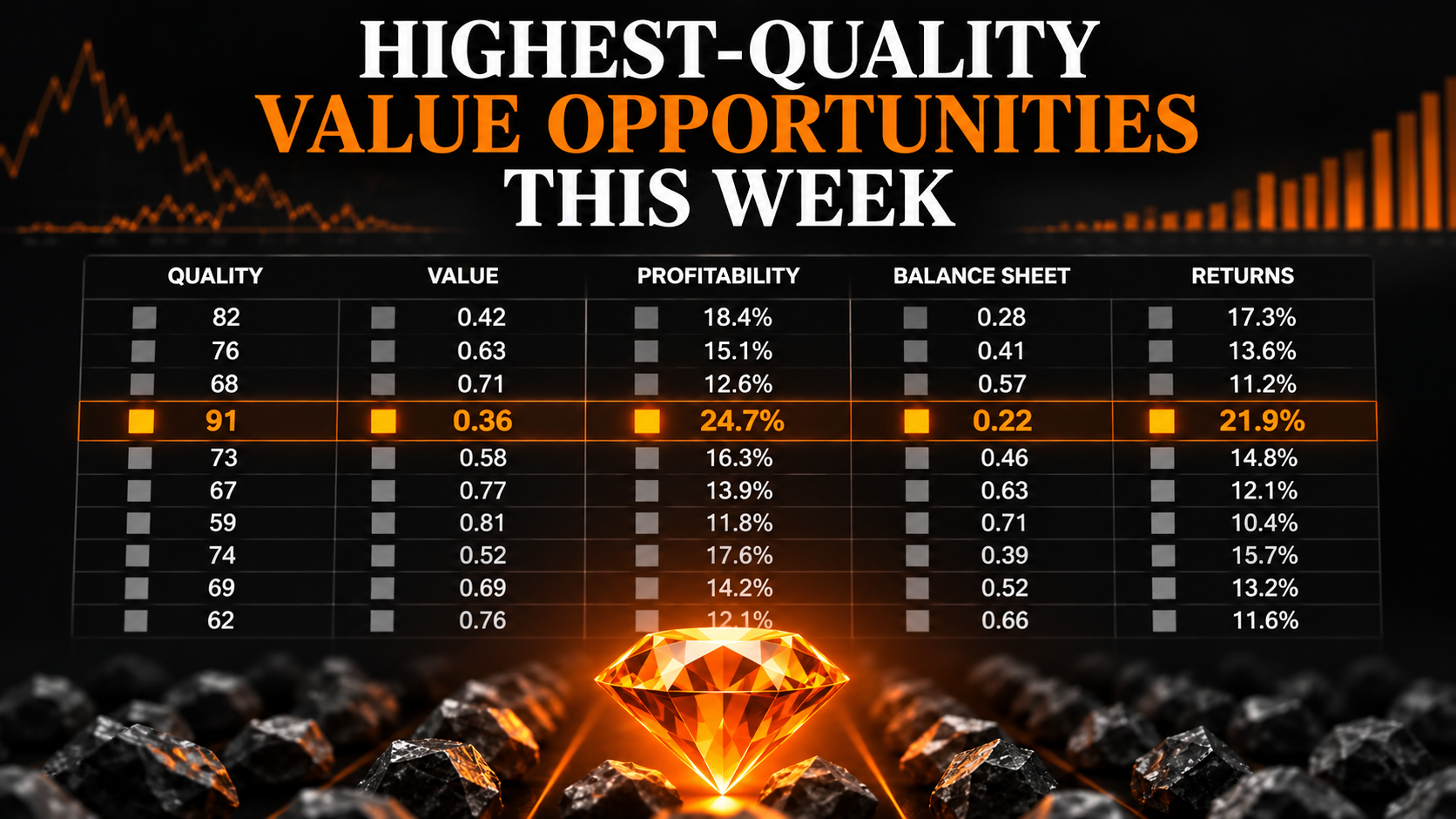 Where Are the Highest-Quality Value Opportunities This Week?
 Howden Joinery (HWDN): The Hidden UK Stock With a Competitive Advantage