Undervalued Stocks: Why Nike, Lululemon and Deckers Are Trading at Discounts
Wednesday, November 11, 2026
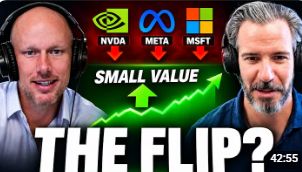
During their recent episode of the Value Options Podcast, Travis and Carlisle discussed Undervalued Stocks: Why Nike, Lululemon and Deckers Are Trading at Discounts. Here's an excerpt from the episode:
[Tobias]
But- I think you made an interesting point a little bit earlier when you said that you thought AGO was trading close to one of its lowest valuations ever. That's not... I think that AGO is particularly undervalued, but that's not unique to...
I sort of feel like there's vast swathes of the market that for whatever reason are trading as if they're in this terrible bear market. And it's lots of very high profile names that have had some extraordinary falls from like 80% off the peak. I'm thinking about something like Nike.
Every single one of the names that I mentioned, like Lululemon, Deckers, they're all... They have idiosyncratic problems. They have their own issues and that's the reason why they're down so much.
But it's such of... It's like there's so many of these companies with their own individual issues that it starts looking a little bit systemic, that there is this... And I think that part of it is that bifurcated market where you have the hyperscalers and those AI CapEx beneficiaries doing one thing.
And then everything else that's not those companies has got really, really cheap. And I looked across the portfolio and I thought my portfolios were as cheap as they were at the end of 22, except Q3, Q4 22, which was that... 22 was that bear market that there was never really any big sell-off.
It was just this grinding bear market that was just miserable every day for a whole year until right at the end of the year, everything looked pretty cheap. I thought the forward returns, even if we didn't have any multiple expansion at the end of 22 was sort of approaching 20%, which is in the portfolio, that's a huge return. I don't think we're quite at that level yet, but I think we're approaching high teens without any multiple expansion.
But then we saw October, there was a little bit of a turnaround. And then I think the hyperscalers stumbled a little bit. I've got no idea why the market decided to do that in October.
Maybe they were looking ahead to the election. What is the sandpile fall over?
[Tim]
Yeah. It's tough to say. I can tell you that I added aggressively to most of the hyperscalers, Meta, Google, Amazon.
I thought that they're extremely, extremely compelling. Google's cloud business grew by a hundred percent. They grew their revenues.
I mean, think of it, this is out in the net. That company is huge, 25% revenue growth. And you look at Meta too.
And I mean, Amazon is, I think there's not many companies I'd rather own than Amazon in the world. So I think that those are really compelling. And you mentioned, it's funny you mentioned the retailers.
So we just on the value options letter, we just sold, we just sold puts on Decker. I believe that was yesterday, Deckers. And like you said, there's idiosyncratic reasons.
So they've got, their big things are UGG and the Hoka. It's the Hoka, right? The shoes, the running shoes that are popular.
I don't wear them myself. But the growth on the running shoes has kind of slowed down a little bit. And so the market- It's still pretty good.
Still pretty good. Yeah. And so the market has some trepidation there, but the stock's trading at like 11 times earnings with a really good balance sheet.
And that's one of the benefits of using the put options. So you take advantage of that volatility from these stocks crashing from such substantial levels. And then you sell a put, you capture that attractive premium.
And like, for instance, we were put on a Lululemon put not long ago. And so I think we ended up owning the stock probably at a break even of like 96, 95, something like that. The strike was at 100.
And last I looked, Lululemon was trading at like 107. And so we actually did a covered call at 105. So that calls in the money, but that'll end, if that expires where it's at, that's a perfect scenario for that strategy.
That's called the wheel where you sell a put, you're exercised. So you keep that premium, then you end up owning the stock and then you sell a call and you benefit from the recovery. So, I mean, it's better in like an IRA or a qualified company where you don't have to worry about kind of the tax implications on that.
But definitely one of the things I like about options is that you can kind of take advantage of the volatility that's in there.
📈 Want to see how value investors Tobias Carlisle and Tim Travis use options trades?
See the actual cash-secured put and covered call trades Tobias Carlisle and Tim Travis send subscribers — with ongoing recommendations as positions develop through the Wheel strategy.
👉 Start your 7-day free trial.
Link in my channel profile or use the link below.
👉 https://valueoptionsletter.com/a/acquirers-multiple
Disclosure: This is an affiliate link. If you subscribe, I may earn a commission at no additional cost to you.
Educational content only. Not financial advice.
 Deep Value Investing: How Stock Buybacks Create Shareholder Returns
 Where Is the Deep Value in Canadian Stocks This Week?
 Watsco (WSO): Why HVAC Distribution Could Be a Long-Term Investment