Howard Marks: There Is No Asset That Is So Good That It Can’t Become Overpriced and Lethal
Wednesday, March 18, 2026 · Johnny Hopkins
Howard Marks’ latest Bloomberg interview reads like a reminder that uncertainty—not valuation—is now the defining feature of markets.
The host opens by highlighting a key distinction between technological potential and how markets price it, noting, “It’s not the same thing to say about the actual investments in A.I., that they’re not in a bubble.” That framing is important. For Marks, even the most transformative innovations do not automatically translate into sensible valuations—a pattern that has repeated across cycles.
His framework for decision-making remains rooted in probability rather than conviction. “One is a view of what’s going to happen, and the other is a view of the probability that you’re right.”
In today’s environment, that second component has become far more difficult to assess. As he puts it, “life under AI is a long… is one of the most unpredictable things I’ve ever contemplated.”
This uncertainty extends beyond technology into credit markets, where enthusiasm has once again compressed risk premiums. Marks is clear about the pattern: “Too many people want to do it. They’re too eager to do it. They compete for deals that bids down interest rates, that bids down safety.” The result is familiar—returns diminish precisely when participation peaks.
He returns repeatedly to cycles, not as abstract theory but as lived experience. “I’ve been around long enough to have seen many cycles of boom, bust, not economic boom, bust, boom, bust of an idea.”
What distinguishes these cycles is novelty. “It’s invariably something new… because it’s new, there’s never been a chance to see its flaws in action.” That observation applies as much to private credit as it does to artificial intelligence.
Marks also highlights a behavioral shift that should concern investors. “Great times encourage the desire to put money to work and discourage analysis.”
In those conditions, discipline erodes and is replaced by “skepticism and… FOMO takes their place.” When fear of missing out dominates, underwriting standards weaken and future problems are seeded.
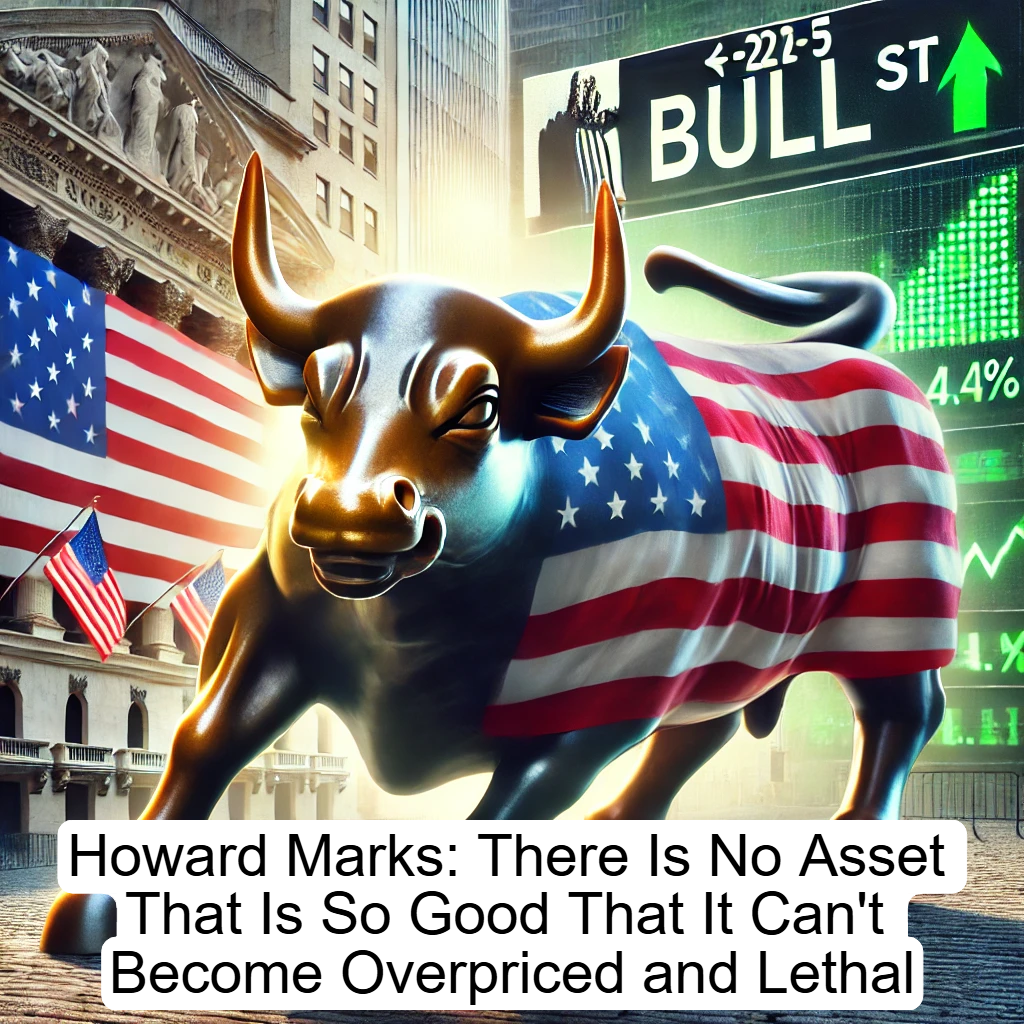
Yet his perspective is not bearish in a directional sense—it is cautious in a structural sense. “There is no asset that is so good that it can’t become overpriced and lethal.”
This principle underpins his reluctance to chase popular themes, even when their long-term potential is undeniable.
Perhaps the most striking takeaway is his view on forecasting itself. “We can depend less on on our expectations.” In a regime shaped by rapid technological change, traditional forecasting loses reliability. Even sophisticated tools offer limited comfort: “It doesn’t answer questions. It makes predictions.”
For investors, Marks’ message is less about what to buy and more about how to think. “When optimism and credulousness are in the ascendancy,” excess returns become harder to find. In such periods, restraint—not activity—may be the most valuable edge.
In the end, his stance is simple but demanding: remain cautious until conditions justify aggression. Or as his career has demonstrated, the real skill is not predicting the future, but recognizing when the odds are finally in your favor.
Full interview here: