Value Options: AI Can Change the World—and Still Crash the Market
Sunday, November 1, 2026
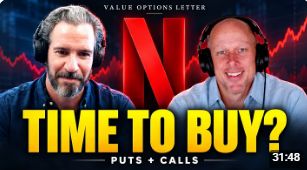
During their recent episode of the Value Options Podcast, Travis and Carlisle discussed:
AI Spending Boom: Are Big Tech Companies Taking on Too Much Debt?
AI Stock Market Bubble: Can the Technology Succeed While Stocks Crash?
The AI Singularity: How Artificial Intelligence Could Transform the Economy
Investing Beyond AI: Why Traditional Businesses Could Still Thrive
Netflix Stock Valuation: Is Netflix Undervalued Compared to YouTube?
TRANSCRIPT
[Tobias]
This is the value options letter. I'm Tobias Carlisle joined as always by Tim Travis. How are you, Tim?
[Tim]
I'm good, Toby. How are you doing?
[Tobias]
I'm well.
Been a nice little run back to value and the rest of the market this month in October, just as we're coming up on the end of October. I think a little bit of maybe concern with the hyperscalers and the capex spent there. I'm just interested to get your take on that.
AI Spending Boom: Are Big Tech Companies Taking on Too Much Debt?
[Tim]
Yeah, it's interesting because the financing was really done by their operating cash flows for quite some time. That's historically how they've been able to do it. They've also been able to buy back stock because they are such prodigious cash flow machines.
But because the capex expenditures are so large, we're talking hundreds and hundreds of billions of dollars, the debt markets have gotten a lot more expensive. Long-term Meta bonds or Oracle bonds might be 7% or 9% for Oracle. And then a company like Corweave is financing itself at 15% in the debt markets.
They've definitely been maxing out their debt capacities. They've been doing a lot of off-balance sheet financing vehicles, which are a whole other matter. And then now, Google did it a while ago when Berkshire bought into Google at about $330 when they did their large equity offering earlier in the year.
And Meta now is raising a lot of money. I think it's going to be close to $100 billion, if not more, when it's all said and done between this year and next year in equity. And so I think you have the stocks selling off a bit because they know that to finance this capex, it's coming to equity now.
It's not going to be just operating cash flow. It's not going to be just debt. So the valuations, I think, are getting pretty interesting if you're bullish on that capex ROIC.
[Tobias]
And what do you think?
[Tim]
I like them. I like most of them. I really do.
I think that Amazon's very compelling at the current valuations. Meta, very compelling. I think that they have a big, huge hit on Muse.
I use it for personal stuff and I think it's quite handy. I could totally see it being adopted by older users of Facebook and Instagram that might not be as comfortable and familiar with some of the other AI platforms. I just think that with their distribution network, they can get it out to a lot of people.
So I really like Meta's position. And I think Google's interesting. There's definitely headwinds, Toby.
For instance, Muse, when it shops, Amazon didn't give it access to the Amazon website. So if you shop on something on Muse, what was I looking for? I was looking for Halloween costumes for my daughter.
And it did all the other things except for Amazon. And for me, probably like you, I buy a lot of stuff on Amazon. It's just so much more practical.
They have your financial information. You know you're going to get it most likely. So they're doing that.
I wonder how some of these AI things are going to impact Google search. Obviously, this has been a theme for quite some time. But that's Google's beast, along with YouTube and stuff like that.
So you could see that it disrupts positions potentially, but they're still so strong. They're leaders and they're able to invest the most. And that's they're investing the most because they have to protect that competitive position.
[Tobias]
Yeah. It's going to be interesting when they all have to compete with each other. Still, I guess Amazon will always have the shopping.
Facebook and Google are all going to get a lot closer together. And I think they compete more directly with OpenAI and Anthropic. It's kind of interesting.
I think some of the stocks that have been big winners through this, Micron and SK Hynix and those kinds of names. The question is, are these cyclical as they have traditionally been in the past, where at the top of their cycle, they look cheap and at the bottom of their cycle, they look expensive. And so conversely, you want to be buying them when they look expensive and avoiding them when they look cheap.
So they're over-earning at the moment. Or if they're cyclical, they're over-earning, trading on a reasonably modest multiple. So perhaps not a good time to buy them.
AI Stock Market Bubble: Can the Technology Succeed While Stocks Crash?
But then the new theory is that AI is this secular growth engine that will always require more and more chips. And so these things are now secular growers. I don't know the answer to that question.
That's a hard question to answer right in the middle of it. What I do know is that they are the beneficiaries of that bullwhip effect where there's money spent by open AI and all of the hyperscalers are spending that money. And it's all going to the chip makers, Nvidia, all of those companies are doing really well.
And so it's flattering their earnings in the short term. Maybe it's secular, maybe it goes on forever. But the companies doing the spending don't currently have the revenue to meet that spending, which is why they're doing the capital raises.
So they either have to start generating revenues from this capex, which likely they can do that. Probably they can do that. I still think in the interim, it's so complex.
There's so much movement going on that it could easily be a early 2000s type scenario where the technology is real and it is going to grow in a secular way for decades potentially. But at the same time, you can still have a stock market crash in the middle. You can have companies' valuations come back.
A crash in this instance is just the biggest names going down because the biggest names are the entire market at the moment. You don't even need to have a crash, just some of those names coming back. I think that the mag seven are not overvalued.
There's lots of reasonable valuations and they look pretty good in there. But there are some of those names that are the beneficiaries of the capex spend. I think there's a lot of water to flow under that bridge yet.
We're going to find out where those businesses really are. I don't know the answer to that question. What do you think?
[Tim]
No, I would agree, Toby. I mean, look, a few years ago, like 2020, 2021, 2022, housing was in a boom. These companies such as Whirlpool or Home Depot and Lowe's and the cabinet makers and the faucet makers, their earnings were huge, Toby, just massive earnings per share and fantastic growth that allowed them to really build strong balance sheets.
You feel like, okay, well, they're little different businesses. They're not doing some of the same stuff that they did during the financial crisis, but then you get higher interest rates and the dynamic changes completely and the profitability could be because these aren't wide moat businesses in many senses, right? There's competitors.
You're not obligated to use one faucet company or something like that. And so, if the hyperscalers struggle to affordably raise capital at attractive prices that make it attainable for them to earn the return on invested capital that they need to earn on these massive spending projects, the rational thought would be, okay, well, that's going to reduce demand a little bit for the NVIDIAs and the Microns and you'd expect supply to pick up for those chips, especially with the hyperscalers having their own internal TPU chips, for instance, to more energy efficiently battle the GPUs of NVIDIA. So, I could easily see that if you get prices going down a little bit, a little less demand, a little more supply, how that historically has impacted commodity-type companies such as a Micron or an SK Hynix. Yeah, I mean, I think that there's a lot of vulnerability there and ultimately that might be good for the AI build-out because then it becomes a little more affordable and more sustainable.
Right now, it seems like we're at an inflexion point where it's not going to take long for people to realise that this is a little unsustainable. Meta can't afford to pay 9% debt, that's for sure, to do this and still subsidise Muse. I mean, they're losing a tonne of money just like Anthropic does with Clot.
They're losing a tonne of money on this stuff.
[Tobias]
In that competition, you got to prefer the more established players like Meta and Google, but Anthropic and OpenAI seem to have the lead at the moment. But I was curious, did you ever look at Anthropic's S1? For folks who don't know, that's the filing document that precedes the IPO.
It contains some of their financial information.
[Tim]
I saw part of it, yeah. I didn't read the whole thing, but I definitely looked at the summaries of it. Anything stick out to you particularly?
[Tobias]
Well, the big headline number is the $80 billion loss in the six months to June. That was very impressive. I haven't seen losses in that, like $80 billion loss and $16 billion in revenue.
I think the initial sort of shock of that loss, it's not quite as bad as it sounds because evidently, it's some accounting treatment of the conversion of the convertible notes into equity that creates that. So, they haven't spent $80 billion in the first six months, $16 billion of revenue. But gee, these are Star Wars numbers.
These are really, really big numbers.
[Tim]
It's a Star Wars game right now. I mean, the cash on the balance sheet was huge. So, they have a lot of cash.
They're going to do IPO, so they're going to have a heck of a lot more. They're in a great position. I mean, it's an impressive product, an impressive company, but they're spending a tonne of money.
And to play in this field, I mean, you really have to spend a lot of money. So, yeah, it sounds like they're going to beat OpenAI to the IPO market. And you know, what's the pricing power like?
I mean, if you're an OpenAI user or a cloud user, at what price would you switch over? I don't know.
[Tobias]
I mean, there's two questions about this. What is your capacity to spend on intelligence? And I don't know the answer to that either.
It's incredibly useful. I don't know if you'd call me a power user, but I've been using it pretty consistently for a few years now. And it's leaps and bounds ahead of where it was 12 months ago.
I looked at something I did 12 months ago using Claude and it's vastly more usable now, even in 12 months. So, give it five years or 10 years, it's going to be amazing. Replace me.
It's incredible.
[Tim]
And I've seen some people say that it's not improving productivity for a lot of employees and companies. And it's like, just wait, just wait. It's tough to find that many fields.
Now, if you're a welder or a plumber, that's a phenomenal field to be in, or in construction. Those are AI proof as of now. But yeah, a lot of the phone service providers and stuff like that.
I remember I got a refrigerator repaired and it's one of these big refrigerators that it's not easy to just replace. And I mean, they came like six times and the process would be like the repair guy would call the home office and get walked through what they're supposed to do. And it's just like, oh my gosh, imagine the waste of money.
And of course they could never fix it, just had to replace the whole thing anyways. But yeah, I mean, those service centres and things like that are highly vulnerable. So, I think the productivity is going to get better and better for sure.
[Tobias]
Yeah. I don't want to make it sound like I'm bearish on any of this stuff because I think that I can separate the pricing on the stock market of these things. And I think it gets a little bit ahead of itself.
Sometimes it gets a little bit behind and that volatility is just, you could expect these enormous changes that are going to happen to the economy. I just can't imagine how we get through it without some enormous volatility. But I like science fiction and I've been doing a lot of research.
The AI Singularity: How Artificial Intelligence Could Transform the Economy
I don't know if we talked about this last week, I've been talking about this for a little while, but the singularity is where you get to this point where everything changes so rapidly that all of the change starts happening at once. And the indications of the singularity, this is a thing that it's been in the science fiction since 1965, as far as I can tell. So, people have been thinking about this point in time for a long time, but it looks to me like we're almost, we're getting really close to what actually happening.
So, there was this guy, Good, who was a statistician. He wrote this short story about ultra intelligent machines, which I think is kind of funny given that Trump wants to call artificial intelligence, super intelligence, but he called them ultra intelligent machines. And that was the machine that could make a smarter machine.
And he imagined a computer, but clearly it's going to be the software AI. And once the software is improving itself, which if you listen to what Musk says, if you listen to what Sam Altman at OpenAI says, and if you listen to what Dario says at Anthropic, they're talking about, they are already doing that. And they're talking about that being like automated in the very, very near future, which that's Good's definition of the singularity.
And then Ving was this guy who, I think in the 90s or the late 80s, he said that it would be this point where once the machines are improving themselves, then you reach this point, which is the singularity. And some of the indications are like, all of these breakthroughs start happening faster and faster. And if you follow any of this stuff on, I just watch YouTube videos basically, but you can see they're solving these math problems that have been around for hundreds of years and doing it in a weird way.
They call it an alien sort of solution to this stuff because they combine these two things that no human would think to combine together. Although I think if a human had done it, and if you look at, if you're a fan of this stuff and you've gone back and looked at the way that they've solved these problems in the past, it's often been in a weird leap from one subject area of math to another subject area of math. And that combination together, if a human does it, it's like a brilliant insight.
If a computer does it, they call it alien. But I still think that we're close to this point where we build the last tool we'll ever have to build, which will be this AI. And then we're going to build robots that do the physical labour.
So, that's the singularity as far as I can tell.
[Tim]
That's a scary thought. That's when you better trust your leaders and stuff like that. But I won't get into that tangent, but yeah.
[Tobias]
They call that P-Doom, right? The probability of doom. Yeah.
Like 5% or 10%, which I think is a pretty high number.
[Tim]
Yeah. The reality is, is you're not going to stop AI. The only thing that maybe would, would be like an asteroid or something just truly catastrophic.
And so, it's kind of like, I'm not a big doom and gloom guy. I kind of utilise it for the best, hope for the best, and I have faith and stuff like that. But yeah, I mean, it's creating a lot of opportunity.
And look, I mean, I think if you were to talk a couple of years ago, you'd be saying without a doubt, the Googles, the Amazons, the Metas, I mean, these are some of the best businesses in the world and to be able to buy them at a high teens or low twenties earnings multiple is really attractive. I mean, that's a, I mean, Buffett was, Berkshire was buying at 330 on Google, you know, and, and that had had a nice run and it, you know, was down off of its highs. I mean, if you look at the, if you believe in the earnings are sustainable, like NVIDIA is cheap, the one that sticks out is Apple.
Apple's trading at, you know, really like what is 11, 11 times sales, something like that. Kind of like the 30.
[Tobias]
Why is it so expensive? And it's the least sort of AI.
[Tim]
It's interesting. I think, I think that's kind of why it's just that no matter what, I mean, no matter what they put out that a foldable phone and like, you know, a bunch of them cracked right away, I guess is what I heard. And it's not going to change anything.
I mean, you know, we talked about it, I think last week, if you try to buy your daughter a, you know, Android or something like that, they're, you know, they feel like they're not cool with their friends, which is crazy. It's such an old, it's like, I mean, when did it come out? Like 20 years ago?
I mean, it's been quite some time and for it to keep the so-called like cool vibe with it is interesting. I mean, that's good lasting power. Definitely beat the Walkman.
[Tobias]
I think one of the really interesting things about, I know I talked about this idea of the singularity and like that being a very significant kind of event and something that science fiction had been writing about for a long time, but equally like we have had these technological revolutions in the past. Maybe this is different in kind. I don't know, but electricity to every single household was like, that was a gigantic leap forward.
Automobiles, internet. I mean, exactly Toby.
[Tim]
There's a lot to it and there's going to be new jobs created by it. There's going to be a lot of jobs destroyed by it. So it's all not, you know, a zero event.
And then there's going to be external events, you know, wars, famines, whatever disease that, that can impact things too. I mean, right now it's, it's interesting to think about what this economy could be doing without the Iran war, without the Russia war, without, without that impact on energy prices, what could be occurring right now is just, I mean, it's, it's unbelievable to think about. There's so much potential that we're in a period where a lot of things are going okay.
And the stuff that's going bad is almost mostly a relation of high energy prices. Like you have the housing market, you know, that's in a, in a terrible state in terms of affordability and, and, and transaction sales. You know, almost every type of property investment is down.
So ultimately that's going to be good to reduce the supply overhang in some industries like apartments, for instance. But but yeah, I mean, it's, it's all data centres and AI, and now we're starting to get the first major headwinds, which is the cost of financing to that. And if we ever get a positive solution on the wars, that would be huge.
But I mean, it's been like this since what, 2021, when did the Ukraine, Russia war started? I mean, right after COVID pretty much, and it's just been a cluster with that stuff.
[Tobias]
We've seen some, a lot of weird things since 2020, really, because we went through the pandemic, which just totally reset the entire economy. And I still think we're feeling some of the, I think the housing market is still an overhang from that period, because rates got so low, people got locked into those low rates, means that they can't move out of the house that they're in, which means that houses that do trade, trade at very high prices, which locks out a huge portion of the population. So they're in this murderous revolutionary kind of, you know, rage, and they're looking at alternative political solutions, like socialism and communism, which is a scary thought.
I think that a resetting of, and you know, that I think that part of that is also why we're seeing such huge, what they call it, inequality, or the diffusion between the top end of the market, the K-shaped economy, as they call it, like the top end of the market, that the 1% that's incredibly wealthy and the teeming masses below that can't even get on the ladder, like that's not good for society. And I think a lot of that is a hangover from the stimulus and from just shutting the economy down for that period of time. 100%.
100%, Toby. Yeah. How long does it take to work its way out?
We're a long way beyond that now.
[Tim]
It doesn't look to me like it's anywhere near- Oh, and then, okay. And I mean, on that subject, if you have it to where you have robots doing stuff and the AI doing the software, I mean, there's a lot of useless eaters in the world to some people, to some psychotic people, if you want to look at the conspiracy things like that. So it doesn't seem like there's a mechanism that's going to bridge that gap between the haves and the have-nots in the near future.
So yeah, you should expect some types of change and radicalism, I would imagine.
[Tobias]
Well, if we're going to speculate a little bit, here's one. There's this very clear population collapse in lots of these developed countries around the world. South Korea, which has 40 million people at the moment, looks like they have 8 million in a generation.
China's in the same place. The US has not seen any of that population collapse because of immigration to the US, but that is this phenomenon in the developed world. And if you look back historically, it's not a nice thought, but the Black Plague, when it knocked over all of the people in Europe, that sort of transferred the power from the lords to the serfs, where finally they could get some value for their labour.
I think that China's plan is to build a whole lot of robots to fill in that gap, but I don't know. I don't know if that works.
[Tim]
Yeah. I mean, I think that that's going to be ultimately the plan for sure. I mean, I think when these big tech guys go on their islands and have their meetings, I think that that's probably the type of stuff that does get discussed while peons like you and I are doing these YouTube videos and talking shop, but they're the ones that seem to have the capabilities.
I feel like every year in my career, there's been people that would call in and just be like, look, I'm really worried that stuff's going to hit the fan. And how do we protect? How do we protect?
And almost always it has not been the thing to do. And so I think, look optimistically, I think that using the type of technology is a good idea, getting yourself acclimated. I remember I really regretted not being more into the internet when I was younger.
I didn't get into computer programming or anything like that. And so as a professional, I always felt a little bit behind, not that that's my industry, but I would have loved the capabilities to do that. Whereas now, I mean, it's just the greatest time to be an entrepreneur because everything's at your fingertips.
There's almost nothing you can't do and you don't need a massive budget. So I'm trying to focus on the positives.
[Tobias]
Well, that's right. That AI is very powerful, but it makes some of the moats for some of these businesses, it calls them into question. And I think you're going to see it across a whole lot of things.
And I don't want to speculate too much because, I mean, we've been doing a lot of it already, but in certain names, like in one sense, like a lot of stuff can change, but in another sense, probably less change. There's this meme that does the rounds on Twitter where nothing ever changes. That's the idea that whatever kind of big headline risk you're seeing, really not much changes.
And we've seen technological revolutions before and we've adapted to them and come out the other side. And I think that's probably what happens this time. That's sort of what I've been trying to work through.
Investing Beyond AI: Why Traditional Businesses Could Still Thrive
We're still going to need enormous amounts of energy and power. I mean, there are no rich, low energy nations. Every nation that gets richer on basically the fit to it is like one for one.
They need more and more power. And clearly the more technologically advanced, we're going to need more power. We're going to need oil and gas to get us to that point probably.
We need land, like all of these things that, all of these businesses that have existed for hundreds of years are going to continue to exist after the singularity or if we're right in it now, or if we're post-singularity now, all of that stuff is still going to exist. So it is possible to invest in the things that don't change, which is always Buffett's thesis, like what doesn't change? And so I think that we've discussed some of those kind of ideas.
Like I had Tim Melvin on the podcast yesterday and one of the stocks that he likes is Vichy Properties, which I know is one that you looked at before.
[Tim]
Yeah. Yeah. I mean, exactly.
I mean, people are still going to gamble and I mean, when you're the landlord and your tenants are strong, viable businesses, I mean, it's not like Caesars doesn't have the greatest balance sheet in the world, but the casinos are profitable and they cash flow well. The regional casinos, which are the ones that people are a little more worried about, they actually outdid Vegas in terms of growth last quarter. So yeah, I mean, look, there's such a dichotomy between commercial real estate valuations and what's going on in the residential housing market.
If you're a long-term bull on real estate, I think that you can find buys right now that, I mean, can make you a tonne of money over the next 10, 15, 20 years. But on a day when rates go up, like today, last time I checked, the Fed held steady, but two officials wanted to raise rates and yields were up a little bit, the REITs sell off. So you have to be willing to take some short-term pain, look stupid in the short term for the long-term benefits.
But absolutely, like that's something that is going to be there.
[Tobias]
You looked at Netflix at all?
Netflix Stock Valuation: Is Netflix Undervalued Compared to YouTube?
[Tim]
Yeah. Yeah. And on the value options letter, there's been some Netflix trades.
Toby, I remember years ago, I was on the value after hours podcast with you and Jake. And I remember talking about Netflix when it was trading at a pretty crazy valuation. And I remember saying, I think YouTube's worth a lot more than Netflix.
And my reasoning behind it was just that the content is so much cheaper to produce. You have so much more variety. And then with Netflix, you have the same thing that occurred with a lot of the major networks where you get a lot of political or weird storylines that don't really fit what people want to see necessarily.
It can almost be a little polarising. You don't have the same variety. You don't really have to sit down and watch those shows to enjoy them.
Whereas I know probably for you too, I'll be working and then I'd rather just have something like sports or business talk or podcasts like ours on in the background, so you can pick up the good points and stuff like that, but you're multitasking. So they've definitely not capitalised on some of the content they had. Stranger Things was such a great show.
Squid Games, they haven't had that blockbuster hit recently. It's been a few singles. You think a big blockbuster brings them back?
Is that what they need? No, I don't think that's it. I think that they need some more change.
I don't know. The live programming I think is helpful in keeping people subscribed, but I think they need a few hits. They definitely need to get back to it.
I remember when I started watching Netflix, I liked a lot of their international stuff. They had really cool shows in Italy. I love this Italian mafia show called Gamora.
It's my favourite show. That was so good. There was another one called Sabura.
They had some good German ones. And I haven't seen as much of that stuff. I feel like that's on other networks more so now.
And now it's just kind of different, a lot of similar type stuff. They have a lot of documentaries that I feel like I've already seen, like Mike Tyson and stuff. I've already seen that stuff, The Last Dance.
But I think their valuation is pretty attractive, Toby. I think that at this price, I think they can get back on content. I don't think that they've lost their edge there as far as their ability to put out good stuff.
They need a Taylor Sheridan type guy to just put out some bangers. That guy's killed it for Paramount.
[Tobias]
Yeah. When they crush it, they seem to be able to do a lot of political stuff that doesn't seem to have a really big market behind it. But I wonder if when they get a little bit squeezed and they start becoming a little bit more commercial and start producing stuff that's mass appeal, I suspect that's what's going to happen.
They'll have to get a little bit more commercial in any sense with a little bit of a broader distribution. But I agree with you. I think that valuation is getting sort of interesting here.
I think free cash flow last time was like 4%, which is, that's a little bit below the 10-year, but it's still got pretty good growth in it. So it probably grows beyond that. And the last time it was at this level was like 2011, maybe.
And it's clearly had a whole lot of growth since then. And that doesn't have that much growth in front of it now. But I still think that it's probably growing faster than GDP for a long period of time.
Pretty good cash flow yield here. Problems are fixable. And it's a pretty high return business.
So it's one of those things that I don't have a position in it, but I think it's an interesting stock to consider. But I agree with you, they're big risk. And certainly the main competitor for my time is YouTube.
I would much rather watch YouTube because it can go so much narrower and deeper on your own interests rather than sort of the very broad slop factory that Netflix serves up.
[Tim]
Yeah. I know. My youngest daughter is seven.
I mean, it's easy to get her. I mean, she'll love watching YouTube and she doesn't go on TikTok yet, thankfully, but she doesn't really like sitting down and just watching Netflix. And she likes some Disney stuff, but yeah, I mean, she loves the YouTube stuff and it's probably not the best thing for her.
But I just think there's so much variety. I'm on it all the time too in the background. I mean, I've never watched CNBC or Bloomberg anymore.
I feel like it's very negative and it's not a good energy source. And options are good on Netflix. So we've had some trades in the value options letter.
So the puts have pretty good premium because the stock has been quite volatile. And then that's why I like that wheel strategy where if you get exercise, you can do covered calls on it. And so then on a stock like Netflix, which I don't believe pays a dividend.
If it does, it's almost nothing. You can protect some upside on that stock, but also collect the premium from the covered call.
[Tobias]
So it's a good- No dividend, but a little bit of a buyback going on, which I think is the more efficient way of doing it. I think that's all for this week, Tim. Any final words?
[Tim]
No. Let's hope that the month finishes off strong and I hope everyone has a safe Halloween and enjoys themselves and looking forward to next week, Toby.
[Tobias]
Good one. Thanks, guys. We'll see you next week.
📈 Want to see how value investors Tobias Carlisle and Tim Travis use options trades?
See the actual cash-secured put and covered call trades Tobias Carlisle and Tim Travis send subscribers — with ongoing recommendations as positions develop through the Wheel strategy.
👉 Start your 7-day free trial.
Link in my channel profile or use the link below.
👉 https://valueoptionsletter.com/a/acquirers-multiple
Disclosure: This is an affiliate link. If you subscribe, I may earn a commission at no additional cost to you.
Educational content only. Not financial advice.