VALUE: After Hours (S08 E40): Raoul Pal: "Economic History Is Over." The Exponential Age Has Begun
Sunday, November 29, 2026 · john hopkins
This week's cheapest large cap: Equinor ASA (EQNR), 2.5×.See all 30 free →
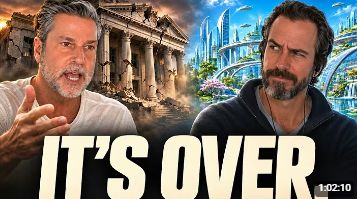
During their recent episode, Tobias Carlisle and Raoul Pal discussed:
Raoul Pal’s Everything Code: How Debt and Currency Debasement Drive Markets
How AI and Robotics Could Transform Investing
Bitcoin vs Fiat Currency: Digital Scarcity
Bitcoin, Ethereum and Zcash: How to Value Cryptocurrency and Blockchain Networks
Investing Lessons From George Soros, Stanley Druckenmiller and Paul Tudor Jones
The AI Exponential Age: Economic History Is Over
TRANSCRIPT
[Tobias]
This is Value After Hours. I'm Tobias Carlisle, joined by Raoul Pal, founder of Real Vision. He's got a new book coming out called The Everything Code.
Welcome, Raoul. How are you?
[Raoul]
Great, thank you. Good to be here.
[Tobias]
Looking forward to this. Tell me a little bit, first of all, about you and your background.
[Raoul]
Okay. So, I worked in finance. I've been a macro guy for the last 35 years.
So, I started in investment banking back in 1990. I worked for Goldman, where I started and ran the hedge fund sales business in equities and equity derivatives, where I'd spent, and I focused on macro, really. That was my love.
And so, I spent every day speaking to Paul Tudor Jones and Stan Druckenmiller and Louis Bacon and George Soros and Scott Besant, and, you know, you name them, that was my life. I then, in 2001, decided to go across to the dark side and started and ran the Global Macro Hedge Fund for GLG Partners, who at the time were the largest hedge fund firm in Europe. Ran that for a few years and then opted out of the rat race and moved to the Mediterranean coast of Spain, where I started writing macro research, Global Macro Investor, which I still write today, 21 years later.
In that journey, I managed to get the financial crisis really right back in 2008 and the European sovereign crisis in 2012. And that was also part of the journey where people came up to me in the street and said, why didn't we know what was going to happen? I was living in Spain.
I mean, we almost lost the entire banking system. Cyprus had taken all of the money out of people's accounts. And the financial crisis showed that nobody knew who owned anything.
So, people came to me and said, well, why didn't we know what was going on? I thought, I need to do something about this. And that was the start of Real Vision.
So, I had that idea in my head that I wanted to do something. And we had the crazy idea of video content, which nobody was doing. It was like cat videos on YouTube at the time.
I think it was about the same time Netflix launched. I mean, it just was so new. We'd never made a video, but we started the long form video finance podcast of which now there's a gazillion of them, but we were the very first in the world to do that.
Also, as part of that journey, I tried to set up the world's safest bank because I realised how fucked everything was. And I went on a journey around the world trying to do that. And we eventually settled on a Texas trust bank.
And the idea was to hold just deposits directly at the Federal Reserve, at the local Federal Reserve, and then non-fractional reserve bank. We thought, well, that's what the world needs, somewhere where your money can't disappear because it's been lent out. And so, we went to the Dallas Fed.
We had the ex-chairman of the FDIC as the chairman of the bank. We had a serious team. And the Dallas Fed at the time said, this is such a good idea.
It's so needed. It's exactly what people want. And we were like, fantastic.
He's like, I'll never give you a licence and nor will anybody else.
[Tobias]
Why was that?
[Raoul]
He said, you're going to take all the deposits from the banking system. And so then I wrote about it in GMI. And somebody came back and said, you need to take a closer look at Bitcoin, which I'd written a little bit about.
So then I wrote the first ever macro strategy piece on Bitcoin back in 2013 and started in the crypto journey when it was $200 at the time, I think. And that's all been part of this whole journey. Then, so yeah, I started Real Vision in 2014, also built an asset management firm, Exponential Age Asset Management, which is a crypto asset management firm with a directional fund of funds, market neutral fund of funds, and soon to come, a digital art fund.
I can't remember what else I do, but quite a lot.
[Tobias]
Well, you've written a book too.
[Raoul]
And I've written a book as well.
[Tobias]
Let's talk a little bit about the Everything Code.
Raoul Pal’s Everything Code: How Debt and Currency Debasement Drive Markets
[Raoul]
So the book is really this story. It's the story of when I was back in, when I was at Goldman, I was one of the sort of pioneers of business cycle analysis, using the ISM survey to figure out how economies work and realising how cyclical they were. I'd also stumbled across work on demographics.
And I started to look at the peak population growth in the US. And I had been following Japan closely because I was a macro guy. And I thought, this looks very similar, but just delayed by about 10 years.
And so that was around the late 90s. And I started overlaying the chart of demographics with stuff like inflation and economic growth and stuff. And I started formulating a plan from that.
Eventually, as it all, when I launched GMI in 2005, I think the first piece I ever wrote was called Debt Demographics and Deflation. And that was the basic view, is like, we've got too much debt, an ageing population, we won't have enough growth, it's going to be a big deflationary trend. And deflationary trends tend to blow up debt.
And so that was the framework I used. But over time, I started realising, okay, this was actually much bigger. And it wasn't really until 2020, when it all came into place.
Because 2008, they kind of stopped the world ending. And they did it via this very technical term, quantitative easing, of which I didn't really understand at the time. And then Draghi came out with everything, whatever it takes, which was the same thing.
And basically, it took me, because I was a cynical macro guy, it took me until 2020, to really realise that what they were doing was debasing the currency. And what happens is, in a debt deflation, or a credit crisis, it's the value of collateral that falls, and therefore calls on the loan, and the whole thing falls apart because the collateral gets liquidated. And what they were doing was devaluing the purchasing power of the fiat currency.
So therefore, optically, the assets don't go down. And once you see that trick, first, we could all see that relationship between the Fed balance sheet and markets. But we're like, is this a spurious correlation?
I don't really understand it. And we're always looking for the next blow up. 2020 taught me everything.
It was like, they shut the entire world down for a year, everything. And the market went down for one quarter, and we had a one quarter recession. I was like, OK, they've somehow removed the entire left tail.
That whole economic collapse thing can't happen. So I started realising what was going on. And I realised also that the economy had become perfectly cyclical.
So I've been following economic cycles, and they were longer and shorter. But after 2008, they'd started being every four years. I'm like, this is bloody odd.
And so I figured it out. It was the debt refinancing cycle. Because in 2008, they basically had a debt jubilee and forgave all interest payments so they could service the debt.
That's really what zero interest rates were. It was like, OK, we're all in too much trouble here. Nobody can afford to pay the interest.
Let's just stop all of that and get ourselves sorted out. And everybody reset their debts in the three to five year sector. So what happens is every time you get to the debt rollover, they increase liquidity by printing money through whichever mechanism they choose.
It was the balance sheet for a while, now it's the banking system. And then once they get through the rollover, they slow down liquidity again. The market slows down, the economy slows down.
But we weren't getting recessions either apart from 2020. And you can see that because 2022, when you put interest rates up, we didn't get a recession. That's a big signal.
That's never happened in history. So something structurally changed. And this was when I realised this whole thing was the everything code.
It actually becomes somewhat forecastable because you can understand how cyclical it is. You know what's driving it. You know the debasement of currency is about 8% a year on a globalised basis.
That's your hurdle rate for all investments. Now, if you add in 3% inflation, so if you add the S&P 500, that does about 13% returns. Doesn't really make you any money.
And once you realise the debasement of currency, you suddenly realise why nobody's wages allow them to buy a house. Why? Because houses are scarce assets.
So when you lower the denominator, the value goes up. Wages, like earnings, only grow with GDP. So you've got 11% growth here and a 2.5% growth here. So this gap keeps getting wider. Every five years, it's gone 50% against you. And then it's like, oh, I get it now.
This is why price earnings keep going up on equities. It's all the same process. And once you see it, you can't unsee it.
You understand what the issue is. So then you start looking at, OK, well, what beats the debasement? Well, there's only two assets in the entire world that do on a consistent basis, again, over time.
One is crypto, and one is technology, because they're both kind of adoption curves. And so once you realise that, you're kind of liberated from understanding what this is, how you can use it to your advantage, what's going on. And that then pushed me through the understanding of, I started writing about the exponential age in about 2021, which I was saying that I thought all of these curves are going to go exponential, which we're clearly living in the middle of now, the most ludicrous time to be alive.
And then also into where this is going, which I call the economic singularity. So the book is that whole story told in a way that helps people understand why we got here, that it was an ageing population, because the entire GDP growth is basically driven by three factors, population growth, productivity growth, and debt growth. So when you've got population slowing or ageing, the productivity goes down.
Makes sense. Older people are less productive. And so they increase debt growth to keep economic growth.
And when you invert the chart of US debt to GDP, it's identical to the labour force participation rate, identical. And then you see the whole game. It's like, oh, OK, the whole thing has been keeping this thing afloat with an ageing population, using the debt, and then servicing the debt.
And so it helps you understand why we got here, that it was actually a fault of World War II more than anything else, because of the baby boom generation.
[Tobias]
You think that's the pig going through the python, and we're sort of on that downward side of that. Does it then normalise at some point?
[Raoul]
No. So population growth, look, is already negative in pretty much every country in Europe. It's negative in most of Southeast Asia, South Korea, Singapore, Japan, China, everywhere.
US is not negative, but it's almost flat. But you extrapolate forwards, because you've already got the births, deaths today, so you know what the population is going to be in 30 years' time. The only swing factor is immigration.
They tried that in 2024, which was the largest immigration rate in the history of Australia, Canada, the US, Germany, France, everybody. They managed it for, I think, 18 months before the political system said, no, sorry. So there's no way of solving this problem.
There's no way of solving the growth, and you've got all of the debt. So you have to keep debasing your currency. Or, and this is where we're going, or you have a productivity miracle.
And then suddenly, here comes AI and the robots. And it's like, oh, this is going to break the entire magic formula, because now population can be infinite.
[Tobias]
Yes, because of the robots and AI.
[Raoul]
That's right. And then how productive are they? And then it goes into, and this is the economic singularity point, it's like, well, how the fuck do we measure this stuff?
It's a machine economy, a machine to machine economy. We don't even know it's operating. What is this?
What is a corporation at this point? If you think about setting up a business, it's a nightmare. You've got the legal stuff, the accounting stuff.
You've got to employ people. Just the cost and friction of doing that. An agent doesn't have any of that.
It can build a business tomorrow and close it down in six weeks' time once it's captured an economic opportunity. And it can raise capital via stuff like crypto markets instantly. So you've got, oh, OK, so how do companies work?
How does this all work anymore? How does us as investors work? What, we think we're going to be smarter than something solving the Ryman hypothesis?
No, it's just not going to happen. So therefore, we're going to be much less efficient at investing. So how does that work for us?
What does it mean? I don't know. But by 2030, that's where we're going to be.
So it's kind of planning for that and then thinking about, OK, what does it mean to be human and how do we go through that whole process?
[Tobias]
I'm very sympathetic to this view. I sort of have reached many of these conclusions on my own. So I'm sort of interested to hear, where do we go?
What's the solution?
How AI and Robotics Could Transform Investing
[Raoul]
So as I say, we've basically got four years to unfuck your future right now. Because after that, I just don't know anymore. And we've got to be honest about ourselves.
We don't know. Nobody knows what the world's going to look like. So the four years now, we can invest in our own demise.
I put it that way because it's like, if you're worried about the robots and the AI coming for your job, well, you might as well just invest in them because they're scaling faster, exponential growth rates, all of this stuff. When we get through to the other side, what holds value and what doesn't? Well, in a world of abundance that comes over time, not immediately by 2030, but a lot of things lose value entirely.
Some things don't. And so I think, OK, what is the obvious bet? Are the big hyperscalers going to be still investable beyond that?
I don't really know, probably, but I really don't know. But I know that, for example, if agents are going to be as economic participants, then blockchain will be the infrastructure substrate for economic activity. And we're seeing that already because agents are going to be investing in equities, equities go on chain, the whole process becomes 24-7 at machine speed.
The world is currently set up for carbon speed. All intelligence we've ever known is carbon-based. We've switched substrates to silicon.
Silicon is a million times faster than carbon. We can't deal with this, but that's why we need the new infrastructure. And it's kind of being built in front of our eyes.
So I think that's investable over time. It's like a global homogenous utility that everybody can own a bit of, and it's fractionizable, a blockchain, Ethereum, Solana, whatever it may be. OK, that's interesting.
Then it's like what else holds value? Well, humans are humans. The only thing that we can do that an AI can't is be human.
And you think, OK, that sounds a bit ridiculous. But just look at human experiences and the cost and value of them. Look at owning a sports team.
It is doing this every year. Music tours. Taylor Swift's tour was so big that the Royal Bank of Australia, the Bank of England, the Central Bank of Singapore, and the Fed talked about the Taylor Swift effect.
Music tours are massive. Why? Because they're human experiences.
She doesn't make money out of music sold, even though she's the biggest streaming artist in the world, because anything that can be digitised goes to zero in value, because you can produce infinite amounts of it. So the tour becomes the scarcity, the scarce human experience. Then you look at something like chess.
No human has ever beaten a computer at chess in the last 35 years. Chess is the largest the industry's ever been, because we like to watch. So there are signals everywhere.
Look at the tourism industry. It just doesn't stop. It doesn't stop, because humans want experiences.
So once you realise, OK, there's a massive role for humans in this, because humans have a currency which is very human, which is attention. That's our currency. We'd love at the top of the pile of the most valuable attention, but attention is what we do.
What is this? This is just attention. We've got individual attention of you and I, but we've also got other people watching it.
So that's what we value. And so that will be a premium experience, and we will pay for it. So humans have their own ability to do stuff.
Stuff like culture has huge value in humans. And that's one of the reasons I collect a lot of digital art, blockchain-based digital art, NFTs, because we're going through the largest change in the history of humanity, and the art of those times is going to be valuable.
[Tobias]
Just talk to me a little bit more about how crypto fits into this world. Why can't it be fiat currencies?
[Raoul]
So firstly, fiat currency is not a 24-hour world. So a 24-hour world in fiat currency, you need credit cards, because if not, the banks actually close on weekends. So the FX markets are closed.
I mean, the world's biggest market closes every weekend. So machines, machines move at a speed that credit card payments can't transact, and they cost too much versus machine micropayments. So if an agent is having to pay for compute or a small amount of data or an MCP connector, whatever it may be, they're often micropayments.
Credit cards just don't function for that. The whole process is too expensive. Equities, equities trade a few hours a day, five days a week.
But crypto trades 24 hours a day, seven days a week, and at extreme velocity, and has been battle tested that way, which is why all equity markets and most asset markets are going on chain. It's faster, cheaper, more efficient. But it also is exactly what the agents need, because they're going to be running our portfolios.
To go to the point we said before is they're going to be better at us at doing this, and this is a much faster way of doing it. Right now to operate at that speed, the high frequency trading firms have had to have fibre optic cables and been right next to the exchange. But this changes all of that.
So you've got something that can operate at silicon speed and not carbon speed. And it works 24 hours a day, seven days a week, and can be used for everything. What else does it get used for?
Agent identity. You need to permission your agent and what it's able to do and what it can't do. Right now, you kind of tell Claude, hey, you're not allowed to spend more than 100 bucks on my credit card, but go and buy my mother some flowers and get them delivered.
You can do that pretty easily. Problem is, is you can't actually control that. You have to hope it listens to the rules.
But with blockchain based permissioning, then it becomes a straightforward smart contract. Does it agree with what the action is doing? If not, reject.
There's no decision to be made. It's written into the smart contract. Also, we have another issue is right now, here's you and I on a Zoom.
We are already seeing the first AI versions of you and I in real time that can work on a Zoom call that can see each other's faces and expressions. Okay, we're so fucked. So fucked.
And I've been explaining this for a while. In fact, for like six years now, I've been telling people this moment's coming and it's pretty much here now. The only way of dealing with that is digital identity.
And so you have in crypto something called the zero knowledge proof, which allows you to confirm your identity without revealing it. Meaning I can confirm my passport, driver's licence, anything else, but it's kind of hidden, but it's confirmed. So that allows us to know who's human, who's an agent, all of these things that are going to need to get solved.
So blockchain does a lot of this stuff. And at its simplest level, outside of being a ledger system and a recorded ownership layer, all of that stuff, it's also in a world where anything digital goes to zero in value, it creates digital scarcity. And people don't understand this kind of stuff yet, but this is why the piece of art by Beeple every day is sold in 2021 is the most expensive piece of block space ever sold at $69 million, because you've created digital scarcity.
And that's a profound thing of which we don't even really know what that's going to mean yet, but it means a lot. So that's why to me, it's pretty obvious that this is just a substrate, a utility layer on which a lot of this has to get built on.
[Tobias]
Let's say I am sympathetic to that idea. Can I separate out the utility of blockchain from crypto coins that trade? So if I want to participate, do I have to own a coin or is there some other way that I can get equity in the exchange?
Describe it to me, like I don't understand what's happening because I don't.
[Raoul]
So a token is just a participation unit in that network. You need to use tokens to pay fees, to move money around or to store things. So it's the native currency of that network.
Like the Australian dollar is in Australia, the US dollar, just think of it like that, it's a country, it's an economy. To access the economy, you have to use their local currency. But it also acts like a share, even though it is not a share.
Because the more demand you have for block space or for building within that economy, the more the currency goes up because people are using it, storing it, etc. So what happens is it perfectly mirrors Metcalfe's law. And Metcalfe's law is how you value networks.
And it's basically the number of users in the and the total value transacted on the network. That's really how it is. And the token actually represents that.
So if you think about it, what does it mean for us? It means, okay, if Raoul's right that this is the sort of infrastructure layer, this is the internet all over again, but we can own part of it. So it becomes like a universal basic equity for those of us who invest in it, because as the agents do these economic transactions of which we don't see, they're doing them on a network of which we can own part of.
So that's kind of very interesting. You know, back in the day, for example, British Telecom privatised their shares. And it was the only telco network in the UK and everybody participated in it.
And it's the same idea. It was a network. So that's why tokens have value, because they're used within the network, you have to pay fees in the network, you have to pay for block space in the network.
They also therefore value the block space in the network, because if there's a lot of demand for it, then it's harder to get hold of a token. If there's a lot of demand for it, then people tend to hoard the tokens, because they become a store of value. And you can use them for future use.
So just kind of a very perfect capitalist way of allocating resources across a large network.
[Tobias]
One of the reasons that I ask is that I'm predominantly an equity investor, almost exclusively an equity investor, some equity derivatives. I struggle a little bit with Bitcoin or any of the cryptos, because to my mind, they're currencies. And before the crypto existed, I would look at currencies and think, I have no way of knowing which direction one currency is going against another currency.
And I know that there are traders, famously, who make lots of money on those positions. But I don't have any idea. How does anyone get a view about which currency is going?
Bitcoin vs Fiat Currency: Digital Scarcity
[Raoul]
Really simple. Every currency really should be a function of supply and demand. And that could be because of interest rate differentials.
It can be because more people want to move to that country, build businesses in that country, buy equities in that country, et cetera. But countries have a little trick. It's called printing of money.
So if you've got an inflation rate of the creation of money, more than demand, the currency goes down. That's the standard issue with currencies. Bitcoin was built for exactly this, which is it can only ever be 21 million.
So in which case, you have a defined supply currency. So therefore, demand and supply matches, because you can't access supply. There's excess supply when the market doesn't want it as much.
It goes up and down with cycles and economic movements and all the things it should do. But it can't be influenced by a third party in that particular methodology, which is the weakness of currencies, because they debase your value of your savings over time. So that's why they're super interesting.
And that's why they tend to hold value better over time.
[Tobias]
There was a chart doing the rounds on Twitter a few weeks ago that showed, and I've shared a book about this as well, but it showed for 200 years until the beginning of the 19th century, we were on a gold standard and prices were largely deflationary over that period of time. And it was a period of largely peace and prosperity. And the argument of the gold, the folks who like the gold standard, is the gold standard is responsible for that.
It makes it hard to go to war. You have to tax people directly. Wars become very unpopular very quickly.
[Raoul]
That's total bullshit, right? You don't think so? It's total bullshit.
Go back 200 years, the fucking pirates here in the Caribbean, the French, the Dutch, the Spanish, the Portuguese, and the British were all fighting over this. And they were stealing each other's gold. The Spanish essentially raped South America, stole all of the gold, and then created a massive deflationary bust when they brought it back to Spain.
None of that's true. There was more war at that period of time than there's ever been probably. So it's like this false god that gets worshipped by the gold people.
And we had deflationary busts. We had inflationary periods, less inflation created by monetary inflation, but still supply and demand inflation. So economies that grow fast, that attract capital and attract people, prices still rise.
Why? Because there's more demand than there is supply. So it's simply not true.
But it does stop the most egregious debasement of currency. But you can find more gold. So gold was restricted by the technology of the ability to get it out of the ground until you discover the Americas.
And they've got shit tonnes of it. So then you steal all of that, and the value of gold plummets because you've discovered 20% more gold than you ever thought existed. So it was not perfect.
It helped, but it wasn't perfect. And everyone kept leaving the gold standard. Britain left it a couple of times.
The US left it. Everyone kept leaving it because they would have a debt deflation because they'd still got debts. So people look back with this fond period like it was a golden age.
It simply wasn't true.
[Tobias]
I guess the point that I was trying to make is simply that if you take the ability to deflate the currency away from the government, then you get a better outcome. So the question that I was going to ask was, you know, gold is sort of an arbitrary. I know the gold bugs have lots of arguments for why we use gold, but it's a somewhat of an arbitrary choice to use gold, which depends on- It's a social consensus.
When you pull it out of the ground, where you find it in the ground, it's sort of a little bit random. Most gold mines are non-economic. And crypto seems to be a little bit more.
If you crypto seems like a more sensible, more flexible sort of technological approach to it. But then the natural question is, why do you see Bitcoin like it's halved or something over the last year or so?
[Raoul]
Okay. So in crypto, there is store of value cryptocurrencies, Bitcoin being the king. Then there's these layer one programmable smart contracts.
That's technology. So let's leave all of that separate. That's a whole different discussion.
That's the network thing. Bitcoin is the 21 million. Nothing could ever, you can't ever change the supply.
So therefore it's a function of market supply and demand. It's faster, cheaper to use than gold. It has some issues.
It's not very private. Everybody can see everything that happens on the blockchain. You know, that's why when you speak to family offices who own a decent amount of gold, they'll usually have it in three different centres.
And, you know, there's ways of keeping your wealth away from confiscation by state. But Bitcoin is very fast, efficient, cheap. So it goes up and down based on it is the longest duration asset that exists.
Bitcoin has no cash flow. So it's a super long duration asset. And so therefore inflation, economic growth, liquidity, just wags the tail more than it wags the dog.
It's as simple as that. It's exactly the same process you see in equity markets. Technology stocks are more volatile than the S&P 500, which is more volatile than, you know, utility stocks, which are more volatile than fixed income.
It's just the risk curve. So it's the furthest out of the risk curve. And so it has these wild swings.
Why has it gone up? I don't know, what's it got, up 12 million percent since it came out? I mean, stupid.
Why does it have a CAGR of 140 percent over time? It's because it's a network that's being adopted. So we're gaining social consensus that this is a store of value.
We're earlier in that journey. But yes, we're seeing central banks and sovereign wealth funds and family offices and now ETF. So we're just up the adoption curve.
And the first parts of the adoption curve see high rates of returns. Over time, it flattens out as it becomes a larger percentage of world savings. So the volatility is a function of where we are in the adoption curve, the duration of the asset itself, and then the economic environment it's in.
[Tobias]
Do you have a view on whether it's just where the fair value is? What a good price is for Bitcoin at any point in time? Is there any way you can figure that out as an outside observer?
[Raoul]
There's lots of ways you can look at it. And there's lots of different valuation models, like what does it cost to mine? What is the average cost of each token over the last five years?
There's a bunch of ways you can look at it. I tend to simplify everything down to its simplest idiot-proof path, is when you look at any tech adoption model, they're all log regression channels. Google, Microsoft, Amazon, Apple, I mean, every single one of them, including the Nasdaq itself, is just in this lovely log regression channel.
And it never changes. It's like it's bizarre. It's because it's technological adoption.
Well, Bitcoin does the same. It's just a very clear log regression channel. So you can see when it's one standard deviation overbought, oversold, two standard deviations overbought.
And Bitcoin basically trades within two standard deviations overbought and two standard deviations oversold. Because it's a volatile asset, its average volatility over time is something like 70%. Well, those standard deviations are pretty big, which is why we get wild price swings, which is more than Amazon is now.
But Amazon in its early day was almost equally as volatile, because we didn't know whether Amazon itself, remember, Amazon back in 2012, 13, 14 had a P of 800. And us macro bears would be saying, this is a joke. They just sell fucking books.
And now they're trying to sell other stuff. It's a low margin. Why would you own this apart from, why would you not own Walmart?
All of the stuff that we argued. And what it was, was a tech adoption model, and one of the greatest ones of all time. And volatility goes down over time, because it reaches maturity and less risk.
[Tobias]
What about among crypto? Do you have a view about Ethereum or Zcash or sort of the relative utility of different coins?
Bitcoin, Ethereum and Zcash: How to Value Cryptocurrency and Blockchain Networks
[Raoul]
Yeah. So if you take Zcash, it's the only potential competitor to Bitcoin as a store of value. It's identically built.
So you have to have compute to do this proof of work, you know, complicated compute. So it's expensive to mine. It has 21 million tokens.
It's essentially a carbon copy of Bitcoin, except two things. One, it has an inbuilt privacy. So you have what is called a pool, which is shielded.
So it's like if you put your money into a bank, you can see the money going in. You can't see what happens in the bank. And then you can see it coming back out again.
Well, once you've got a pool of enough people with different size payments, it gets hidden because you can't tell what's what. That's how Zcash works. Additionally, because it's newer and it's less stubborn, they have started working on quantum proofing and stuff like that.
So, okay, that's interesting. So right now, people are saying, I don't know what the value of Zcash is versus Bitcoin in total market cap. Maybe it's less than 1%.
What is the fair value of a private currency that's very similar to Bitcoin? Considering privacy is not something everybody wants or needs and, you know, governments won't like some of it, et cetera. I don't know, 10%.
So that's the basic investment case for Zcash. It's pretty straightforward. Private money as a percentage of total digital money has some value.
Everything else is a smart contract. And smart contract is wildly different than a store of value. Smart contract is a programmable database, which can be used for all sorts of things.
And the programmability of this makes it useful for almost anything, whether it's identity, whether it's that permissioning layer, whether it's a... Think of every derivative contract in the world. They're all settled based on rules of which blockchain can settle simply.
You have an Oracle, tells you what the rule was, you know, did this option, go through it, you know, where's the strike price, where's the underlying asset? It's settled. That's a smart contract.
Smart contracts can do all sorts of things. They can hold all sorts of informational value that allows instantaneous settlement and verification in a digital moving world. So if I go back to my days at Goldman, I was at equity derivatives.
Where fucking is the docs under our desks with so much of this stuff? We couldn't keep up with it. It couldn't even be input fast enough.
We were generating so much of it. Well, this would be instantaneous settlement of every single option, literally in milliseconds. Okay, that's very interesting.
And you know who owns it. You know who owns the collateral, you know who owns the whole lot. So instantaneous settlement and recorded ownership is a big deal.
So that's what these are. This is why they're more utilities. So you might think of it, they're called cryptocurrencies, but they're tokens that give you a slot in the network and give you economic participation to the network itself.
What happens to be very interesting about cryptocurrencies is because the tokens go up a lot when you get through adoption phase, it tends to attract speculation and it creates behavioural incentives to use the network. People tend to hoard these things, the price goes up, the more valuable it is, the more secure the network it becomes. It's a really super smart mechanism that has worked for this.
So they're just very different things. So Bitcoin and Ethereum, Ethereum is the biggest of the smart contracts. It has its own problems, it's a bit slower, everything else.
But then, okay, how do you value something like Ethereum? Because that's where you were getting up before. People immediately go to DCF.
And they're like, it's very expensive because the cash flows aren't huge. I'm like, no, this is not. The job of technology is to drive everything down to zero.
The job of technology is to be the single cheapest, most efficient fastest. That is what all technologies do. Well, shouldn't they be less valuable?
No, they become more valuable because you can do more things with it. So when you think about Ethereum, Ethereum is a giant economy. There is layer twos, which are, they use the security of the layer one, but they are their individual chains that hold economic activity.
Well, let's look at it in country terms. So here's an emerging market country called Ethereum. It has a bunch of states, which have some of their own rules and regulations, but they rent from the underlying legal system of the economy.
It's all it is. And then within this, you've got a bunch of businesses built on top, like a financial system, which happens to be called DeFi, decentralised finance. It's just a financial system built on top of an economy with the economic rails all built and the utility rails being built.
They've got their currency system that works for the economy. You have your scarce assets, your real estate, that's digital art, which is why a piece of art is worth $69 million. And basically, that's how it works.
And so if you think, what is the value of Ethereum? You would just turn off the switch, not that you can, and you destroy every single layer two, every single, all of the tokenised equities are there, the tokenised bonds, the tokenised real estate, the digital art market, the decentralised finance market, that's a trillion dollars plus without discounting into the future. So that's how you think of these things.
What is the economic value that can be built in that economy?
[Tobias]
One of the criticisms of the blockchain technologies that I have read is that we haven't seen a lot of adoption of these technologies for, you know, the things where a smart contract would make a lot of sense, like as you pointed out before, the Easter agreements, and then, you know, making sure that the collateral exists, all of those things. That seems to me like a very natural use of that and a good one. To what extent has it penetrated and been used?
[Raoul]
Well, don't forget, regulation was against it. And why? Because you've got incumbents that charge supernormal rent, or extract rents from an economic system that is inefficient.
So banks, you transfer money, they earn the interest payments. When it's out of the bank account, they can take three days to settle. You know, FX was two-day settlement.
Equities have only gone to 2 plus 1 recently. So it's a very complicated world of which everybody's extracting rent. And the moment you say, here's a instantaneous settlement system, everyone's like, no, thank you, because that's our profit gone.
OK, so that was why they were slow. But obviously, because crypto went up to, at its peak, maybe $4 trillion of value, people start taking notice and disrupt and people start doing it. Where was the first adoption?
With stablecoins. What's a stablecoin? It's basically, at its simplest explanation level, it's just a US dollar that's digital that I can transfer to the Philippines, Nigeria, London, or my mate next door instantaneously.
And if you ever tried Western Union, you know how egregious the rent is, or your credit card, or how long your bank takes, or any of these things, right? And that exploded, exploded. And what it was actually doing was allowing anybody to earn a dollar.
But how the banks allowed it to happen is anybody who issued these stablecoins, they couldn't pay the interest, because that was deemed to be wrong by the state. So people like Circle and Tether make all of the interest of hundreds of billions of dollars. And it's staggering, but that's how it works right now.
That will change over time. But that's this incumbency problem. So that scaled a lot.
So we do trillions of dollars in value now on stablecoins. And now Stripe are using it, and Visa are using it, and Mastercard are using it, and JPMorgan are launching one, and everybody's launching one. So come back to us in two years' time, that exponential curve will have meant it's gone from 100 million people using it to 2 billion people using it.
Equities started tokenising 14 months ago. It was illegal. And so they've started changing it, and equities have gone from 20 million dollars being on chain to 2 billion in 14 months.
And the curve is exponential. So we come in next year, it'll be 10 billion. And then the year after that, it'll be 150 billion.
And then it'll be trillions, and trillions, and trillions. So we are seeing the adoption of all of these, but most of this only started after the Trump administration came in. So it's really been going two years.
[Tobias]
Presumably, all of that facilitates 24-hour trading once it's sort of installed. Again, that seems to me like a fairly natural way for that to go, that your shareholder register is on a blockchain somewhere. It's easy enough to transact and have that reflected in the transaction, and it should be able to happen 24 hours a day without queering.
[Raoul]
It's so much easier. And then you don't have the central settlement system either, because they can be bearer assets. So you can have instantaneous settlement of bearer assets, which means that you can have ownership, true ownership, which we've lost.
Now, whether they'll still allow that or something like the DTCC still wants to be the custodian and settlement layer because they want to extract the rent, that battle is still to come. But you know, it's just obvious where this is going, because economically, those who move first can take an advantage. So one by one, they jump ship.
[Tobias]
One of the questions that I had, just going back a little bit, Visa and Mastercard, and to a lesser extent, Amex, is sort of regard to some of the great businesses around, and that's clearly because they've done the work to instal the terminals in every single shop in the entire world. So in order for Bitcoin or any kind of crypto to sort of step in between and make that transaction happen, do they need to instal those terminals? Or is there some other, is it a square on a mobile phone or something like that?
[Raoul]
So firstly, I don't think the cryptocurrencies necessarily are a payment system right now. One's a store of value, Bitcoin. Sure, you can buy something with it.
You can buy houses with Bitcoin. You can borrow and lend against it. It's an asset.
Fine. So it's fungible with another asset if somebody chooses to accept the value or use the US dollar as the interim. Same with all of these.
Really, it's the tokenised dollar that goes even deeper and further. And that's why Visa and Mastercard, first, they'll just move the money around by stablecoin rails, but wrapped up with a credit card where they extract rent and a big rent as well. But over time, you and I can just open a downloaded wallet on our phone, and I can transfer you money instantaneously.
So you don't need any of that. But what a credit card is, is a lending facility. So crypto can also do that as well via DeFi.
So I could have a 30-day lending facility.
[Tobias]
I usually just give a quick shout out to everybody who's listening. Just bear with me one second. Toronto, Tallahassee, Jackson, Nebraska, London, Princeton, New Jersey, Kauai, Hawaii.
Good job. Toronto, Jupiter, Florida. Good on you, Sam.
Port Arthur, Texas, Boise, Temecula, Hartford, Alabama. Honolulu. Yeah, good place for the break.
[Raoul]
You see, this is what a digital world means. Amazing. We've got people all over the US in almost every single state joining this.
But if we're in person, we couldn't do that. Think of the friction. It's all the same process, right?
Everything is the same process. I'm in Little Cayman in the Cayman Islands in the middle of the Caribbean Sea, miles from anywhere.
[Tobias]
Well done. I wanted to talk a little bit about AI, the singularity, the economic singularity. Just before we do that, tell me a little bit about your economic philosophy.
What's the philosophical underpinnings for the way that you view the world? Do you have any Austrian in you? Is there anything like that?
[Raoul]
Yeah. I mean, I refuse to adhere to a school of economic thought. Yes, I have some Austrian elements.
I just observe. I just observe patterns. And the pattern is that the economy goes up and down.
I never forget. I was invited to Cambridge University to give a talk. And I gave a talk on the business cycle.
So it was kind of forecastable. And it blew their minds because in economics at university, there's no such thing as a business cycle. And I'm like, you can show a three-year-old kid a chart of the economy, it goes up and down.
So I just kind of, I'm a pragmatist, is how I look at it. It's like, I know economies go up and down. Our job is to figure out how and what the influencing factors are, and they change over time.
And so I refuse to be sort of rule-bound. I refuse to, same with politics. I'm just not going to do that.
I don't think we need to do that. We can just be pragmatic in our approach to it. And my job is, how does it drive asset prices?
And that's what matters. That's the point scoring system here.
[Tobias]
When you were speaking to these well-known macro guys, you know, Drucker, Soros, Besant, Paul Tudor Jones, Louis Bacon, who you mentioned there as well. What did you glean from those guys? What was sort of, were there any uniting threads there that sort of helped them understand the world?
Investing Lessons From George Soros, Stanley Druckenmiller and Paul Tudor Jones
[Raoul]
Well, they all had different frameworks and styles. Soros also was a pragmatist. You know, he had his own reflexivity.
He would just approach markets in a different way. Stan could read markets very well. He used a lot of charts.
What I learned was almost every single one of them was a chartist. And almost all of them started with a chart, which just like throws out the rule book of economics and investing and everything else. And these are the world's most successful investors start with a chart.
And it took me a long time to really appreciate. I mean, I've used charts forever, is that charts are the most compressed form of intelligence of markets we have. It compresses every decision of every single person that's ever made a decision within that market and expresses some sort of opinion on it.
It's kind of interesting. And I understand now why it works. So that was that.
Some people were amazing at putting together a trade. Others were fast. Paul Tudor Jones was invariably wrong in his view, but not in how he traded.
So he was agnostic to his view, which was pretty cool to see. He was always bearish. He was always bearish.
He was bearish, yeah. But he could be long for most of the time, in and out, in and out, very short term. And he talked to him in the morning, and he completely reversed in the afternoon.
It's impossible to do. Stan would layer on trade after trade after trade. I mean, I remember seeing his positions when I was at Goldman.
I was in equity derivatives, so I saw those positions. He was short this market, short that market. And then I could see the overall positioning and where he was positioned in copper, oil.
And so he'd expressed the 2002 economic view across every asset class. And that's when I started realising how linked they were. And I spent all of my time spending time with a fixed income salesman, the FX salesman, all of these people to try and construct this whole view.
And I learned that from him. He was exceptional at that. Lewis Bacon was just the fastest connector of dots I've ever seen, ever.
Staggering, staggeringly fast. So I never forget, I started the entire sector swap business in Europe. It didn't exist.
There were no sector ETFs or any of that. And I started it because of Lewis Bacon. So the Brits had just auctioned the 3G telco licence, first one ever.
And they auctioned it, and the auction price was massive. And if you remember, back in the late 90s, everybody had spent a fortune laying down cable. So they were all choked with debt.
And then they had to pay for the licence. And the governments were going to use this like a huge tax. And it went through, and I can't remember what the number was.
Let's say everyone thought it was going to be a billion bucks. It was like 5 billion bucks. And whoever paid for it, BT or whoever it was, everyone was like, wow.
Lewis Bacon, within three seconds, went, they're all going to go bust. And I got the phone calls, I want to short a billion dollars of telcos. Well, how the fuck are we going to do that?
Okay, we'll have to figure out this sector thing and whatever. And that was him just joining every dot all the way through. And I saw him construct the most unbelievable trades.
And he's one of the less known. He's quite a private guy. It's now just a family office.
People know less of him. So he was a king. Nick Roditi was the old Rhodesian who worked for Soros, who was actually better than Stan and better than George.
He was a bit more volatile. But that guy was an absolute god. He traded from an office above a shop in Hampstead High Street in London.
And you walk in there, there's no Bloomberg screens, nothing. He'd have the Financial Times. You'd hear this grandfather clock ticking.
He was an older gentleman. His actual family office is based in Cayman. So he's here a few times a year.
But he's in his late 80s now. But the grandfather clock ticking, his collection of South Korean priceless pottery or just random stuff. But he was a polymath, a true polymath.
He knew more about everything than anybody I've ever seen. I went in to see him once. I'd started an agricultural hedge fund.
I had this macro thesis about ag scarcity, whatever was happening. And I went to see him. And it's always daunting because he basically throws out anybody who doesn't know enough because he knows everything.
And he's like, oh, this is it. I was talking about wheat or whatever it was. He goes, oh, that's interesting.
That reminds me of something. So this was 2007. He goes, somebody in 1966 wrote a paper on this and presented it to me.
I've not looked at it since then. He went, found it, blew off the dust, and goes, yes, exactly. I remember this.
I'm like, fucking hell. The guy's unbelievable. And his risk taking was absurd.
Absurd risk taking without a Bloomberg screen. He took a lot of risk. Absurd risk.
I mean, that's why he was the best performing guy at Soros. Absurd risk. He would call up.
I remember it was the guy who's run the futures desks in bonds. He's like, Christ, Nick. He's just called up.
He put on a multi billion dollar position in bonds. And four weeks later, he calls up the head of the futures desk and goes, Mark, where are the bond things I bought? Because he doesn't have a Bloomberg screen.
Sure, he knows, right? He doesn't. And Mark's like, well, they're kind of like four points against you.
And on bonds, that's a lot because they're leveraged. So Nick's down several hundred million bucks. He's like, well, that's unfortunate.
I think we should just double up. Thanks, Mark. And off he goes.
That's how he traded. It's staggering risk. Very concentrated book.
He'd have like three or four positions. And enormous size. Enormous size.
I used to speak to all of these people. It was such a magical moment. Because these people aren't really around in the same way anymore.
It's all gone to millennium and pods, and everyone with defined risk. These guys were, you know, Ridditi would have an up 200% year, down 35% year. That was just part of his game.
[Tobias]
That's fascinating. Let's talk a little bit about the singularity, economic singularity. We've got about five minutes left.
I think LLMs a year ago, they were sort of interesting, a little bit of a curiosity. They could do some fun stuff. LLMs now are kind of really useful, quite powerful.
It's easy to see where this is going in a year or so. And then five or 10 years from now, we're clearly going to be cut out of a loop. Anything you can do on a computer and LLM is going to be able to do better.
So what do we do?
The AI Exponential Age: Economic History Is Over
[Raoul]
So we talked about Metcalfe's law before. That's why networks all have that logarithmic regression. If you put them on a linear chart, they'll look stupid.
They'll go up and down a lot. But when you put a log chart, they're smooth. That's Bitcoin.
That's NASDAQ. We have just jumped substrate of intelligence from carbon to silicon. The entire universe basically operates on one single principle, which is it converts energy into output of intelligence.
What we are doing is we are doubling the output of intelligence per unit of energy every 3.6 months right now. We've hit a double exponential. So a track like Moore's law since the 1950s, perfect log, perfect log as it should be.
Once you change to this new variant because of AI, you're double, you're a double exponential. It's called Reed's law. It's never been observable in nature in history.
It's Metcalfe's law squared. This is why we have no idea. This is why when this time, it was almost this date, I think it was November the 24th last year, OpenClaw came out and this was agents.
There were now more agents, more agentic activity on the internet than human activity. It passed it a month ago. That's one year.
So let's assume in human terms, there's like 5 billion human equivalent agents in terms of activity. They're faster and stuff. So obviously there's not 5 billion agents, but whatever the number is.
What is it next year in a double exponential? Well, it's not 10. It's probably not 50.
Maybe it's 100. And so 100 billion, we can't think in these terms. Exponentials are hard enough.
Double exponentials are literally impossible for humans to even understand, which is why we keep underestimating every single thing, which is why Anthropic's revenue ramp was the fastest revenue ramp in the history of any company in any country ever observed. And everything's doing this. So then it becomes absurd to say, where are we in three years time?
It's literally impossible to know because we can't figure it out. We could just plot the number on a map. It doesn't matter.
All I do know is we are going through an issue where there was bottlenecks in the supply chain, which is energy, component parts, bits and pieces, permitting, and maybe democracy itself wants to get in the middle of all of this. Whatever's happening, the price is so big. This is the only good in the history of the known universe that has infinite demand.
And it's exponential demand because every agent spins up agents that demand intelligence, and intelligence demands more intelligence, and the models are now training themselves for more intelligence. So it never, ever, ever stops. So the bottleneck is supply.
And Elon just wrote about it today. At the base of it is the energy component, units of energy, output of intelligence. So we're about to work through this bottleneck period.
And when we work through it, because the economic incentive is so large to solve it, you use solar, you use nuclear. Elon just bought those whole mobile gas turbines to bootstrap these data centres. He's built a whole transformer business because there's no transformers to be bought.
So he built them himself and now sells them. So all of this stuff's going on. It's an economic incentive to clear the bottlenecks through innovation.
Amazing. Out the other side, let's say by 2029, we're going to, I don't know, triple 5X the compute the entire planet has in one period of time. The fuck is going to happen?
That's my question. And the answer is, we don't know. And people have got to be, they've got to be more open to saying, we don't know.
We've birthed apex intelligence. It is already more intelligent than us. And it is scaling at a speed we can't even comprehend in ways we will never comprehend to do things we'd never comprehend.
And we just have to say, and that's okay. And everyone's like, oh, it's going to kill us. I'm like, why?
You know, we're part of it. It's part of us. It's a compression of all human thought and learning processes of which it then takes itself and moves further.
Much like humans are a compression of all of the planetary intelligence around us, the trees, nature, the seas, all of this is stuff that we have learned from. We consume, it all computes and we use that compute to understand climate and, you know, where we can live and where we, all of these things, we're all part of the same thing. And this is just a new part of it.
It's just built on top of us.
[Tobias]
I like that. That's a nice optimistic note to end on. Raoul, the book is called The Everything Code.
You're doing it with Harriman House, like those folks over there.
[Raoul]
Yeah. Oh, by the way, this is the first book by a major publisher ever, I think, to be co-written with an AI.
[Tobias]
Who did you do it with? Claude?
[Raoul]
No, not me. They had built, so Harriman House came to me and said, listen, we'd love you to write a book. And I'm like, The Everything Code is what I want to write.
I just have no time. I can't write the book. And I said, but you know, why don't we try it with AI?
And the publisher said, you know what, we've just bought a whole division as part of Pan Macmillan that's just going to do this. So I'm lucky because I've got 21 years of macro writing plus video transcripts of every interview I've ever done. I mean, I've got more long-form macro writing than probably anybody else in the world or very close to it.
And so we just digested everything relevant to The Everything Code. I gave the publishers the narrative arc and worked with the human editors, all of that. But it just used all of my stuff to write it.
And then Nick Fletcher, the human editor, does an amazing job of making it so it actually sounds properly like my voice. I went through it as well. But it was the first major book where it was kind of co-assisted by an AI.
Not in the sloppy Claude way, but just like a full professional publishing way. Amazing. It's all the exponential age, my friend.
It's all happening.
[Tobias]
I always ask if folks want to follow along with what you're doing and get in touch, what's the best way of doing that?
[Raoul]
Two easy places, three places actually, quite fun. One is obviously find me on X at Raoul, R-A-O-U-L, G-M-I, very prevalent there. If you want to find out more about all the things I do, raoulpal.com.
There's plenty of stuff there. If you want a bit of fun, you want to continue this conversation with me, go to raoulpal.ai. It is my, trained on my content, in my voice, or you can type to me and you can just ask me about any of this stuff, any macro stuff, anything relevant to me, and you can have a conversation with me. That's at raoulpal.ai and it's free.
[Tobias]
Amazing. Raoul Pal. The book is called The Everything Code.
[Raoul]
You can get it on Amazon. I think it was number one in its first week in Australia, the UK, Canada, the US, in finance and investing and a whole bunch of things. So far, it's been reasonably well-received, I think, fingers crossed.
Congratulations. Thank you.
[Tobias]
Folks, we'll be back next week. Same time, same channel. Thanks very much, Raoul.
Speak to you then. I'll see folks then.
 Nvidia's AI Financing Risks: Could Data Centre Overinvestment Trigger a Downturn?
 The 10 Cheapest Large-Cap Stocks This Week
 Value Options: Can Nvidia Keep Its Margins When Its Customers Build Their Own Chips?