VALUE: After Hours (S08 E32): Why Own a Sports Team Stock? Jonathan Boyar on MSGS, Braves & 3 Other Value Picks
Sunday, October 4, 2026 · Johnny Hopkins
During their recent episode, Taylor, Carlisle, and Jonathan Boyar discussed:
- Booking and Airbnb Stocks: Is the AI Sell-Off Overdone?
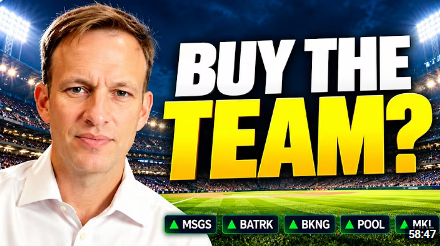
- MSGS Stock: Unlocking the Value of the Knicks and Rangers
- Pool Corp Stock: A Buying Opportunity After the COVID Boom?
- Jake’s Veggies: When to Sell a Stock—Lessons from Starlings and Opportunity Cost
- Markel Stock: Is This Berkshire Hathaway Alternative Undervalued?
- Uber Stock: Can It Thrive Alongside Waymo and Tesla Robotaxis?
TRANSCRIPT
[Tobias] We are live. This is Value After Hours. I’m Tobias Carlisle, joined as always by my co-host, Jake Taylor.Our special guest today is Jonathan Boyer of Boyer Value. How are you, John? Welcome back.
[Jonathon] Thank you. It’s great to be back. [Tobias] Tell us very briefly a little bit about Boyer Value. [Jonathon] Sure. We’ve been around since 1975. We’re a research shop where we sell independent research on a subscription basis, utilising kind of a businessman’s approach to stock market investing.And then we utilise that same research and manage money for institutions, family offices, high net worth individuals. So we’re opportunist investors. We’re US-based investors, all cap, any sector.
[Tobias] Just give us a brief overview of the market as you see it at the moment. There’s this very wide bifurcation between the sort of AI adjacent names, which seem to be the vast bulk of the index. [Jake] Objection. Leading the witness. [Tobias] And holding up the index. And everything else is in a quasi bear market, maybe not a technical bear market, but it feels like it’s pretty close. [Jonathon] Yeah. I mean, I see all the headlines, the people trying to be funny with the bad breath the market has. And it’s certainly the case.I mean, we’re stock by stock investors. We’re finding things that are interesting. But to find things that are interesting, unfortunately, you have to take some pain.
And the last couple of months have been a little bit painful. But overall, it’s generally been a pretty good year for us. So we’re happy with that.
But it’s definitely, we’re living in an AI world. How long we’re going to, you know, in terms of the stock market, how long that lasts is anyone’s guess. But we’re just sticking to our knitting and trying to find situations that are interesting.
And then also taking advantage, you know, you and I were talking offline on some of the names that have been sold off due to AI fears. We did that earlier in the year with Salesforce and Microsoft. And now we’re doing that with Airbnb and booking and some other names.
So it’s, you know, it’s creating a lot of opportunity.
[Jake] Toby, you want some numbers that I saw recently? [Tobias] Yeah. [Jake] 59% of constituents in the index are greater than 20% below all-time highs. 41% are greater than 30% below all-time highs. 17% are 50% below all-time highs.So it might be that the crash is here already. It’s just not evenly distributed.
[Tobias] Yeah. Yeah. Feels like we’re in a post-singularity world at the moment. [Jonathon] Yeah. [Tobias] Let’s talk a little bit about booking because that’s one that we’ve had a previous guest discuss. It’s one that I hold as well, full disclosure, but it seems to be impacted by AI or that’s the perspective anyway.Booking and Airbnb Stocks: Is the AI Sell-Off Overdone?
[Jonathon] Yeah. I mean, listen, everything is impacted by AI in positive and negative ways. But, you know, Muse came out, you know, we’re recording this on September 29th, a couple of weeks ago, and it hit Airbnb hard.It hit booking hard. You know, Goldman came out with one of these baskets, which usually are pretty self-serving for their clients. I think it was the Investor’s Inertia Basket, they called it.
Some desk analysts came out with it. It was a one-page report that took away tens of billions of dollars of stock market value, if not hundreds of billions. So take that for what it’s worth.
But they’re saying something like booking is not going to be necessary. And it’s ridiculous. You know, they said, you know, Google tried to take it over, not the company, but tried to take the space.
They couldn’t do it. They have a tonne of resources. TripAdvisor tried to do it.
They couldn’t do it. Booking is competitively advantaged, and it would very difficult for someone to replicate what they’ve done. And what they’ve done is they’ve gone to these small and mid-sized, like, boutique-y type of hotels and have inventory from them, and they make it very profitable for the companies to list on booking.
And Muse is not going to do that. Muse is not going to be able to handle cancelling reservations, dealing with the hotels, dealing with all the intricacies of travel, dealing with the EU regulations. And now you’re able to buy the stock at a discounted multiple.
And, you know, I’m happy about that, and I’ll take it. And at some point in time, the market will get rational and realise that this is a very high-quality business.
[Tobias] Does Airbnb fall into that same bucket? Is that one that you’ve looked at closely? [Jonathon] Yeah. I mean, I think that’s even more absurd.At least you can make, I think, the argument on booking that Muse could, and I don’t think it’s true, but Muse could disrupt them. But Airbnb has supply. How is Muse going to go out and, you know, are they going to individually ask every homeowner, will you rent out your home for you?
Like, it just makes absolutely zero sense. I think these things are, you know, Muse and the other agents that are inevitably going to come out are going to help these businesses because it’s just going to make travel, booking travel, easier. And it’s also going to give people a lot more free time.
So AI is a beneficiary of these companies. You know, Airbnb in particular noted on their last earnings call how much they’re saving, how much more productive AI is helping them. So helping them to be.
So, yeah, I think the in this case has overshot. And I think a lot of the reasons why this happens is, one, obviously, people are extremely short of short term time horizons. They shoot first, ask questions later.
But you also have, you know, pod shops that, you know, will get out of these things really quickly. And if they turn a couple percent, they liquidate and that selling begets selling. So there’s a structural part of the market that creates these opportunities.
And if you have, you know, a time horizon that’s more than, you know, six months to a year, which we do and you do, I think this is a great thing for us.
[Tobias] When you look at some of the other names that we’ve discussed, I think that restaurants in particular have been sort of beaten up. I don’t know if it’s so much AI related as it’s just general cost pressures for consumers, whether it’s rising rates or gas prices or whatever the cause of that is. I saw a stat today just before I came on that consumer confidence, and this is a, I get that this is a very soft number, but consumer confidence is worse now than it was in 2020 in COVID and in 2008 after we had gone into recession.So I don’t know if it’s like people are just softer generally and they get upset more easily. And so they report lower confidence in the market, or if it’s some problem with the sampling of these surveys, but that assuming that those two things, you know, aren’t the case, it seems like the consumer’s struggling a little bit in any case. And it’s showing up in restaurant stocks, particularly one of the ones that you have mentioned is QSR. What do you think about QSR?
[Jonathon] Yeah, QSR and booking were part of our fresh look issue that we come out each year. And QSR, we profiled a few years ago on an absolute basis, it’s done quite well. It’s done fine.Compared to the S&P 500, it’s done horribly. But compared to the other restaurant stocks, it’s done well, which is, you know, little consideration. Yeah, to me, I just want to make money for our clients.
I don’t care how the other stocks do. QSR, you know, it was the problem with, I guess, take a step back. QSR owns Burger King.
It owns Tim Hortons. It owns Popeyes. And it owns Firehouse Subs.
So for a while, Burger King North America was the problem child. It seems like they have it fixed. So they are in the middle of a turnaround that seems to be working.
Now, Popeyes, people don’t like their chicken. People prefer to go to Chick-fil-A. And they’re going to have to fix that.
The problem with diversification is sometimes there’s always something that’s going wrong. But you have a cheap stock that’s well run. They’re run by a guy, the executive chair, Patrick Doyle, who I had on my podcast.
He’s fantastic. He’s a guy who turned around dominoes. I don’t know if you remember.
He was the CEO. The stock went up about 20x under his watch. He had the commercials where he went on and basically trashed his own product.
And he’s doing that. He did that same playbook with Burger King. The Whopper.
Yeah, with the Whopper. And they redesigned it, you know, have the clamshell, the new, you know, carrying case or whatever you want to call for it. So he’s, it’s improving.
McDonald’s, which is also cheap, got killed the other day, is kind of at the beginning of their turnaround. So that’s why we like QSR a little bit more. It’s also a little bit cheaper.
You’re getting a 3% yield, 3.5% yield, maybe a little bit more while you wait. And they’re also, they bought a whole bunch of restaurants. They’re a cap light business, but a franchisee ran into trouble.
They bought at Carroll’s. There were about, I think, a thousand stores or so. And over the next couple of years, those stores are going to be refranchised and it’s going to be fully capital light.
So there’s a lot to like with that story. I think it’s one that, you know, investors, if they can take, you know, the short term noise about, you know, at some point gas is going to, gas prices are going to come back to normal. Interest rates are going to come, settle down, I hope at some point in time.
And if you’re in a more normalised environment, it should do just fine.
[Jake] What about GLP-1s in that equation? [Jonathon] Yeah, I mean, that’s a factor, but they’re, these companies are adjusting to that. Smaller portions, selling different kinds of things. I can’t decide if it actually gives you licence to go eat more Burger King than it did before.Yeah, no, it could. And also, you know, it’ll be interesting to see how long people stay on these things because the side effects are not exactly the best in the world. But yeah, no, I mean, that’s certainly a factor, but people are still going to eat, maybe eat a little bit less.
But I think people, you know, Americans are still going to eat their hamburgers and fries.
[Tobias] I see that some of the looks maxes have been micro-dosing the GLP-1s. I’ll bet you that’s a sentence that would have made no sense about 12 months ago, but that’s- Six months ago, yeah. Six months ago.Yeah. I think they do that for appetites, for satiation or just, but I think that they’ve got a lot of other, they seem like there might be some kind of miracle drugs, these things. They seem to do other things besides, they just give you generally more willpower.
[Jake] I don’t know, it’s a little bit of a sidetrack there, but do you think- I heard though it’s one in 5,000, you go blind. Is that right? That’s what I read.I mean, that’s kind of frightening.
[Jonathon] You also don’t know the long-term side effects of these things. Who knows? I have, you know, people should just be careful what they put in their body, you know, Burger King included. [Tobias] Do you think that that’s, I mean, it seems to have hit all of the restaurant stocks that just everything seems to be in the dumps in the restaurant space. So is it more, have I missed the, is GLP-1s the main driver there or is that the thesis, do you think? [Jonathon] I think it’s a hybrid, GLP-1s, gas prices, consumer not feeling so great. I think all, kind of all of the above, you know, more trends towards healthier eating, but, you know, the restaurants will adjust to that. So I think there’s not, I don’t think you can point to one thing.I think it’s a mixture of things, but, you know, Burger King finally, North America is now, you know, same source sales positive. So people are, people are going and people are going more than they did the year before.
[Tobias] Let’s talk about some other, some other theses that are out there. One is that sports, there seems to be a lot of action in sports. There are some sales going through.The LA Lakers got sold. There’s lots of things sort of happening. MSGS has been a long term hold of yours.
What’s the story there?
MSGS Stock: Unlocking the Value of the Knicks and Rangers
[Jonathon] Yeah, no, MSGS has been a great stock for us just to give a quick backstory on it. It originally was part of a company called Cablevision, which was controlled by the Dolan family. Everyone loves to hate the Dolans, but they spun out, they spun out MSG in 2010, which consisted of the garden.I take a step back further. They bought MSG in 1992 or 1993 for a few hundred million dollars. Good, goodbye.
Very goodbye. And that included the Knicks, the Rangers, Radio City Music Hall, the actual Madison Square Garden, the Knicks and the Rangers, like lots of great assets. So they spun all that out in 2010.
And since then, they’ve done spin outs after spin outs. And right now you have MSG Sports, which is just the Knicks and the Rangers. Okay.
The enterprise value of the company is $10 billion. Okay, so you can buy both teams for $10 billion. Yesterday, they announced a minority sale of the Islanders, which is not nearly as prestigious of a team for $3 billion.
The Lakers went for $12 billion in what I would say is a forced sale. I mean, I think that guy had to sell and had to sell really quick. So it makes absolutely no sense that you can buy both the Knicks and the Rangers for $10 billion.
So what are the Dolans doing to help unlock the value? Sometime in October, they’re going to be splitting them up into two separate companies. So you’re going to have MSG, you’re going to have New York Knickerbockers Corporation, and then you’re going to have New York Rangers Corporation, so investors can buy both.
And that’ll help highlight the valuation disconnect.
[Jake] You want to peer play basketball and peer play hockey. [Jonathon] Well, there’s also separate buyers for them. It’s a lot easier to do a $5-$6 billion check to the Rangers. Yeah, Canadian people buying hockey teams.Exactly. And the Knicks, I think what they’re going to do is sell a minority stake in one or both of those teams, either commiserate with the spinout or soon thereafter. I think it makes a lot of sense.
And then they can use the proceeds to buy back shares. So I think that’s what’s going to happen. Plus, there’s a tax law coming into effect, Rule 162 something, that basically what the rule is, if you’re a publicly traded company in the U.S., your top five employees can’t be deducted for income tax purposes. So the Knicks are the only publicly traded sports team. The Raptors sort of are, but they’re part of a bigger company. So they’re at a huge competitive disadvantage.
So if your top five players make $150 million and you can’t deduct that for income tax purposes and your total earnings are $180 million, that’s a real problem. So they might be forced to sell or the law gets changed. But changing a law in this Congress is pretty difficult.
So there’s lots of things that could happen there. The Dolans, as much as everyone loves to hate them, they have been a seller of assets. They sold Cablevision at the peak of cable valuation.
So maybe they do sell one or both of them. Who knows? And then the other way to play it is Atlanta Braves Holdings, which is a few billion dollar market cap company that owns Atlanta Braves baseball team.
And it also owns valuable real estate adjacent to the park. If you take what the Angels just went for, which is a decent comp, and you utilise the same metrics, BATRK, which is the symbol for Atlanta Braves Holdings, which is a $50 stock, it would be an $88 stock. And the owner is John Malone, who’s rational.
At some point, him or his heirs are going to sell the business. So you have ways to make money in publicly traded sports. You get to, as part of your due diligence on stocks, watch either baseball games or hockey games.
So it’s a fun way to invest and you make some money, hopefully.
[Tobias] How did the Dolans get control of Madison Square Garden with all of those assets for $200 million? What were the circumstances around that sale? New York in the 90s was pretty rough. [Jonathon] Yeah. They had a partner that they were dealing with. I forgot who exactly it was.But yeah, one, sports values were not nearly as big. I mean, just to give you an idea, I’m reading David Rubenstein’s book. It’s a really good one.
I recommend it highly about the view from an owner’s box. He talks about how in the 70s, 80s, 90s, it’s like kind of multi-millionaires own these things or corporations. The price tags really weren’t that high.
I mean, the Yankees, believe it or not, were sold for $11 million. I mean, now they just were, obviously, that was in the 60s. So you have to put a little inflation there.
But Apollo is taking a stake for $12 billion. So prices have gone up a little bit.
[Tobias] It’s become a trophy. I said it’s one of the few things that people will watch live. So they’ll watch advertising.Is that the thesis?
[Jonathon] The thesis to us is as long as there’s billionaires, as long as they’re billionaires with egos, these things should do well. Plus, you have private equity involved. It’s also going to be more of a globalised thing.But if you think about it, all these billionaires, they have private jets, they have yachts or whatever. There’s only 30 or so NBA teams. There are only 30 or so NHL teams.
It’s a scarcity. You’re buying a publicly traded collectible. So as a guy who likes cash flow, this is not a great investment on that type of thing.
But in terms of scarcity value, I think it’s an interesting part of a portfolio.
[Tobias] Do they tend to lose money while they’re on an annualised basis, on an operating basis? [Jonathon] Sometimes, yes. But now that their national TV contracts are coming up or they had come up on the – that’s going to happen in, I think, 2029 for baseball. And it just happened for the – what is it called?For the NBA recently. Plus, they’re going to have expansion teams. They’re probably going to have one or two.
And it’s going to be $5 billion each or so divided by 30 teams. So you have cash flow going in. But yes, from an operating standpoint, these are not great businesses.
You make your money when you sell. Obviously, in some ways, you can argue that’s a greater fool theory. But I think that these trends will persist for long periods of time.
[Tobias] Let’s change direction a little bit. It was a darling during COVID when everybody was going to get a pool. And it’s been – I’ve been watching it on Twitter recently.It’s now universally hated. Pool.
Pool Corp Stock: A Buying Opportunity After the COVID Boom?
[Jonathon] Yeah. Pool Corp. Another fresh look constituent.Pool is a name that we profiled in 2009. We did a huge issue talking about investing in consumer-related stocks. We’re in the middle of a global financial crisis.
And that was a kind of a once-in-a-generational time. We had Marriott, $20. We had Pool Corp at like $20.
And it was a great success for many years. But it got way, way ahead of itself. And we stopped really doing any profiles of it in 2000.
During COVID, it got to 55 times earnings. And that was just absolutely ridiculous. And we’ve been watching it as it went from $500 a share to $400 a share to $300 a share to $200.
Now it’s $162, selling at 15 or 16 times earnings. Very little leverage. Very good management team.
Very good board. In a good business. And to us, it’s 16 times earnings, 15 times earnings.
We’re willing to take our chances. At 55 times earnings, that’s ridiculous. Everything has a price.
But I think Pool Corp is one that’s worth taking a look at.
[Jake] Isn’t it so funny how price drives narrative? Take Rawlins also recently. It always was a bug company.And yet, it gets painted with this quality brush whenever the hell it got up to 60 times earnings or something. And now that it’s down, it’s like, oh, yeah, well, it’s just a bug company.
[Jonathon] I mean, I go back to what Buffett talks about some of his biggest mistakes. And one of them is not selling Coca-Cola when it was 60 times earnings in the last quality bubble we had, or second to last quality bubble we had. If you took the performance of Coca-Cola from 1998 till today, the operational metrics have been great.The company is performing really nicely. But the return is half of that of the S&P 500. Because when you pay 60 times earnings for something, it’s very hard to make a profit.
And Buffett, fortunately for him, he did many things right. So it wasn’t a major sin. But it happens even to the best of us.
[Jake] There is something kind of sweet, though, about getting like, what is it, a third of his cost basis and dividends now every year or something. And you just every year you’re clipping. That’s pretty cool. [Jonathon] Yeah. No, no, no. I mean, no one’s going to argue this has not been a great investment for him.But he could have. The problem is he was so he’s so taxed. It’s a big opportunity cost.
It’s an opportunity cost, but he’s done he’s made many more good decisions than bad.
[Tobias] We discussed a little bit before we came on, but I was sort of interested in how Poole captured the imagination. It’s just such a funny company to run like that. It’s not like it’s an AI.So it’s funny that it was like memeable through that period of time. What was the narrative? How do you daydream yourself to 50 times?
[Jonathon] Yeah, we paid much less attention to it then. I think if I had a guess is, listen, they people extrapolate current things to to infinity, you know, for the rest of time. [Jake] And we still learn. [Jonathon] Yeah. People are building not actually not even so much more than like during the prior to the global financial crisis. You know, I think it was 120,000 pools a year.Normally you would do 80,000 pools a year. Now we’re doing 60. So you get back to a mean reversion.
So now they’re extrapolating it on the downside before they were extrapolating it on the upside. And that’s that’s just what that’s human nature. And I think if you can take three, four, five year view, you’ll be just fine.
I think it could be taken over. I’ll put that on record. You have low insider ownership.
You have very little debt. You have a well-run company and you have a shareholder base that must be exhausted.
[Tobias] Yeah. Do they do any buybacks or anything like that at this level? [Jonathon] I think they’re starting to do it. I’m not 100 percent sure, but it would be a good use of funds. It’s really not in the video like buyback. [Tobias] Should we do some veggies? Start a little bit earlier, folks. [Jake] Do you want to do around the horn? I know you like to do that. [Tobias] Yes, I do. Thank you. Thanks for that reminder.Breckenridge, what’s up? Luzon, Switzerland. Surbitz on Jupiter, Florida.
Temecula, Roseville, Bellevue, Tallahassee, Toronto, Tampa, Boise, Cludge, Transylvania, Romania. Thanks for the kind words. Port Arthur, Texas, Havatown, Gothenburg, Sweden, San Bandum, Bangalore, Colorado Springs, Gurney, Illinois.
Thanks, guys.
[Jonathon] You have a diverse audience. That’s so cool. [Tobias] We really do. Global. [Jonathon] Global. It’s really cool. [Jake] All right. Shall we serve up the veggies? [Jonathon] Let’s do it.Jake’s Veggies: When to Sell a Stock—Lessons from Starlings and Opportunity Cost
[Jake] All right. Today’s veggies are about a bird. In 1784, Mozart walks into a shop in Vienna, and he paid 34 cruzers, I think it’s how it’s pronounced, some kind of currency, for a starling bird.We know this because he wrote it in his expense book. Under the entry, he wrote out the bird’s version of a theme from his Piano Concerto No. 17.
The bird had changed a note from a G to a G sharp, and then stuck a pause in the middle there. Mozart wrote underneath, that was beautiful. Here’s the odd part, though.
He’d finished the concerto six weeks earlier, and nobody had heard it yet. The best guess is that he was whistling it probably to himself in the shop, and then the bird picked it up and then edited it a little for him. When the starling died three years later, Mozart held a funeral, and he wrote a poem for it.
But it’s not true that he sold the bird to a blind kid, like a dumb and dumber. But the starlings that I want to talk about today are not of the musical celebrity variety. It’s the working parent on an ordinary day, flying back and forth to a nest that’s full of baby chicks.
Ecologists call this feeding strategy a central place forager, which means the bird doesn’t eat where it finds food, it has to carry it home. Every trip, the starling is running a particular calculus, like, do I dig out one more insect, or do I fly back now with what I’ve found, or do I try a new place entirely? In the 1980s, Oxford ecologists put that question to the test.
They put these feeders out at different distances from the nests, and they measured what the parents carried home. For a long flight, the birds would stay longer and stuff their bills more. Then for shorter flights, they’d bring back smaller loads, and they’d make more frequent trips back and forth, which kind of seems right, feels obvious.
The load size matched a model of the birds maximising the energy that would be delivered to the nest per unit of time. Mother nature is, of course, quite clever about these kinds of things. Why does a bird ever leave with food still on the ground, though?
Which is kind of an interesting question. It’s because the patches don’t really run out of food, they just start to run thin. The first insects are obviously easy, but the rest take more hopping around, more probing, more digging, more time.
The starlings actually have these very muscular jaws that are built to open the bill against resistance. They stick it into the ground, and they pry the soil open. Then they have eyes that rotate forward to be able to look down into the gap and find insects.
The researchers observed that the birds practise a form of marginal value theorem. They leave the patch when their rate of intake falls to the average rate that they could earn across the whole environment, travel time included. That’s actually baked into the calculus that they’re doing.
It’s not when the field is empty. It’s when the next minute here in that spot earns less than the next minute that they could earn somewhere else, basically. Simple opportunity costs.
Munger told us, once you’ve found the best thing, then you measure everything else against that because that’s your opportunity cost. You guys remember back to when Munger was 97, and he was talking about how hard selling is. He said, I don’t think I’ve got a system yet, so I’m just learning as I go along.
Maybe Mother Nature, in the form of this humble starling, can give us a little bit of help on how to craft a logical selling philosophy. A position probably shouldn’t become a sell just when the company disappoints, necessarily. The business can still grow.
Earnings can still rise. The stock can still go up, but maybe the market has already figured out that insight. This is like what John was saying about Coke in 1998.
Everyone figured out that was a hell of a business. The price then assumes continued excellence and maybe even more of it, and the next leg has to clear a higher bar under harder assumptions than it did before. So the patch is still producing, but the easy insects are kind of gone at that point.
So selling a winner doesn’t have to necessarily be a verdict on the business. It’s kind of relative judgement. Now, I want to focus a little bit on the travel time part of the bird’s equation, which I think has some interesting analogies for us.
So the bird has to fly, search again in a new place, risk that that new place is worse than the one that they just explored. And for us, travel time is the full cost of changing our minds about an investment. So taxes kind of being the most obvious and pertinent, straightforward, you always kind of should be thinking in a post-tax way for the most part.
But there’s other travel times to consider as well. Like bid-ask spreads could be a potential travel time implication. Market impacts.
It takes a long time maybe to exit a big position if you’re moving the price too much, especially in smaller names. That quote on the screen that you get isn’t necessarily the price available to you for your whole position. And then there’s the invisible travel time, which is actually the time you spend researching.
If you’ve owned a company for five years, you’ve seen management handle good and bad quarters. But the new company, it has this beautiful presentation that you just looked at and a spreadsheet that you finished last week. And it’s basically like kind of comparing a five-year marriage versus a dating profile in a lot of ways.
So the research you’ve already done isn’t a reason necessarily to stay forever. But the knowledge that you’ve gained has a value to it. And you’re replacing it actually takes a fair amount of work.
And then one more travel thing to consider. Public proclamations about a stock. If you said it on Twitter or you’ve said it in a podcast potentially and that you love a stock, leaving it costs you something extra.
It might be your ego that wrote this check and then your portfolio is the one that has to eventually cash it. But embarrassment is probably not really a transaction cost that your client should be paying. And it does something worse actually than making you uncomfortable.
It can corrupt the measurement here. So every insect you find then becomes proof that the patch is still rich enough. You have this confirmation bias that kicks in when you’re trying to do commitment and consistency to things that you said in public.
So pretty sure you’re measuring how well the facts are defending your thesis more so than the facts themselves. And the starling doesn’t have to explain why it missed last quarter’s insect forecast. And the theorem only really works if you’re measuring things truthfully.
And a public position can be a subtle nudge to measure things incorrectly. So the common rule might not be just sell at fair value. It may be a sell when the return from staying in that name falls below your best realistic alternative, maybe the average of your whole portfolio.
And that’s why I think it’s interesting to think about this from turnover of different investor types. So a liquid tax-exempt fund with 10 analysts has a shorter commute to a name maybe than someone else. And it should probably leave patches then more quickly than if you’re a single taxable investor with embedded gains, one pair of eyes.
That’s probably a longer commute to change patches. And so maybe that’s describing the individual investor versus maybe a pod shop. One last wrinkle for the professional money managers out here.
So far, we’ve been asking how to make the best use of time over these repeated trips. But let’s change the problem a little bit and say, what if the bird needs enough food to survive tonight? And that foraging theory has a prediction that’s called energy budget rule.
And imagine that you have this reliable patch that will leave you just a little bit short of what you need. What does mother nature do in that instance? Well, she gambles then on finding a richer patch because it gives you a chance of surviving.
Maybe it won’t, but at least you have a chance. The useful point of this is that a hunger threshold can change the risks that make the most sense. So managers have that same threshold as well.
They might be trying to survive to the next December performance review and not necessarily a longer-term 10-year horizon. There’s a classic study of mutual funds that found that mid-year laggards, so if you’ve been trailing the first half of the year, they find increased volatility in those managers because they’re trying to catch up with where they were. They’re trying to make the year by the end of December so they don’t look like an idiot.
And they’ll gamble to see if they can do that. But it maybe doesn’t make that much sense for the person whose money is in that account and has a long-term orientation. So you have to be careful there.
So anyway, before asking whether a manager’s decision makes sense, kind of ask, what are they trying to keep alive? Your purchasing power or their job? Or is it a sure stock pitch that they made six months ago on a podcast that’s going sideways, and that’s what they’re arguing for now?
So a trade can make perfect sense for all of these things in different ways, but you kind of have to know what game you’re playing. So the bird has one advantage over us. The chicks keep the score honest.
You’re trying to your babies surviving. And you can’t come home with an empty beak and say, good news, kids, the other nest did worse. So we’ll wrap up with that.
[Tobias] Good one, JT. Mozart, Starlings, and selling discipline. How does he do it, folks?He’s a magician. We’ve got Buffett stepping down as chairman last week. We got that announcement from Berkshire.
And so I’ve seen a little bit of a debate on Twitter, not who is the next Buffett, but which is the next Berkshire Hathaway. And clearly, Berkshire is not replicable easily. But there’s two contenders out there.
One, I think, is Markel, which, Jonathan, you’ve taken a closer look at.
Markel Stock: Is This Berkshire Hathaway Alternative Undervalued?
[Jonathon] Yes. Markel is a name we know well. Is it the next Berkshire Hathaway?No. I mean, I think it’s an attractive investment. I think there’s only one Berkshire Hathaway.
I think Markel has great days ahead of it. But I don’t want to be disingenuous and say, I know it’s good for headlines and et cetera. But it’s not.
You have a company that’s selling for 1.2 times book that over the last couple of years missed the hard insurance market. They were not good at writing insurance, which is a problem for an insurance company. But it seems like they’re turning it around.
They have a new person who’s doing this. And so far, the early results are quite promising. Combined ratios going down.
There’s an activist involved, Channa Partners, who are putting suggestions in place that I think some of them make sense, some less so. But he’s been run by Tom Gaynor. He’s been a little skimpy on the buybacks.
I think going forward, he’s going to be a little bit more aggressive. If not, I think Markel will, Channa will make life very unpleasant for them. So I think there’s a lot of things to like.
I think it could be, you know, a company you can hold for a long period of time and do quite well. Is it going to be Berkshire Hathaway? No, but it could be a good stock.
[Tobias] How did they miss the hard insurance market? What happened there? [Jonathon] I mean, they just didn’t do a good job growing, you know, writing policies. They didn’t do a good job of growing the amount of policies that they were going to write. They got into reinsurance, which was a disaster.You know, they just, the one division that did do well was international, which is where the new guy is coming from. So they just, they missed the boat and it is what it is. But going forward, if they’re able to lower that combined ratio, which is essentially basically their profit margin, which would increase their profit margin, they could do quite well over time, especially if they buy back shares at 1.2 times book. Plus, they own these like industrial type businesses and financial assets. They have a stock portfolio that’s done reasonably well, ironically, or maybe not ironically, Berkshire is their largest position. So there’s things that they, there’s a lot to like about the name.
I just think, I think it’s an unfair comparison to almost any company to say it’s going to be the next Berkshire Hathaway. But it’s, I think investors should take a further look.
[Jake] Toby, who’s number two on that list that you were saying? [Tobias] I would have said Fairfax as another potential. Do you guys have any views on Fairfax? [Jonathon] No, I mean, we have a lot of respect for Prem and what he’s built there. He’s a great investor. I just did not, not close enough.You know, they were subscribers to our research for many, many years and we had interesting dialogues with them. And they’re, yeah, I think, you know, I certainly wouldn’t bet against him.
[Jake] I had more opinions about it when it was trading at half a book. [Jonathon] Yeah. [Jake] But it’s harder to have opinions about things that are closer to probably more fully priced. [Tobias] That was going to be my question. How’s it traded? Like how’s Markel traded relative to book over the last, I think that they all went through 2020, they all went sub book.Well, it’s a book.
[Jonathon] Yeah. I think, I think historically, I think it’s 1.7, 1.8 times. [Jake] It’s been a little rich most of the time, like relative to Berkshire and Fairfax. [Jonathon] But book value for them is a little bit, you know, it’s a little, I don’t want to say misleading, but they have all these other kind of businesses there. So it’s hard to necessarily to subscribe a book, book value is what the multiple should be. But, you know, if you can buy an insurance company that is profitable at 1.2 times book and is going to be able to grow premiums over the next couple of years, I think you’ll do fine. [Tobias] You think you see expansion in the valuation there? Or is it just that’s about fair value and you’re getting pretty good underlying growth? [Jonathon] I think you can never discount on multiple expansion. That would be, but I think you’re just kind of better operational, you know, and better. And I think you will have better sentiment, which will lead to an expanded valuation.But that can’t, I don’t think that can be your only, you know, hang your hat on. You have to have a good business that’s going to continue to either improve or continue great performance.
[Jake] And if you’re a long-term owner and they’re rational capital allocators, you’re praying every day when you wake up that it’s going down. [Jonathon] As long as they’re buying back stock. You know, they haven’t been doing it as aggressively as they should. But yes.But if you have money to put, yes, you want your holdings to go down until you’re fully invested into the company. How old is Tom Guyana? I think he’s late.
I could be wrong. Late 60s. Does that sound about right?
[Jake] I think he’s younger than that. I think he might be yeah. [Jonathon] I don’t want to give him extra years. But he is now, they also named him. Oh, what’s interesting is Markel is also not a controlled company.He’s 63. So within five years. Sorry, Tom, if you’re listening.
I didn’t mean to call you older than you are. He, it’s not a controlled company. I think it was Steve Markel just got off the board there.
And Tom is now chairman of the board as well as CEO. I generally don’t like those kind of situations, but it is, it is what it is. But someone could buy this.
You know, I don’t know who. But, you know, from what I understand, the Japanese insurance company, conglomerates and insurance companies have big appetites for U.S. insurers. One just took a big stake in W.R. Berkeley. I think they bought 15 percent of shares and that sells at a very high book value, multiple book value. So is that the investment thesis? No.
But if shares remain depressed, you never know what will happen. But it’s people might mistakenly think that this is controlled by the Markel family and it’s not.
[Tobias] When you’re looking around for opportunities, where do you see them at the moment? I mean, I’m talking in terms of market capitalisation and also in terms of industry. [Jonathon] Earlier this year, if we were on earlier, I was saying for the first time in many years, was buying Microsoft because I think it got down to levels that were were quite interesting. Still, you know, as a firm, it’s one of our larger positions because we bought it right between 2007 and 2012 and sold very little. So, you know, companies that got caught up in the SaaS apocalypse.CRM was another one. It was a name that we’ve always wanted to own. It was always too expensive.
And then it got down to pretty cheap. And then you have other companies that AI is supposedly or autonomous driving is going to disrupt. You know, that would be an Uber.
I think, you know, there are areas, you know, that’s an unbelievably interesting name. You’re paying a below market multiple for a company that’s growing 20, 30 percent a year. And then you have the small and mid cap companies like Poolcorp that no one cares about.
I think those are ones that have very little analyst coverage, have pretty bad sentiment. So there’s I wouldn’t say there’s one place to look, but I think looking where other people aren’t or where where is currently hated is probably a good place to start.
[Tobias] What’s the Uber thesis? Because I guess the risk is Tesla really does roll out cyber cabs everywhere. Waymo’s ubiquitous when you’re in sort of downtown areas.Uber Stock: Can It Thrive Alongside Waymo and Tesla Robotaxis?
[Jonathon] Yeah. Yeah. We I mean, we’ve been waiting for Elon Musk to roll out cyber cabs since like 2020.Waymo has done a fantastic job and they’re a formidable competitor. But the thesis on Uber is as long as there’s not just one autonomous vehicle company, they’re going to do quite well. People are not going to want six different apps.
You’re only as good as what you can do during peak demand. Waymo, even though they’re largely owned by Google, is not going to it wouldn’t be capital efficient for them to have enough vehicles to satisfy peak demand, especially in areas that are more rural and suburban. So I think it’s going to be a hybrid mix for many years.
And Uber is the go to platform. Plus, they have the delivery part of the business. Dara, you know, for the first time in a while, just bought back some stock.
It’s as I said, it’s selling at a below market multiple. And I think our thesis pans out as long as there’s not one winner in autonomous vehicles. Plus, they’re partnering with Lucid and a few others to, you know, put these cars on the road.
And they’re generating a tremendous amount of cash flow. I think they’re going to have 10 billion dollars of free cash flow next year. It’s and they’re buying back stock.
[Jake] I mean, anecdotally, I feel like the price of taking an Uber has gotten they’ve been really taking price. Yeah, well, everything I mean, everything two or three X, I feel like what I used to pay for comparable trips. [Jonathon] But the number of trips and revenues still still growing. So they’re able to they’re able to absorb it. And they’re you know, the cost of these things are going up with the price of gas, etc.So it’s, you know, but yeah, no, it’s a very profitable business. And, you know, it’s ubiquitous. It’s literally a verb.
We like those type of companies.
[Tobias] So that that’s a little bit of a plus for Tesla, isn’t it? Wasn’t that the thesis that you like you park your car and then you just put it in the pool and it goes to work for itself during peak hour? It goes and pays for itself. [Jonathon] Yeah, it’s what happens when someone makes a mess in your car. [Tobias] Well, that’s true for Lucid, too. Yeah. And you’re gonna put a hundred thousand dollar vehicle into the cat pool. [Jonathon] Well, I mean, they’re making Lucid cyber type of like solely for that. And that’s the other thing like you Tesla needs an infrastructure on. They need to clean these things.They need to make sure everything runs smoothly. It’s not just putting a car out on the on the road. So Uber has all the, you know, back end operations for it.
Waymo, I’m not dismissing what they’re doing, but Waymo would have to, I think, double the amount of rides every year for the next seven or eight years to get to where Uber is today. And Uber is growing. So Waymo is a long way to go.
And Uber and Waymo in their latest funding round was valued closer to that of Uber. Just, you know, you have to kind of think about it in those terms as well.
[Tobias] So the the challenge for Waymo is that at peak hour, at peak hours, it costs so much to have that many cars on the road that it’s not economic. [Jonathon] Exactly. I mean, think about how many you really need cars from, you know, seven in the morning to nine, ten in the morning and, you know, four to seven on, you know, in the evening and then certain times on the weekends during the day, you don’t need nearly as many of those cars. So you just they would just be sitting there.And these cars, obviously, they’re gonna get cheaper and cheaper. But right now, the cars are like $100,000. So you’re just you’re going to need that hybrid mix.
Plus, if you look in the cities that Waymo is in, San Francisco being one of them, Uber is still growing in those areas. So it’s it’s not taking away share from them.
[Tobias] Yeah, it’s interesting. I see Waymo’s when I go to Santa Monica, there’s no Waymo’s where I am, but Santa Monica and downtown and there’s but Uber’s will come here. Yeah, it’s hard to see who wins that.And then but I still think that’s a big plus for Tesla if they can figure that out. They’ve got people who are prepared to put their cars into the pool anyway.
[Jonathon] Yeah, I mean, if they’re able to do that, it’s a lot easier said than done. It’s also the they’re way behind in terms of the regulation. It’s not easy to get cities to approve these things.So, you know, we’ll see. Elon Musk is someone I would never bet against. I just don’t think it’s going to be a winner take all type of scenario.
[Tobias] What do you make of this bifurcation in the market between a very small handful of companies that I’ve seen that even if you eliminate the rest of the S&P 500, other than like whatever the 11 or so companies that are sort of up, that’s like 4,400 on the S&P and then everything else sort of is a rounding area or it’s the other 3,000 or whatever it is. They seem to be at this very wide valuation dispersion between those companies which are growing very rapidly and may very well be justifying those valuations and everything else, which seems to be more subject to the economy. [Jonathon] Well, I mean, they’re not unbelievably expensive. I mean, NVIDIA is selling at a below market multiple and I’m not saying to go out and buy NVIDIA. These companies aren’t blatantly like, except for Tesla, crazily expensive.They’re certainly more expensive than the other companies, but they’re growing faster and they’re higher quality businesses. So they’re justified. But I think this is bifurcation in the market has been, obviously, it’s increased because the percent of the top 10 has gone up considerably, but it’s always been kind of bifurcation in the market.
And it’s very rarely that the equal weight, which would exemplify that, outperforms the cap weighted index, although there are periods of time where they do and they do it outperform significantly. But it’s a feature of the market. And a lot also, I think, has to do with 401k money constantly going into the S&P, et cetera, and that allocates more shares to Google, Facebook, et cetera.
So in the meantime, I think if you, right behind you, you have the acquirers funds, which we acquire multiple. If you look at these companies that are selling cheap enough, at some point, either the stock market recognises it, the value or someone will acquire it, which should be very good for you.
[Tobias] It seems like private equity has been fairly quiet at the smaller end of town. I think they’re like stacked to the gills with everything they bought through the cycle, and they’re having a little bit of trouble offloading it, which I find a little bit funny because it seems like it’s a pretty good, has been a pretty good market for IPOs this year. There’s been plenty of supply anyway. [Jake] We’ll open up those 401ks to democratise private equity and that’ll make some room for your dogs. [Jonathon] But it looks like the IPO market is, I don’t want to say shutting down, that’s wrong, but like Aura just cancelled and a few others. I don’t know if that’s a temporary thing or a sign of more things to come, but that’s something certainly worth monitoring. And they talk about the number of IPOs, which there were a high absolute number, but the vast majority of the actual IPO was one company.I mean, granted, it was a pretty big one.
[Tobias] Yeah. How’s that traded since it came out? [Jonathon] It did really well, then did really badly, and now I think it’s doing okay. I think that’s basically, I follow it like baseball scores, not very closely. [Tobias] I think they’re flattish. Yeah. [Jake] I mean, I would have guessed that it would have done much worse actually, just with the lockups and the amount of people trying to get liquid out of it. But so far, it’s actually probably held up. It’s better than I would have predicted.So what do I know?
[Tobias] There’s a lot of implied growth in that valuation in the fission market sense. [Jake] Have you seen how big space is, Toby? It is huge. [Tobias] And we just got a lessee one asteroid and it pays for the whole thing. [Jake] One asteroid paid for gold, all this. [Tobias] What do you think, John? What’s the next sort of three to five years look like for the domestic markets, international markets? Where do you want to place your bet? [Jonathon] I, a US-centric investor, just because it’s my home market, I understand it better. It’s not a call on international not doing well. But I think the next couple of years should be reasonably fine.Stocks aren’t particularly expensive and not particularly cheap. I think stock pickers, I hate using the term stock pickers market because it’s unbelievably self-serving. But I think there are individual stocks that are selling, you know, reasonably, significantly below what they’re worth.
And people who are patient should do well. Will they do well in the next two or three years? I have no idea.
But I think over the next five or 10, if you’re patient and you hold these things, you should do quite, quite well.
[Tobias] Yeah, it is a little bit of a, it’s a truism. We always say stock pickers market, but it really does feel that way when you’ve got a handful of companies that are up over the course of the year and everything else is in various levels of drawdown to the point that some of them are in genuine sort of, what one that I’ve been watching is Nike, which was, you know, that was a, there’s a, there’s a well-documented conversation between Buffett and Lou Simpson, who was a big Nike ball about how much he liked Nike and what a great business it was. And I think it’s down something like 80% from its peak. And I’ve just, over the last few weeks, it’s been finding lower lows almost every day.So it’s been one of those, it’s like a car crash. I check in every now and again to have a look at where it is. I don’t know how it resurrects itself from here, but at some point, the valuation makes it interesting enough.
[Jonathon] Well, you have to be careful the next month or two, you’re going to have tax loss selling or next month for, for mutual funds. So you have, you have that issue. And then at the end of the year, you have other tax loss selling.Nike is also, you know, they did everything that they shouldn’t have done. You know, they alienated retailers. They had bad products.
You know, turnarounds are tough, but they are, they are great brands and, you know, we’ll, we’ll see how it is, but, you know, it’s, you know, it is, it is interesting here, but it could get a lot cheaper.
[Tobias] Yeah. Do you think it suffers a little bit with all of these, there are these little niche, like Hawker is a niche, is on, there’s all these little tiny little niche brands out there that seem to be, they seem to have resisted it for a very long period of time. There’s always been like other competitors, Reebok and ASIC and whatever else out there, but for whatever reason, they’ve sort of stumbled amazingly over the last year or so. [Jonathon] Well, yeah, I mean, and that was self-imposed. They, they alienated the retailers. They did that failed experiment with Amazon and yeah, I mean, all sorts of things.And that left room for on, for hookah or hoco, however you pronounce it. Yeah. So it’s, that’s their fault, but, you know, brands, you know if you have a great brand, it’s hard, you can tarnish it, but it’s hard to ruin it.
The, the, the other issue though, is back in the eighties and nineties when Nike was kind of at its payday, you know, Jordan, et cetera, the athletes needed Nike a lot more than Nike needed the athletes. Now athletes can go kind of direct the consumer in terms of their image and, and, and everything. So Nike has lost a little bit of that power there, but if it sells at a cheap enough multiple, it’s, it might be worth taking a look.
[Tobias] Dividend yields something like four and a half percent. Although I don’t, I think that’s, I’ve, I’ve read that that’s likely to be cut. I haven’t looked particularly closely at it, but four and a half percent. [Jake] It always gets the biggest right before it gets cut. [Jonathon] Has it been cut from the Dow or whatnot yet? When that happens, that’s usually the good buy signal. [Jake] That was taken, taking Exxon out to put in a Salesforce. [Tobias] Was the buy signal for Exxon. Hey, Jonathan, we’re coming up on, on time. If folks want to follow along with what you’re doing, I’m getting contact.What’s the best way of going about doing that?
[Jonathon] Yeah, I would say go to boyerresearch.substack.com. Visit our website at boyervaluegroup.com. And if you want to get some free reports, I think we have it on Madison square garden sports and Markel, just go to boyervaluegroup.com forward slash fresh, and you’ll find that or just, you know, give us a call. Good stuff. JT, any final words? [Jake] Uh, no, just, uh, I’m in North Carolina this week. I’m at, um, one of Ted’s events and just give him a little plug since he puts on a good, they’re called capital allocators. Uh, it’s a good, good conference.So do a quick little shout out to him, but otherwise have a good week. Everybody.
[Tobias] Good one. Thanks folks. We’ll be back.