VALUE: After Hours (S08 E23): Inside Artisan’s International Value Fund with Portfolio Manager David Samra
Sunday, July 26, 2026 · Johnny Hopkins
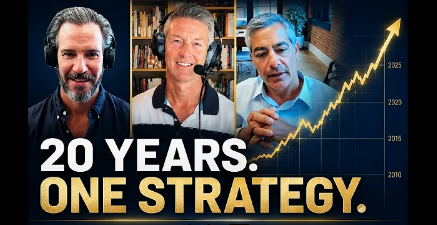
During their recent episode, Taylor, Carlisle, and David Samra discussed:
- How International Value Investing Has Changed Over the Last 25 Years
- Four Rules for Finding Undervalued Stocks
- How To Build a Concentrated Global Value Portfolio
- How Value Investors Use Financial Statements to Understand a Business
- Where To Find Value in Today’s Global Markets
- Is the AI Boom Changing the Semiconductor Cycle?
- Why the Vasa Sank: A Powerful Lesson for Investors About Risk
TRANSCRIPT
[Tobias] We’re live. I’m Tobias Carlisle. This is Value After Hours.I’m joined as always by my co-host Jake Taylor. Our special guest today is David Samra. He is the artisan partner’s founding international…
I’m sorry, I’ve got a little bit of feedback.
[Jake] Strong story, David. Back from vacation. [Tobias] Oh, David, I apologise. Let me try that one more time. Take two.We’re live, so this is what happens. David, my apologies.
[David] That’s okay. [Tobias] Why don’t we do this? Why don’t you describe… [Jake] Why don’t you introduce yourself? [Tobias] Please. [David] Okay. Well, I’m David Samra. I work at a place called Artisan Partners, and I manage about $55 billion, all invested outside the United States.I’ve been doing this since 2002, where we started with $2 million, and we raised about $16 or $17 billion of that and compounded the rest.
[Jake] Is there even $55 billion worth of businesses outside of the US anymore? [David] Well, it does make it tough. The larger your investment responsibilities are, the harder it is to find, especially since we’re looking for undervalued securities. It gets harder and harder as your universe gets smaller and smaller.We’ve got almost all of that money invested in 25 securities, so it’s not as if we’ve got it really spread out, because I always think somebody’s 30th best idea is not something that I’m really that interested in. We try to keep it relatively concentrated in things that we think are particularly valuable, because we’re able to buy good businesses at undervalued prices. So the answer is yes, there are, but they’re hard to find, and it requires a lot of work.
[Jake] David, how’s the opportunity set today feel relative to other points in your career? Obviously, probably relatively speaking, compared to the US, where I think maybe we’re all in agreement that it’s pretty fairly richly valued, but absolute value basis, how do you feel about today’s opportunity set internationally? [David] Well, I don’t want to be pithy about it, Jake, but if you just invert the question, it’s not as if we’re tracking at the lows of some massive sell-off, where all these markets are hitting all-time highs in most markets around the globe. I think there is some parts of the market that are obviously being ignored, because capital is flowing into a few narrow areas associated with the AI data centre build-out, and if that’s sucking in a lot of capital, then capital comes out of other areas in the market. There’s always something that’s interesting, especially when markets get narrow like this, but it’s not as if we’re like a kid in a candy store at this point.Stock markets are pretty well-priced in most places in the world.
[Tobias] David, you started in 2002. There’s been a fairly prominent value cycle, and then there’s been a fairly prominent growth cycle. How do you think that value has changed, or your investment strategy has changed in that 24 or 25 years?How International Value Investing Has Changed Over the Last 25 Years
[David] Well, I think that if we try to put aside in style-based cycles, we tend to ignore that sort of thing and think about just the change in the dynamic. I teach now at Columbia Business School, and in my first class, I say, what are the differences between investing inside the US and outside the US? I start with, well, not everybody speaks English, and they’re awake when you’re asleep, and you’re asleep when they’re awake.What I’m trying to get at is 30 years ago, those very simple points were much more accentuated. Disclosure was really poor. Disclosure in English was almost non-existent.
There was no internet. You had to get on a plane and go just to get information, and if you had that information because very few people were doing this, you were at a huge competitive advantage just having the information, especially as you started to go down the market cap range. I remember 30 years ago, even large companies like Nestle, the frequency over which they would report, the accounting standards that they would use had much less disclosure than what you would get in the United States, and so the complexity way back when was much higher than it is today.
Then as the capital markets developed, and so what that means, just to keep it clear in everybody’s mind, a lot of the capital for companies outside the United States used to be provided by local banks, and the equity capital markets were just a secondary source of funding. I’m not talking about Australia, New Zealand, the old UK empire. Canada was well-developed at the time, and even Hong Kong was reasonably well-developed, but places like Japan, most of Europe, and then you get into emerging markets like India, and it’s just completely the wild west, but as capital markets started to develop and companies became more reliant on the stock market for capital, and the investment banks expanded across the globe, combined with the internet, the advent of the internet, disclosure improved, your ability to communicate with companies improved dramatically, and their valuations improved.
To go along with that, as people started to appreciate, hey, there are actually some pretty good companies that are outside the United States, and they deserve more than a perfunctory look and some decent valuations, and that required us to evolve along with that, because it was no longer, you didn’t just have to go. You had to become a competitive business analyst and a true investor that understood how businesses operate and what the difference is between a good business and a bad business, and what’s valuable and what’s not valuable, and that skill set, and not everybody was able to make that transition, and then the other transition that we specifically made, having gone from managing small amounts of money to managing larger amounts of money, is to be able to effectively work with some of our investees, not that we really want to do that, but when you have a large stake in a business, call it $2 billion, and something’s going wrong, and it’s not going the way that you had thought, you initially handicapped it, that it might go, well, if you want to get out, it’s not a $2 billion transaction, it’s a $4 billion transaction, because you’ve got to sell $2 billion, which is hard, and it has market impact, and then you’ve got to find a replacement, which is another $2 billion, and then you’ve got to get in, which is also hard, and that has a big impact, so you want to think twice about that and say, okay, if I work with the board or I work with the management team, maybe there’s a way we can solve this problem, and that’s a different set of tools that you’ve had to pick up along the way and learn how to use them effectively and communicate with people and help motivate people to do things that have a good outcome for investors and shareholders, so that’s really, in a nutshell, how things have changed over the course of my career.
[Tobias] Can you walk us through an ideal position for Artisan, and feel free to give examples if you would like to.Four Rules for Finding Undervalued Stocks
[David] Sure. We are value investors, and I think your audience is pretty sophisticated to know what it means, so I’m going to insult them a little bit by giving our insight as to what that means, but if we find a business that trades at $20 a share and we do our homework, and we’re growing by 10%, we buy it at $20, a year goes by, if we do everything right, it revalues up to $33, right, because it’s growing 10% a year, so we make most of our money on the unwind of that discount to intrinsic value, and then we pick up a little bit as the underlying value of the business grows, and why do we do that? Because it’s a two-for-one deal.You are able to generate an excess return from the unwind of that discount, and because life is not linear, and the world doesn’t operate in a straight line, things go wrong, and government changes the rules, management makes a bad deal, you know, all sorts of things can go wrong with businesses, and if it ends up being worth $25 a share, you make a mistake, you’ve avoided a permanent loss of capital, and a lot of value investors have forgotten over time that there are two components to value investing, which is why I’m sort of going through the basics all over again, is that managing risk is a huge, huge part of being an effective value investor over time, so when we started this way back in 2002, we not only thought about this dynamic between what we pay and what the estimate of intrinsic value is, but we added on what we call additional insurance policies, so for example, we like strong balance sheets. We like companies that have, you know, what we would deem to be very strong balance sheets, what others would call excess capital, and why do we want that?
Well, it helps us, you know, if you’re going to get a company at a discounted price, usually there’s something wrong with the business, right? You’re not getting it because everything’s peachy, and there are all sorts of things that go wrong with businesses, and the company having enough capital to properly reinvest back in the business, right, or if you’re just in an economic downturn, the company can use that capital to keep investing in the business, right, where some of their competitors may not have a strong enough balance sheet, won’t be able to do that, but we looked at it as a risk management tool, right, and then what we also like on top of that is a good business, meaning, you know, we talked about that stock that was worth 30 but growing 10 percent.
Well, that growth, that underlying growth is really important to avoid value traps, right? Inflation is ever-present, and it erodes away your purchasing power, so you want the underlying value of the business to keep growing as you own the stock, and that helps you retain your purchasing power, and the fourth thing that we look for is a good management team, and, you know, if everybody had a choice, they would prefer to have a management team that’s going to add value rather than one that doesn’t, right?
So, you know, we haven’t had anyone on the show who said we’re looking for terrible management, crappy businesses, and, you know, it’s funny because we see a lot of investments made in companies, and we know the executives, and we know that they do a lot of damage, and yet, you know, the register, somebody’s on the register, right? There’s always somebody on the register, so it’s, you know, it’s interesting to watch over time, and so those are the four things we look for in a business, and, you know, it’s kind of needle in the haystack. It’s kind of hard to find those things in combination, which is, you know, getting back to my original description of who we are and what we do.
That’s why we have most of the money in 25 securities.
[Jake] Do you find yourself attracted to family-run or family kind of dominated businesses? [David] Well, there are good families and bad families, yeah, and we’ve had our share of both, and so it’s really important that you handicap, you know, who really is a value creator, and then if you stick around, you know, is the next generation capable of doing the same thing that the, you know, the first generation did, so we’re not afraid of that. You know, we’ve been with the Lee family in South Korea on and off for many, many years, and, you know, despite JY Lee going in and out of jail, you know, the South Korea is a very particular place. You know, the family, if you go back to his grandfather, has created an enormous amount of value over a very long period of time, and so, yeah, we’ve had families that have created a lot of value for us despite, you know, what might be bad headlines and hard to understand things done inside of an organisation. [Tobias] One of the ways that you can manage risk and enhance your returns is through portfolio construction, so could you talk us a little bit about how you think about concentration, how you think about diversification on an industry and country level?How To Build a Concentrated Global Value Portfolio
[David] Yeah, you know, 25 securities were pretty well diversified, and we do have limitations by country and by industry that were sort of set up when we started way back in 2002 that our clients like. We don’t get close to it. We’re pretty well diversified, and portfolio construction is really based on relative expected returns, right?So, just to simplify it, if we had two companies in the portfolio and one was 50% undervalued and the other one was 30% undervalued, we would allocate more capital to the security that’s 50% undervalued, maximising our expected return. Now, that degree of undervaluation is based on our estimates of intrinsic value, which are risk adjusted, right? So, if you’re looking at a bank, for example, which is an inherently leveraged business, coming up with a point estimate for a bank and then saying, yeah, that’s our expected return, that has a risk associated with it then, you know, owning, you know, a food or beverage business that’s pretty steady, you know, where you can reasonably estimate the earnings power of the business without a sudden expression of volatility from some change in an economic situation. So, you know, we risk adjust those outcomes.
Now, when you start thinking about other, you know, my clients are all dollar-based, right? So, I have to generate returns in dollars. So, we start thinking about currency exposure, you know, what currencies are we exposed to, what’s happening in those countries, are those currencies over or undervalued?
And so, you really have to sort of think through, you know, where your exposures are. You know, the example that I throw out to my clients sometimes just to sort of magnify it is, you know, if you had two choices, one, you could have all of your assets in Switzerland or you could have all of your assets in Indonesia, which would you pick, right? And so, you start forming a risk profile in your head on how you might want to think about capital allocation.
And then you’ve got, you know, not to overly complicate it, but you have incredibly different corporate governance structures that exist in different parts of the world. And not only, you know, the laws, the rules, the regulations, the corporate bylaws that exist inside of a company, but you also have differences in attitude, right? Cultural attitude towards a minority shareholder.
And what does that really mean? And if you want to pick sort of extremes, right, you can look at, you know, Russian corporate governance is sort of the extreme on the bad side. You know, some of the best places have been, you know, the corporate governance structures in the UK.
And then there’s a spectrum that runs, you know, all the way through. And so, when you’re thinking about allocating capital to a business, understanding the laws, the rules, the regulations under which a company operates, their own corporate bylaws, who’s on the board of directors, who controls the company, what sort of government influence is there on this business? And again, we’re allocating very large amounts of capital, right?
So, we have to be really careful to understand what we’re getting ourselves involved with before we start putting large sums of capital, which are hard to get out, into a business. And that all goes into your risk assessment of a company and, you know, what it’s truly worth. So, it, you know, my message is don’t try this at home.
[Jake] Any countries that you completely just quit claim? [David] You know, you do, you know, you do look at things like, you know, if you were an owner of a Russian asset, when they invaded Ukraine, the US government, you know, shut you down, basically, right? And then there’s a, we didn’t own anything. But there’s a rush for the exits, and you’re not going to avoid that, right?And there is a possibility that if, you know, the Chinese government goes across the Taiwan Strait, you know, you could be facing the same thing. And so, you better think twice about, you know, as an American, right? This might not apply if you’re a European or Canadian or, you know, Vietnamese, you know, you could invest with abandon and not really worry about these things.
But as an American, you know, you really need to, you really need to think about those things.
[Tobias] What’s your diligence process like once you’ve identified something that is investable? And then how do you proceed from there to making sure that does tick all of the boxes? [David] You know, I would put us put us in the category of, you know, reasonably diligent investors. We start with all the legal information that’s available to us, you know, annual reports and 10 k’s and other mandated filings that we can get our hands on. And we, we, we look at these filings over multiple years, depending upon the business, complexity, let’s call it five to 10 years.And believe it or not, in this day and age, we build all our own financial models. We don’t use a database. We don’t use any database information whatsoever in our investment process, other than for screening, right?
And we drill everything down to free cash flow. You know, there are still some accounting standards that are different from place to place, although that’s diminished dramatically. But we, we drill everything down to free cash flow to try to minimise any, any differences and, and look at what the cash flow is coming out of the business.
And then we start the real work, right? Anybody can do that. You don’t have to be a genius to do that.
But the real work is what’s hard, which is understanding the business and its competitive dynamic. And we’ll talk to the company, of course, and we’ll talk to competitors, customers, we’ll analyse the customers, analyse why they purchased their products. We, you know, I, you know, I think it’s just basic due diligence.
And, you know, there are former employees that we come across or consultants to the industry when things get a little bit over our head in terms of technical complexity. I, we do, we do have all generalists in our shop. You know, we’re not industry specialists.
I want people who are absolute return orientated and, and, and not focused on relative valuations. And so, and, and, and, you know, the world doesn’t offer you the same thing all the time, right? You know, one day it’s Korean semiconductors and another day it’s European food companies, and another day it’s banks.
And you want to have the ability to understand all these business models, because that’s where the good deals are. And we want to have the ability to go where the good deals are. So we, you know, I like to say, we don’t, we don’t hire analysts, we don’t hire and train analysts, we hire and train investors, right?
People who can, who can understand investments in the, in the developing world and the developed world and across different industries. And so we spend our time doing the fundamental work to try to make an assessment on what we think that estimate of intrinsic value might be. We have kind of a collaborative process.
I’m a big fan of inefficiency. So we, I work in combination with each of the analysts on everything that they’re working on. And, you know, so we have at least two, honestly, three sets of eyes that are going over the same thing.
And then that continues even after we buy the equity, you know, I read all of the, all of the earnings reports, which drags me down for a month or two, and, and am involved with on an ongoing basis with our dialogue with the company or anything else that’s going on with that business. So we, you know, we have a pretty collaborative and intensive sort of co research process that happens inside our shop. And, you know, I, I, and, and at the end of that process, we are coming out with, like I said, some estimate of earnings power, which has a value associated with it.
And that value is a combination of an economic value, along with the risk assessments that we put in that we talked about earlier.
[Tobias] One of the curious function or features of the markets over a long enough period of time is the occasional very large fraud that pops up. And the few that I think of a Sino forest, which I know some big funds had deployed very large amounts of capital into, and they had done fairly extensive diligence, which included going to China to have a look at the forest. It just so happened that the forest wasn’t owned by Sino forest.And then there was Parmalat, which was another one where they had gone to the banker to get a banker’s letter that the billion dollars that they said was in an account was in fact in the account at the bank. And the bank was the one that had was part of the fraud. So you encounter some very sophisticated frauds.
How do you mean, they’re almost impossible to detect, but how are you how are you looking to uncover something like that?
[David] Well, first of all, it’s infrequent. And I, you know, I think it’s really interesting. If you take the annual report of a company that’s managed aggressively in an annual report of a company that’s managed conservatively, you can really see the difference, right?Especially when you read the report over a multi-year time period, and that probably helps us weed out a lot of junk. You know, we’re generally not attracted to fast growing businesses with fast money, which a lot of fraudsters like to portray themselves as. And then maybe we catch some things in the due diligence process, but we, you know, we had, we had one, we had two investments, both Chinese, that one of them, we avoided the fraud, because we noticed in the accounts, a number of irregularities that sort of popped up after we got involved.
We got out of the stock, and the fraud came out later. And one, this was fascinating. It was a small investment, luckily.
And it was a Chinese chemical company. And they had hired three Dow chemical, I can’t remember the name of it, but they had hired three retired Dow chemical chemists to build, you know, a business of a speciality chemical product in China. We looked up their backgrounds, we checked their backgrounds, we got on the phone with them, right?
And they vouched for the company in the business. We talked to their customers who vouched for the company in their business. We sent one of our analysts to go to their bank and check on their bank accounts.
We, you know, we did everything that we possibly could. And it ended up being a fraud, or at least a short seller came out and said it was a fraud, right? And then the stock reacted as if it was, which is a, you know, it’s a technique, right?
It’s a short selling technique. And it was such a small position, we had just started getting involved. There was a liquidity window, and we got out.
And, you know, honestly, I didn’t follow through on it. So maybe it was, maybe it wasn’t, but it sounded like it was, at least from the short sellers report. But luckily, it was a small investment.
You know, I just think it’s a cultural thing. You know, we have people who are value investors and think conservatively and behave conservatively. And we like the management of our companies to, you know, fit that same profile.
So generally, we don’t always get it right, of course, but generally speaking, you know, fraud’s infrequent, and is probably something that people worry about too much.
[Tobias] I think it’s one of the great fears of investing in markets where you’re not as familiar with the market as you are, perhaps with the US market or developed markets around the world, that there’s a reason why these assets trade very cheaply in this country. It’s because everybody’s sort of, it’s common knowledge in the country, but they don’t let the foreign investors know. That’s sort of the reason that it concerns me.And I think it’s hard in global value.
[David] Yeah, I think that, you know, there is, I spent a lot of time, there are a couple of publicly traded companies who I won’t name in India, where the treatment of the minority shareholders is so bad, you know, and I would spend months and months at a time, going through years of financial statements to look for the techniques that they use to basically strip assets in and out of the publicly traded company to favour themselves, right, the controlling shareholders. And so, you know, you learn about these techniques, you see complexity in financial statements, if it’s too complicated, you know, generally, there’s something untoward going on.And, you know, you learn to at least mostly identify bad behaviour, as you build experience over time. So it’s good to, you know, Munger used to call it rubbing your face in misery, right? It’s probably good to do a fair amount of that through your career.
So it helps you identify, you know, what’s miserable, and then you can just stay away from it.
[Tobias] Let me just do a quick shout out around the horn, and then JT will give us some veggies. Valparaiso, Boise, Tumble, Texas, Tallahassee, Petitique, Israel, Alabama, Lausanne, Switzerland, Hartford, Alabama, Canary Islands, Spain, congrats, Snohomish, Dead Cat Gully, New South Wales, me too, brother, Bangalore, India, Gothenburg, Sweden, Serbaton, Zagreb, Croatia, Bellevue, Philly, Pori, Finland, welcome, Bishop, California, San Diego. JT, take it away. [Jake] Okay, so as you know, from our little update, I was in Stockholm recently, and I went to this really cool museum that’s in the main area near Gamla Stan, and inside this big building lives a 400-year-old ship called the Vasa, and it’s the best preserved of any from that century. And the story behind it, it practically writes its own veggie segment, like, you know, I had this done within two seconds of being at the museum, but as a little bit of background, the Vasa sunk in about 30 metres of water right there in the harbour, and she sat there for 333 years.And the unfortunate thing was that the Baltic is cold and not all that salty there, so it’s too fresh for the worms that normally eat wooden wrecks, and so she never really rotted, and she just sat there and waited. And a man named Fransen found her in 1956. Navy divers dug six tunnels under the hull, and they ran steel cables through it and lifted her in 18 separate stages.
And in April 1961, after three centuries underwater, the Vasa broke the surface again. And then they sprayed her with this preservative for 17 more years so that she wouldn’t crack as she was drying out. And it was like putting together a jigsaw puzzle at this point, but they got it all finally reassembled, and today 98% of the ship is the original wood.
And so it’s really quite something to stand in front of. It’s this full-size ship, really dark oak, looks almost brand new, and it’s kind of this strange gift in that most of the time the failures like this, you only really get the story or maybe like a piece of the wreckage or something, but this is one that you can walk around like almost as if it never happened. So what actually did happen?
Let’s flash back to Stockholm Harbour. It’s the 10th of August, 1628. Picture the crowd flooding around the waterfront to capture a glimpse of this brand new ship, foreign ambassadors, families, the whole city’s out to watch, and they’ve come to see the Vasa.
And it’s the most expensive, most heavily armed, most beautiful warship Sweden had ever built. Two full gun decks, 64 massive cannons, 500 gilded sculptures etched up on the back of the stern there, which were meant to inspire the crew and also intimidate the enemy. She fires a salute, catches a breeze, and begins her mated voyage.
And she sailed about 1300 metres, so a light gust comes across the water, nothing that a fishing boat would even notice. And she leans to one side, water starts pouring in through the gun ports, and she rolls over and sinks. 20 minutes, the pride of the Swedish Navy gone in front of the entire country, basically.
So in some ways, it was actually positive that she sunk so quickly because that really limited the loss of life to around 30, they estimate, 30 people out of the 150-ish that were on board. And basically, you only had to be able to swim a kilometre to get back to where you started. And there’s this Norwegian adage that the sea finds out everything you did wrong.
And the Vasa was going to sink the moment anything at all pushed on her. And the reason why is a useful idea in physics that will torture that to help us with our investment survival. So let me give you some of the physics.
A floating ship is governed really by two forces. Gravity is pulling down through the centre of gravity, and then buoyancy is pushing up through the centre of the displaced water. And upright, they completely align together.
And that’s why the ship is so stable when it’s just sitting like straight up and down. However, when it tips, the buoyancy shifts sideways, and it creates this twisting force. Now, the width of the boat is what sets the length of that lever on the twist.
So a wide hole carries a lot of the volume away out at the edges. So when it tips, that force far out on the side gets a long arm to create the boat back upright. A narrow hole has almost nothing out at the edges, and the push that barely moves it, the arm is short, and the recovery is really weak.
So that’s why hard to tip and quick to ride itself live together. And that same lever that fights the tip is the lever that pushes it back. And what’s interesting is this phenomena scales with the cube of the width.
It’s not just the width by itself. So if you double how wide a ship is, you don’t just double her stability, you multiply it by about eight, which is why tall and narrow proved to be so fatal for the Vasa. Anyway, sailors have a name for the angle where a ship stops fighting to come back, it just keeps rolling.
And they call that the point of vanishing stability, which I think is a is a beautiful phrase that I’m going to steal at some point for something. So the Vasa was really tall, she was gun heavy, she was covered in this carved oak up really high, and she was very narrow. And with that equation, she was ready to capsize basically before she left the dock.
In fact, they did some rolling testing before they launched where men would like rush to one side and like go back and forth. And it started to get squirrely like right away almost. And so they just stopped the test and abandoned it.
So and by the way, like I don’t think they had all the math for this at that point back in 1628. As I learned at the museum that that the ship’s architect had all the plans in his head, like nothing was written down, which I was like, Oh my god, this is no wonder this went so sideways. Anyway, so on to torturing our investment analogies from this, you also have a centre of gravity as an investor, and so does every business that you own.
So let’s start with you as the person. When your ballast is low, and boring, unemotional, you can weather rougher seas. And this shows up as maybe in your portfolios, Apple, ample cash balances, diligent and repeatable processes, monk like patience, a solid written plan of action, little need for excitement or having to prove to others how smart you are.
It’s a business like approach, as Graham would say, and I might, you know, I might need to make you a red hat at some point, TC that says, make investing boring again. I think that’d be good. So, so when the market drops by 30%, and everybody gets scared, you know, that’s like the big gust of wind.
And the investor with the low centre of gravity is sure it’s going to get leaned over by the wind, but but she’s going to quickly ride herself. Now the investor carrying his weight up high gets hit with that exact same gust of wind and ends up capsizing. And, you know, weight up high is is a big ego, it’s leveraging your portfolio, it’s processes that you’re reinventing every time in the heat of the moment, it’s an identity that’s welded to a single position, it’s the need to appear right and prove everyone else wrong.
You know, and Buffett’s been saying all this for 50 years at this point, like beyond a certain IQ, temperament matters more. It’s a statement about, you know, kind of where you keep your weight. Now, that’s the investor mindset part, let’s just do the business part.
A company has its own centre of gravity as well. Low centre of gravity is recurring revenue, low fixed cost, modest or no debt, you know, as David was saying with his, you know, ample balance sheets, a wide hole of many customers who need you. So like customer concentration risk, ample runway to deploy incremental capital and attractive returns.
And high weight is all kind of the inverse of that kind of stuff, financial leverage, operating leverage, prestige projects, empire building management, a narrow hole of one customer or one product, bad returns on capital, large capital needs just to stay in place. So, and any gusts might just be a recession, a rate move, a lost contract, a global pandemic, who knows? That’s kind of the point though, he’s like, no one knows, you have to prepare, not predict, no one knows when the wind’s going to blow.
So when a low centre of gravity writes the first anti-fragile company and capsizes the poorly designed second, like who’s to blame? Is it mother nature or is it the shipbuilder? So if you want just like a quick financial capsize story, flashback all the way to 2021, a firm called Archegos run by a man named Bill Huang had around 36 billion of stock exposure sitting on a tiny equity base.
All that weight was stacked high and borrowed money. It was hidden, held inside these swaps that no single bank could actually see the whole load that was there. And the hole was very narrow, five or six concentrated names.
Then most ordinary gusts happens. One of the big holdings did a routine stock sale and the price dropped. Nothing, a sound balance sheet would ever even hardly notice.
Archegos rolled over past the point of vanishing stability in a matter of hours and the banks called for more collateral. There’s none to be had, it’s over. $20 billion of Huang’s money’s gone in two days and another 10 billion dragged from the banks that lent to him.
So the important thing is you can’t instal temperament in the middle of a panic and you can’t raise cheap equity in the middle of a crash. Ballast is something you have to load in calm water. The Vassa didn’t sink because the wind was strong, she sank because her weight was high and her hole was too narrow.
So the gusts simply kind of delivered the invoice that was inevitable. So the takeaway is prepare and don’t predict.
[Tobias] Good one, JT. [Jake] Thanks. [Tobias] How does he do it, folks? What do you think, David? [David] I think that it’s a fantastic analogy. All of these number of examples are running through my head, but Archegos is a really good example of stacking your chips on red number nine in a levered way. It’s just a bad idea and it leads to ruin, those sorts of things. [Tobias] The concentration was the strategy there, he was trying to sort of a little bit like the Janus funds, his own investment into it was impacting the price, he was running it up himself. [David] Yeah, and it was on Paramount, which wasn’t a very expensive stock. And it was just the way that he put it together. That’s all personality.He probably had enough money to feed himself and his family. His personality wanted to produce it.
[Tobias] I’ve been reading Bernard Matissi’s The Long Way, which is about a solo race around the world, which I’ve just finished. But he gets close to the finish line and decides he doesn’t want to finish the race and heads back towards Tahiti. I don’t know if anybody’s read the book, but the book is fascinating because he talks about the difference between looking at the…It’s written in 1969, so he’s using old maps and he has no way of communicating with anybody. And he talks about the difference between looking at the etchings on the map by people who’ve the various capes, and then trying to translate that in his own mind’s eye into what that will mean when he travels around and how hard it is to do. The difference between translating the map into the territory, as it’s much more commonly known.
I think it’s one of the challenges as an investor to go from looking at what’s written in financial statements to translating that into what that means in terms of the business. That’s the most difficult challenge. What do you think, David?
How Value Investors Use Financial Statements to Understand a Business
[David] I had an accounting professor at Columbia Business School way back in 1993, Sandy Burton. And Sandy taught us to make the numbers sing. You’re not just looking at a set of variables, you’re looking at a set of figures that help explain what the business is all about.And maybe that today is perhaps why we continue to build our own financial models, because you can… And if you build them over a long enough time period, you really… One, you internalise them literally by putting the numbers into the spreadsheet and you’re looking at each number and thinking about it.
And two, as you go through a number of years, you can detect a number of trends. Is this business getting better? Is it getting worse?
Are they doing more deals? Are they doing less deals? What’s happening with the return on capital over time?
You can really get a sense for the business. And oftentimes, when I first come across something that I’m interested in, let’s say through a screen, I’ll start at the back of the annual report and read my way towards the front, because even just going through, let’s say the first 25 pages of the annual report from the back, you learn a lot about the business, not even really knowing what they do. You learn a lot about the economics of the business.
Are there seven pages of legal liabilities in the back of it? And okay, so we’re involved with a company that has legal issues, that’s a meaningful piece of… And so you can really use the numbers to make it sing.
But the reality is, a business is an operating entity that are run by human beings. And the real work that determines the outcome is what’s going to happen in the future, not what’s happened in the past. And so you’ve really got to get down into the details of if it’s going to grow and does it have a competitive advantage and how is that valued out in the marketplace?
[Jake] David, what’s the biggest, as far as frequency and impact, mistaken assumption that you see earlier people in their journey make when they’re trying to build models at your shop? [David] I mean, model building isn’t that complicated, but it’s correctly thinking through particular items. So I’ll just pick something completely obvious, stock comp. And let’s say you’re trying to get to a free cashflow number.I fight with management teams over this all the time. And they’ll do an ad back for stock comp and leave that in their free cashflow, which can be meaningful in some companies. I would say, no, no, no, you’re diluting the shareholders.
So you’ve got to then go out and buy in shares and that’s a real cash cost. So that’s not an ad back to your free cashflow. So it’s people who are coming out of school and just trying to give you a model.
Excuse me. There’s a whole bunch of treating lease expense, which has become incredibly complicated, treating that correctly through your cashflow statement. And then depreciation lives can create some complexity, but really it’s not that complicated and it’s not a huge…
The most important thing is understanding the business and the people and what the future is going to look like. That’s the hardest part.
[Tobias] David, when you cast your eye around the world now, what industries or countries do you find interesting?How To Find Value in Today’s Global Markets
[David] If you had asked me a year ago, I could point to European chemicals. The whole industry was being taken down by ETFs because there’s a lot of excess production in China and there’s not a number of competitive companies in Europe that could compete with dumping excess production. And so that was a fertile area for a while.I still think that there are AI loser buckets that are out there. We very carefully… AI is a big topic.
The future is very uncertain and it is seemingly a very powerful piece of software that can be developed in apparently an infinite number of ways. And if you just try to internalise that, you can take down almost… You can imagine all sorts of things in your head, which is what the stock market is really good at, imagining things and then immediately bundling it into a price.
And so you have companies that are considered AI losers that are trading at more attractive valuations. And I would say if you were brave enough to do traffic in these companies, there are certainly businesses in there that are pretty interesting.
[Tobias] What do you make of the South Korean market at the moment? It’s got this huge boom bubble going on, partially driven by the memory stocks that are dominant in that market. Has that sort of…Were there interesting opportunities there before it ran up or what do you think?
[David] So my history with South Korea goes way back. Early part of my career in the early part of running this portfolio for Artisan, where we would be buying business at three, four, five times earnings and turning down businesses at nine or 10 times earnings, thinking they were too expensive, right? [Jake] Yeah. [David] I remember buying a gas utility company called Samchuli with no debt as a gas utility, growing very rapidly, putting in gas pipes and buying it at three or four times earnings and selling it at seven to eight times earnings, finding out BioPost was buying it from us, thinking I was getting a good deal. And they were thinking they were getting… So my history goes way back.And over time, the Korean discount has started to unwind. And now certainly with what’s happening with AI and the semiconductor market, the market has taken on a dynamic of its own. So in full disclosure, about 10 years ago, we started buying Samsung Electronics in one of its several down periods in its cycle and stuck with it for a long period of time and committed to it until very recently.
And most recently, about two years ago, the company went through a horrible time period where Hynix, their competitor down the road had taken some of their engineers and developed a speciality type of memory product that took the leading edge away from Samsung and moved it over to Hynix, which created a big problem once Nvidia’s chips became very popular. And it looked like that they were going to have to sit out this AI boom until there became this incredible shortage. I mean, they’ve fixed it since then, but we were buying the business at an enterprise value of about 250 billion, which was more or less the amount of money that they had sunk into the largest capacity at the leading edge of manufacturing for memory chips in the world.
The stock market was basically saying that this capacity wasn’t worth more than the amount of money that they put into the ground. And having been observers of this industry over many years, we just knew that that wasn’t the case. And it’s the perfect example of how the stock market can get myopia.
I spoke about it in podcasts, I presented it at Buffett and Beyond in Omaha. Nobody wanted to hear it back then, did they? They heard it and they were interested, but it’s harder to invest in South Korea.
And what is this thing? And what is Hynix? And who is JY Lee?
And why is he in and out of jail? These things are really complicated and scare away people who like to do things that are easy. But today, so that market sort of, and then what is a chable?
And why do these few families control this somewhat small country? And the politics are very crazy, socialist, very cohesive, interesting population. So it’s a very sort of quirky part of the world.
And the North Koreans are right there. And talk about quirky. And so it persisted at these very low valuations for many, many years, and oftentimes deserved, low return businesses, POSCO and just terrible overinvestment.
And the gas companies, poorly regulated, the telecommunications companies, very low multiples. But Samsung is a special company. And now you’ve got the exact opposite with this boom in AI.
And the valuations are at this point implying that the company can persist at gross margins that are higher than what they’ve earned in history. And so arguably, just given the scale and the size of these two companies, Samsung Electronics and Hynix, that you can no longer call it the Korean discount. You can call it the Korean speculation with all these triple levered ETFs in the market.
And the government is actively promoting investment in the stock market, which is, I think, kind of a problematic thing, especially if it goes wrong.
[Jake] I saw something on Twitter, so it must be true. I saw it on a bus. Yeah.One in 10 people in South Korea got margin called recently. Could be.
[David] I mean, it’s in the US too. I mean, the gamification of the stock market, the popularity of the stock market, and the way that people are involved, the way people call ETF stocks, right? I own a stock.Oh, what do you own? Oh, I own an ETF. That’s not a stock.
That’s 500 stocks. And just the lack of understanding of what they actually own, what people actually own, and what they think they understand is a very dangerous thing to have. And it doesn’t matter as long as things are good, and the government’s spending all this money, and there’s plenty of liquidity.
But when things go bad, somebody is going to get in trouble. I hope it’s not me, but somebody is going to get blamed when things go poorly. And that reflects badly on us as an industry.
And I don’t know, that’s a long-winded answer to your question on the South Korean stock market. But it’s a different animal at the very top level. There are still securities, and we’re buying some that I won’t talk about below that, that are kind of interesting.
[Tobias] It’s a bit of an unfair question, but we’re in the more speculative part of the podcast. What do you think about the cyclicality of those semiconductor memory type chips? They’ve always historically been very screened very cheaply, because everybody knows that they’re cyclical.And there are reasonable intelligent people now who are arguing that the cyclicality has gone away somewhat because of the AI has this sort of seemingly unlimited demand.
Is the AI Boom Changing the Semiconductor Cycle?
[David] First of all, again, not to be pithy, but we’re clearly not bumping along the bottom of the cycle. So let’s just start there. 85% gross margins.It’s a pretty good earning stream coming out of these businesses. Now, how far can it go? The speculation is it’s going to go again next year, because the hyperscalers are ramping up their capital spending yet again.
Now, you listened to Buffett talk to CNBC, and he talked about the fact that, and this is a simple observation, that there are participants in the AI game that are spending money because they have to. They have to compete. So you’ve got five, six of these LLMs, all who need capacity in order to try and win this game where they’re not really making any money.
And some have competitive advantages and some don’t. And the persistence of that capital spending is what is driving today’s level of demand for DRAM. And just like any other commodity-based cycle, there are two things that happen when the price goes above the marginal cost of production.
The users of that commodity are doing everything that they can to reduce that usage. And the manufacturers of that commodity are doing everything they can to increase the production, because, well, it’s 85% gross margins. Why wouldn’t you want to sell more of that?
And so the supply-demand balance is not going to persist. It’s just not. And you don’t bring capacity on in small increments.
You bring it on in huge increments, and you have Samsung, Hynix, and Micron all spending capital in ways that we have never seen before. Some of it’s subsidised. A fair amount of it’s subsidised.
And then you’ve got China, who wants to be self-reliant, spending an enormous amount of money building out DRAM capacity. It’s not at the edge, but it’s still offsetting capacity that others would have been able to sell. So the risk-reward is definitely not where it was when you were paying book value for these things.
I could try to speculate. I’ve looked at supply-demand models. They’re all over the map.
We tried to do it ourselves. It’s just hard to tell. It’s hard to tell.
And that says a lot. If you say it’s hard to tell, then are you really getting a good risk-reward? Isn’t that enough to make you wonder?
[Tobias] Yeah, 100%. David, we’re coming up on time. If folks want to follow along with what you’re doing or get in touch, what are the best ways of doing that? [David] Oh, there’s a website. I think it’s called artisanfunds.com. And I post my shareholder letters there.You can read them. I don’t know if anybody’s really that interested. And they can follow.
I put in what I buy or what I sell. We don’t have a lot of activity. We like to go to the beach.
And it’s in there. And you can read about what’s happening in our funds. And then there’s articles published here and there on our thoughts on things.
[Tobias] JT, any final words? [Jake] I was just going to say, just for fun, I wrote a little essay on AI. And I tried to filter it through 15 different mental models just to see. [Tobias] I thought you were going to say 15 different AIs. [Jake] No, no, no. [David] I used AI to create a poem on value investing. It was really good, actually. [Jake] We’ll have to have you back on to read it. You could take the veggies. [David] It’s in one of my shareholder letters. [Jake] Nice. So yeah. So I published it on Twitter if anybody wants to read it.And if you have hate mail, send it to Toby.
[Tobias] They do, don’t worry. David, let me give you a better introduction for the outro. David Samra, founding partner of Artisan Partners International Value Group, lead portfolio manager of the Artisan International Value Fund since 2002.Thank you very much for your time. We greatly appreciate it.
[Jake] Were you working on that for the last hour, Toby? [David] I really enjoyed the conversation. It was very nice to meet you. [Tobias] Yeah. Thanks so much.