Jeremy Grantham’s Latest Market Outlook: Valuations, Risk and Opportunity
Monday, April 20, 2026 · Johnny Hopkins
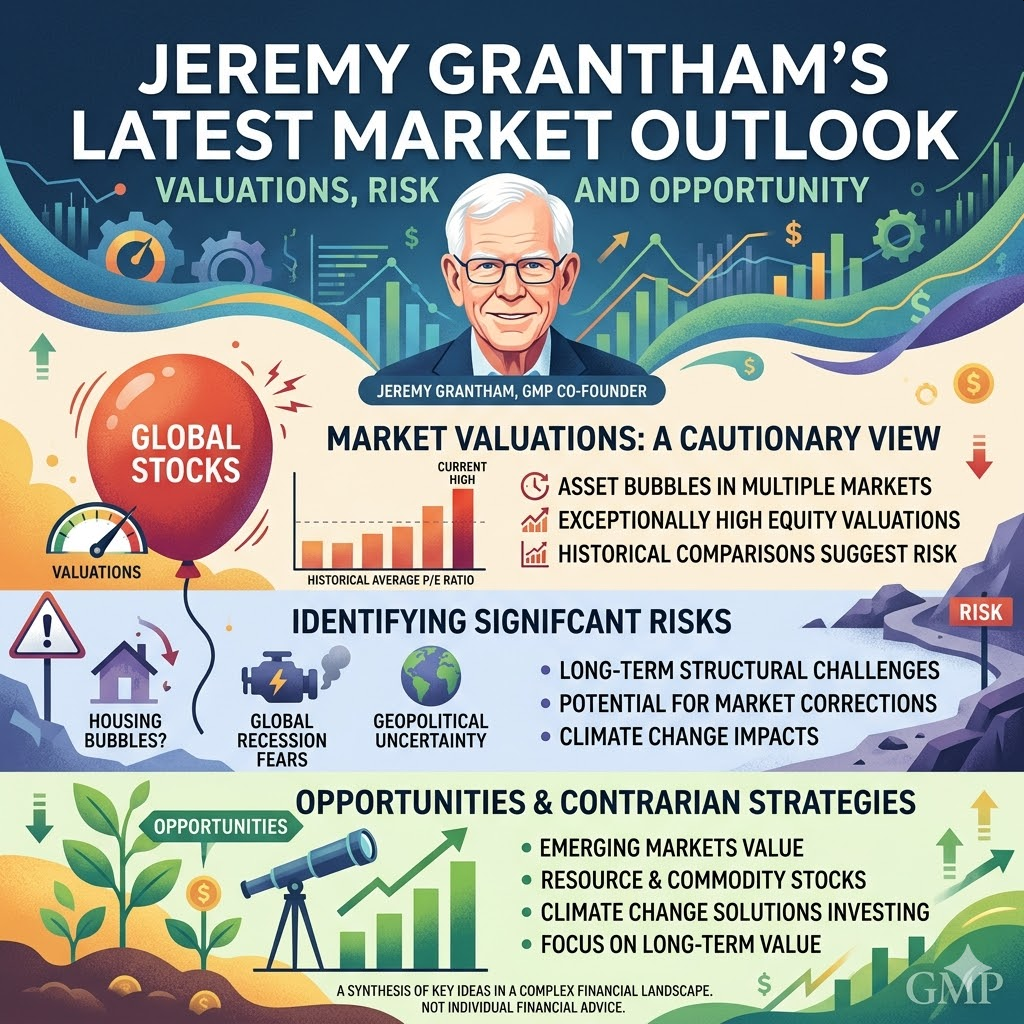
Investors keep searching for a formula that excuses paying any price for popular assets. During his recent interview on The Master Investor Podcast, Jeremy Grantham offers a colder discipline: valuation still matters, even when momentum looks unstoppable.
His blunt framing cuts through fashionable narratives: “I don’t think of it as timing the market. I think of it as getting out of clearly overpriced stocks and concentrating always on the ones that are cheap.”
That distinction is essential. Too many portfolios are built on the hope that someone else will pay more tomorrow. Grantham’s approach begins with arithmetic, not applause.
Cheap cash flows, durable balance sheets, and reasonable expectations may lag during speculative runs, but they have one enduring advantage: they do not require fantasy to justify ownership.
He goes further: “do not stand your ground in in badly overpriced stock markets unless eventually you want to take it on the chin.”
That is not market theatrics. It is a reminder that overvaluation is risk, even when volatility is low and headlines are cheerful. Expensive assets often feel safest near peaks because recent returns create emotional comfort. Yet comfort purchased at excessive multiples is rarely cheap.
Grantham also understands the emotional toll of value investing. As the host quotes him: “We never made tons of money without taking painful losses beforehand. You need to have the confidence to hold your positions when it moves against you and to increase your waiting as it gets more attractive. Value gives you that confidence.” The message is uncomfortable but true: successful contrarian investing often looks wrong before it looks smart.
That matters now because many investors assume innovation alone can justify any valuation. New technologies can transform industries, but even transformative change does not repeal price discipline.
Great businesses can become poor investments when purchased at absurd terms. Average businesses can become strong investments when bought with a margin of safety. Entry price remains the bridge between business quality and shareholder return.
Perhaps Grantham’s most useful metaphor is gravity. “For me, value is a gravitational equivalent. Sooner or later, being cheap has consequences. Being expensive has consequences and it will eventually wear you down.”
Gravity does not operate on a trader’s schedule. It can appear absent for months or years. Then it reasserts itself suddenly.
None of this requires permanent pessimism. It requires selectivity. Investors do not need to predict every macro turn, rate move, or quarterly print. They need to avoid paying reckless prices and remain willing to own neglected assets when sentiment turns sour.
The practical takeaway is simple: trim positions whose future already seems fully priced, redeploy toward securities with realistic expectations, and accept that patience is part of the process. Markets reward glamour in seasons. Over full cycles, they still reward discipline. Grantham’s record suggests that while narratives change, valuation keeps the final score.
Full interview here: